
Diamond family’s final games night: one “Mario Kart” session that kept them together
A Guardian account explains why games stayed the glue when a 20-year household finally started coming apart.
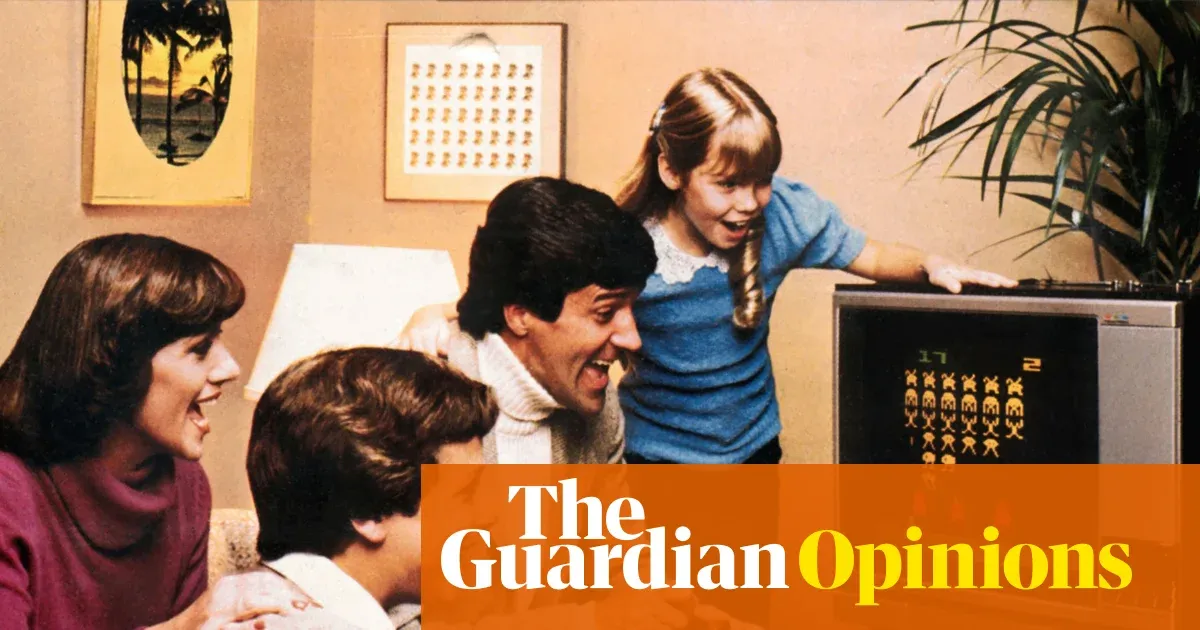
Dominik Diamond describes the end of an era for the Diamond family, shaped by constant conflict, serious health crises, and mental health struggles. The consequence for decision-makers is a reminder that shared cultural “infrastructure,” not just policy, often determines whether teams survive stress.
Dominik Diamond calls it “the end of an era” for the Diamond family. For 20 years, there have been five of them living together, and it “has not been easy.” The household is described as conflict-laden at times, with “militant vegan daughters,” sons with “Scottish tempers,” and a youngest child who “attracts trouble like an industrial magnet.”
Then comes the detail that makes the whole piece feel like more than memoir: through all of it, they still had games, and those games brought them back together. The final family games night was wanted to be “the best fun we’ve ever had,” and the narrator jokes that maybe they should have stuck with “Mario Kart.” The point is not that games magically solve everything. It is that games created a repeatable moment of shared attention, where disagreements could cool long enough for conversations to happen.
This is the core dynamic the author credits: games as a “cultural touchstone.” When any of them “spy another playing something new,” the household shifts. Instead of friction taking over, curiosity takes over. The article explicitly links games to “the conversations that happen” around new play, and it argues those conversations helped the family “crack through the veneer of disagreements and distrust.” That language is doing a lot of work. It is describing a specific social mechanism: a shared artifact, plus a shared ritual, plus the low-stakes permission to talk about something concrete.
For context, that matters because the author does not portray the Diamonds as dealing with ordinary sibling squabbles. The piece says they are “beset with all manner of mental health bobbins and chronic illnesses,” and it adds a brutal real-world anchor: those chronic issues “resulted in two of our three kids almost dying in hospitals.” In other words, the stakes were not just emotional. The family life described here was shaped by health events severe enough to bring near-fatal outcomes. In that setting, anything that reliably prevents constant rupture is not a leisure activity. It is infrastructure.
Executives and operators might recognize the business version of this pattern, even though the story is personal. In organizations, the closest equivalent to “family games night” is a shared ritual that produces predictable reconnection. It can be a weekly demo, a cross-functional review, a culture norm that forces people into the same room, or a recurring learning session where the goal is to show something specific and get real feedback. The author’s claim is that games “remind us that we have more things in common than we sometimes feel.” In a workplace, that is the social fuel boards and leaders often struggle to manufacture when trust erodes. You can have formal governance, but if people are never placed into a shared context that invites conversation, the “veneer of disagreements and distrust” tends to thicken.
The second-order implication is that this kind of “shared artifact” can be especially important when a group has multiple sources of stress. The author lists overlapping pressures: temperament differences, ideological clashes (in the form of “militant vegan” daughters), and the constant shadow of mental health challenges and chronic illnesses. When stress is layered, the default social mode tends toward blame, defensiveness, and fatigue. A low-stakes shared activity can change the dominant mode, not by pretending the hard stuff is gone, but by giving people a reliable channel for connection.
There is also a subtle governance lesson here. The author portrays closeness as something they built and maintained, not something they were handed. Games “always brought us back together,” and the author emphasizes that it was both collective attention (everyone “hunkering over Super Mario Kart”) and the subsequent conversation. That is a reminder that in teams, culture is rarely about slogans. It is about loops. If you want trust to survive pressure, you need repeated moments where people experience shared reality. In the Diamonds’ account, the loop was games. In organizations, it could be something else, but the structure matters.
Finally, the “last session” framing makes the stakes concrete in a way that resonates beyond family life. The author wanted one last games night to be “the best fun we’ve ever had,” which signals that the finality of change is itself a stressor. When groups break apart, they do not just lose logistics. They lose rituals and the emotional safety that rituals create. For executives, this echoes a familiar moment: when leadership transitions, restructurings happen, or teams split for new priorities, the risk is not only operational. It is relational. The Diamonds’ story argues that a shared cultural touchstone can keep people “extremely close” even when the house is described as “combustible.” And if that worked in a situation involving hospital near-death outcomes, it is a useful question for every boardroom: what rituals are currently doing the quiet work of keeping people connected, and what happens when they are removed?
This story's Key Insights and Take-aways are locked.
Create a free account to unlock Executive Actions for one credit.
Register to UnlockAlways free for Executives Club members. Join the Club
More in Entertainment

Ali G's 'stooge' says he was in on joke, outplayed Sacha Baron Cohen
A 54-year-old aspiring actor says he recognized Sacha Baron Cohen mid-shoot, kept his MAGA act up, and let the film-makers think they had fooled him.

Entertainer Russell Brand denies 7 sex charges amid accuser's 'couldn't breathe' claim
The alleged victim's account sharpens the reputational and legal stakes for Brand, his platforms, and any business tied to a public figure under criminal scrutiny.

Russell Brand's accuser 'bewildered and confused' as he denies 7 sex charges
The criminal case against the comedian is a live test of how media companies manage talent risk when serious allegations go public.