
DNA shows Sweden’s medieval children in shared graves were usually not related
Analysis of 142 skeletons from three cemeteries reveals co-burials of unrelated adults and children, reshaping how early Christianity buried the dead.
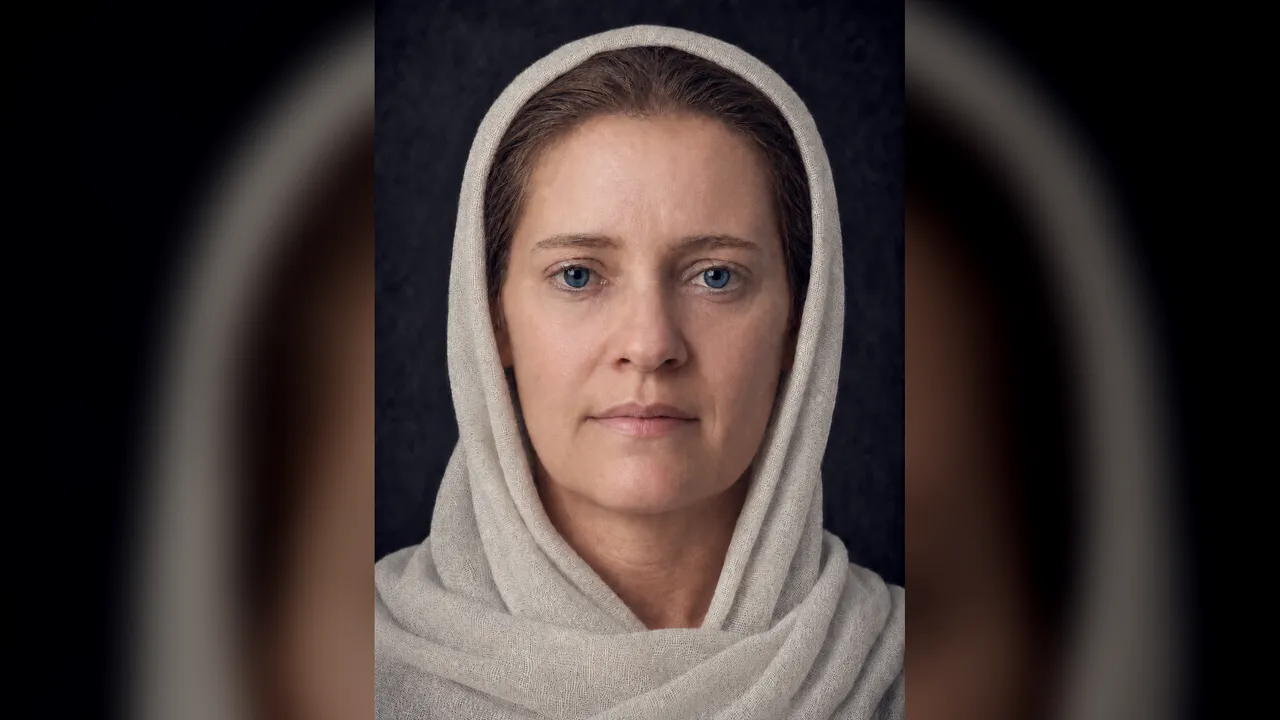
Paleogeneticist Maja Krzewińska and colleagues analyzed DNA from 142 skeletons from three Swedish cemeteries dated to the 10th to 14th centuries. Their genetic results suggest that most multi-person graves including children were rarely close biological kin, challenging a long-held assumption about parent-child burial pairs.
Early Christian burial practices in Sweden may have looked tidy from the outside, but the DNA tells a messier story. In a new study, researchers analyzed the remains of 142 people from three medieval cemeteries in Sweden dating to the 10th to 14th centuries. The surprising part: when adults and children were placed together in the same tomb, the shared grave was usually not close biological family, even though people often assume it was.
“We often assume that adults and children sharing a grave were parents and children or other close family members,” study first author Maja Krzewińska, a paleogeneticist at Stockholm University, said in a statement. “In most cases, that was not what we found.” That finding matters because it flips a baseline assumption archaeologists and historians have relied on for years, namely that shared burial space automatically signals close kinship.
So what did the genetic data actually show? The researchers determined that most burials containing multiple individuals held both adults and children. They also found a strong pattern in sex pairing, with people buried together usually being of the same sex, such as a woman buried with a girl or a man buried with a boy. But the genetic part is where the story gets uncomfortable: people buried together rarely exhibited close biological kinship. In other words, the graves were not random, but they were also not what a “parents and kids” interpretation would predict.
The researchers connect this shift to how Christianity spread across Scandinavia starting in the late 10th century. As Christian practices became more uniform, graves were oriented east to west, and people were buried in a simple shroud without grave goods. Baptized individuals were allowed to be interred in consecrated cemetery grounds. Babies who died before they could be baptized were excluded. That religious boundary created a practical problem for families and communities. If a child was not eligible for burial in the cemetery, what happens when that child dies anyway?
Krzewińska and the team suggest a few non-kin explanations that fit the genetic results without inventing new ones. For instance, some of the children co-buried with adults may have been unbaptized. The source notes that the researchers previously analyzed a burial containing an adult and the remains of a fetus and believed it represented an unbaptized individual. That implies a workaround: children who were normally ineligible might have been interred with an adult in a way that got around religious norms.
Other co-burials might reflect the reality of timing and terrain. The researchers propose that some unrelated people were buried together in the spring after passing away in the winter, when burial in the frozen ground was impossible. If communities could not bury immediately, the “who ends up in the same tomb” question becomes logistical as much as familial. Krzewińska also adds that based on more distant genetic affinity, some co-burials could represent more distant family relations, or even non-biological kin group relations. And in early medieval Scandinavia, households could include extended relatives, servants, employees, and enslaved individuals, so “who counts” in community membership might have mattered at least as much as biology.
From an executive perspective, the interesting parallel is how systems that look uniform in policy do not always behave uniformly in outcomes. Here, once Christianity spread, burial practices became more standardized, but the genetic evidence suggests social rules and constraints still produced complex, human results. The study highlights that membership in the local Christian community may have been equally important in determining where and with whom to bury someone. That means “grave interpretation” is no longer simply a family tree exercise. Archaeologists have debated relationships between people buried together in this type of grave for a long time, and, according to the source, ancient DNA is finally the tool “we have been waiting for to test these interpretations directly.”
The researchers also found evidence of something more conventional, which is a useful reminder not to overcorrect. In addition to co-burials of unrelated people, they identified evidence that some families were buried within the same cemetery over several generations. One burial, known as Lady 56, was a Christian pilgrim who anchored three generations of relatives. Lady 56 died when she was around 30 years old and was buried with a rare scallop shell, a symbol of the apostle James, obtained after completing a pilgrimage to Santiago de Compostela in northwestern Spain. DNA analysis revealed Lady 56's parents, brother, and daughters were also buried in the same cemetery, but in different places. The cemetery itself, Västerhus, was part of a wealthy landowner's farm from the 11th to 14th centuries and contained remains of more than a dozen members of a biologically related group, many of whom were interred with members of a different kin group.
The source concludes that DNA connections between the main Västerhus family and other kin groups in the cemetery support the special status of the main family. In other words, even when co-burials were often not close biological kin, the genetic links point to social hierarchy and community importance. For decision-makers, the second-order lesson is sharper than it sounds: when rules and rituals govern outcomes, DNA and policy can diverge. Similar to how organizations can follow standardized procedures while producing irregular real-world results, medieval communities may have used burial practices to express religious membership, eligibility boundaries, timing constraints, and social status. That is why ancient-DNA testing is positioned here as more than a technical upgrade. It changes the interpretation of same-region, same-era graves that appear similar, but may reflect different traditions.
If you lead teams that rely on evidence interpretation, this is a reminder to treat “default assumptions” as hypotheses, not facts. In the medieval cemetery case, the assumption was that shared graves meant close family. The DNA says otherwise for most multi-person adult-child burials. And once you see that, the strategic stake extends beyond archaeology: it is about how quickly culture, constraints, and incentives rewrite the meaning of the data we think we already understand.
This story's Key Insights and Take-aways are locked.
Create a free account to unlock Executive Actions for one credit.
Register to UnlockAlways free for Executives Club members. Join the Club
More in Science
2026 Nikon Small World Winners Reveal the Hidden Machinery of Everyday Life
A mycologist's frozen Edinburgh garden became the backdrop for vivid views inside cells, a reminder of what advanced imaging now makes visible to researchers and the industries built on biology.

Study: 1 in 4 depression cases may be a body-clock problem, not a chemical one
A 10,000-person study finds standard antidepressants often fail these patients, but melatonin and morning sunlight may hit the real root cause.

Start-Up Says A.I. Designed a Virus to Attack One Patient's Superbug
If the claim holds up, personalized phage therapy could become a new frontline weapon against antibiotic resistance - but proof is far from final.