
DNC shifts 2028 first primary to South Carolina, beating Nevada over vote-count speed
The Rules and Bylaws Committee picks Palmetto State first, resetting incentives in the 2028 Democratic nominating race.
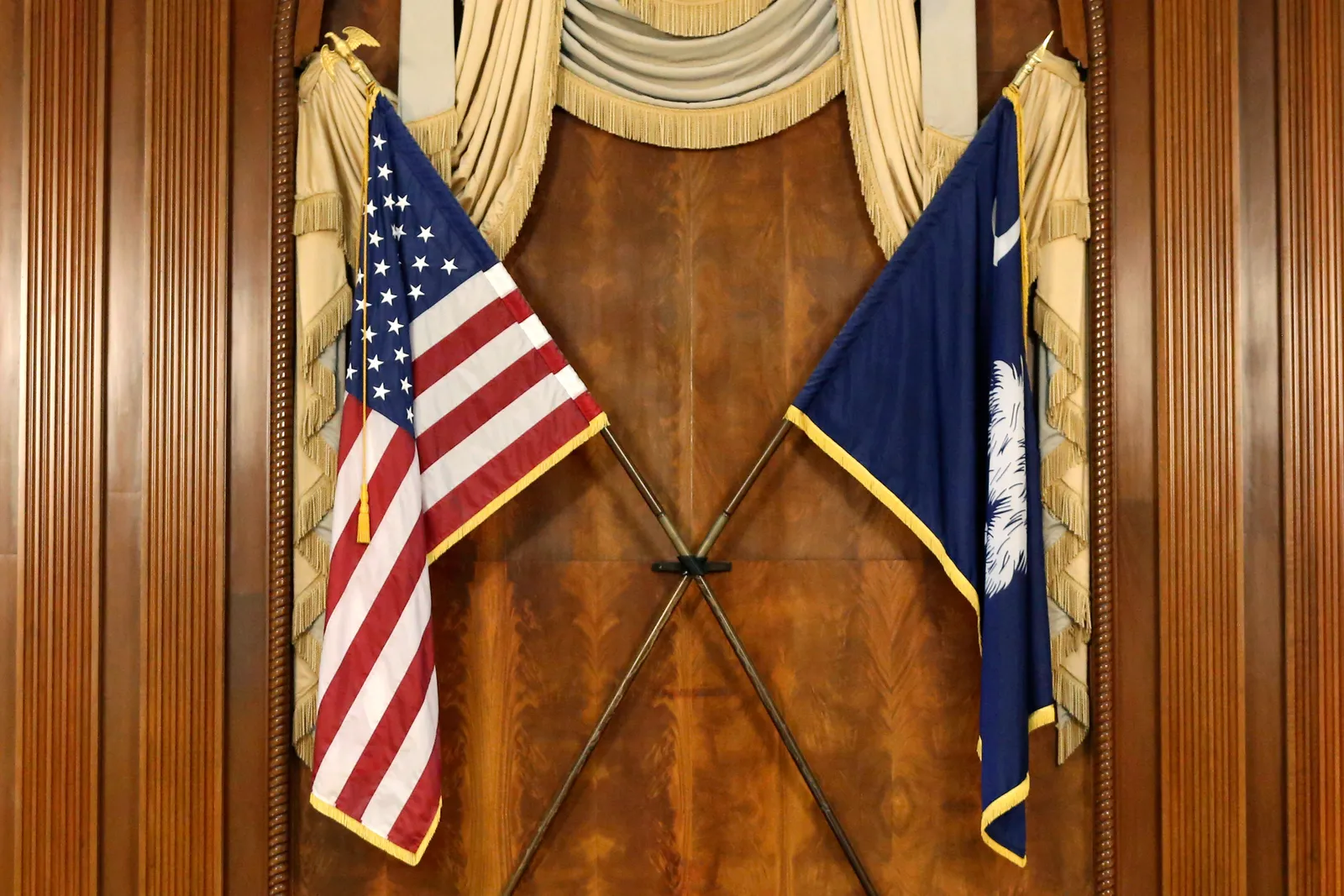
The DNC Rules and Bylaws Committee voted Friday to make South Carolina the first presidential primary state in 2028, edging out Nevada. The decision reshapes the calendar’s operational and political incentives, with knock-on effects for outreach, messaging, and resource allocation.
Democrats just rewired the start of the 2028 presidential nomination. On Friday, the DNC’s Rules and Bylaws Committee voted to make South Carolina the first contest in the 2028 primary calendar, beating Nevada, another historic early-state contender for first place.
The split mattered enough that it came down in part to something unglamorous but consequential: Democrats cited concerns about Nevada’s ability to process election results quickly. Translation: before candidates even get judged on persuasion, the party is trying to make sure the opening contest doesn’t turn into a logjam. If results drag, momentum drags with them, and the calendar becomes more about administration than narrative.
South Carolina is not just a random pick at the top of the calendar. The source flags the political rationale Democrats emphasized: strengthening Black voting power in the South after the Supreme Court significantly restricted the Voting Rights Act earlier this year, which triggered redistricting efforts. That matters because primary schedules are never only about who votes first. They are also about which constituencies the party signals it will prioritize when it wants legitimacy early, especially after major legal shifts reshape maps, districts, and the practical path to coalition-building.
This year’s legal backdrop is a key reason the calendar choice carries more weight than it might on paper. When the Supreme Court restricts the Voting Rights Act, redistricting follows, and the effects do not land uniformly. The DNC’s move to lead with a state that has a significant Black voting bloc fits that new reality, using the earliest spotlight to reinforce the party’s outreach goals in a post-VRA-restriction environment. Executives, strategists, and investors who track political risk should notice the second-order implication here: calendar mechanics become a tool for managing coalition arithmetic when the legal map is in flux.
The calendar shuffle did not stop with South Carolina and Nevada. In the Midwest, Michigan bested Iowa to become the region’s early state. That means Iowa will not be an early state in 2028, after leading the nominating calendar for decades through 2020. Iowa has historically functioned like the scoreboard for activists and donors alike, the place where early viability gets tested and where narratives often harden quickly. Removing Iowa from early positioning changes the rhythm of how campaigns build momentum, how media attention is allocated, and how campaigns manage organizational burn rates in the first stretch.
Meanwhile, New Hampshire, which has gone second on the nominating calendar in most past cycles, landed a distant third in the voting to be Democrats’ first primary state. That is a reminder that even for states with deep historical branding, outcomes can change when committees prioritize different operational and coalition criteria. If New Hampshire is not near the front, candidates who once treated the Granite State as a predictable step in the climb may need to recalibrate their early rollout plans, including how they stage staff scaling, ad buys, and local ground game.
For board members and senior operators, this is not just political trivia. Party rules are a form of infrastructure. They influence when campaigns can credibly claim momentum, when donors feel safe moving, and when organizations can rationalize spending. The specific reasoning the source highlights, concerns about Nevada’s ability to process election results quickly, points to a broader operational theme that will matter to any campaign running like a timed machine. Election administration speed affects perceived legitimacy. Perceived legitimacy affects media narratives. Media narratives affect whether money and manpower accelerate or hesitate.
There is also a strategic echo across industries: when legal frameworks shift, the playbooks for early signals change too. Here, restrictions to the Voting Rights Act earlier this year, and the resulting redistricting, appear to have pushed Democrats to look for a first-state path that reinforces Black voting power in the South. Put differently, the first primary state is being selected not only as a tradition, but as a coalition management instrument. In 2028, the opening week may become the party’s earliest opportunity to define who is empowered, whose preferences are centered, and how the nomination story starts.
The bottom line: the DNC’s Rules and Bylaws Committee chose South Carolina to lead the 2028 primary calendar, edging out Nevada due in part to concerns about result processing speed, while also emphasizing strengthening Black voting power after Supreme Court changes to the Voting Rights Act. At the same time, Michigan beat Iowa for the Midwest’s early slot, and New Hampshire fell to third in the race to be first. For anyone tracking political momentum, this combination signals that in the next cycle, calendars will be treated like operational systems and coalition strategy, not just tradition.
This story's Key Insights and Take-aways are locked.
Create a free account to unlock Executive Actions for one credit.
Register to UnlockAlways free for Executives Club members. Join the Club
More in Politics

Trump to mark nuclear milestone Friday, just after four executive orders to quadruple output
A White House announcement caps a push that included cutting health and environmental considerations, with big implications for US energy policy.

CDC: Measles reaches 43 states in 2026, raising alarm for public health readiness
With measles spreading across 43 states, executives should treat outbreak preparedness like a risk metric, not a headline.

Gulf states arrested 1,000+ for filming Iranian strikes since Feb. 28
Crackdowns across Jordan and US-aligned Gulf countries aim to stop image circulation and uphold denials of strike targets.