
Drexel’s Thamires Lima shows simple liquids can fracture, challenging elasticity-based crack theories
New lab stretching results suggest nonelastic fluids can split in ways engineers did not expect, with downstream design implications.

Thamires Lima, a chemical engineering research professor at Drexel University, uses extensional rheology to study thick, viscous fluids and how cracks form. Her findings challenge the assumption that elasticity is always the key ingredient behind fracture, forcing decision-makers to rethink material risk models.
Thamires Lima, a research professor in chemical engineering at Drexel University, studies thick, viscous liquids and why they sometimes fail in surprising ways. In her lab, she uses extensional rheology, a method where liquids are stretched between metal plates to measure the forces that push them toward flow. It sounds niche. But the underlying question is not: what actually makes a liquid crack apart when it is pulled, stressed, or forced to move?
For a few years, researchers leaned on a straightforward story. In complex fluids, the property of elasticity was thought to be what enabled break apart, with cracks propagating because the material could store and then release mechanical energy. Lima's work is challenging that comfort. The key twist is that she is studying thick, viscous, simple fluids, and she is seeing that a crack can appear even when elasticity is not doing the heavy lifting the way the earlier framework suggested.
To set the stage, imagine the difference between honey or molasses and a more “industrial” substance. In everyday life, those sticky examples are the right mental image. In a lab, Lima is more likely to work with materials like polypropylene or crude oil. Those are not just props. They represent a practical class of liquids and melt-like materials that engineers encounter when designing pumps, pipelines, processing equipment, and industrial manufacturing steps. The moment you are pulling, stretching, or accelerating a fluid, you are not just worried about whether it flows. You are worried about whether it fractures, deforms irreversibly, or develops internal damage that later turns into a bigger failure.
Extensional rheology is how Lima finds the “force that makes them flow.” By placing the liquid between metal plates and stretching, researchers can measure how the material responds under tension and how that response maps to the onset of flow and, crucially, the conditions under which failure might begin. This is different from typical viscosity tests that focus on simple shear. Stretching probes how molecular structure and intermolecular forces behave when the material is pulled rather than slid. In other words, it is closer to the mechanical story many real processes put on fluids: the fluid gets tugged, stretched, and forced to elongate.
Lima's challenge to the old cracking narrative hinges on an important distinction: the earlier idea tied fracture behavior in complex fluids to elasticity. If elasticity is the driver, then removing or minimizing elasticity should make cracking less likely, or at least change how cracking occurs. But a crack in a nonelastic simple fluid has researchers questioning that assumption. The surprising part is not that liquids can fail under stress. It is that the mechanism might not be the one people were using as the default explanation. If simple, nonelastic fluids can fracture, then fracture is not just an “elasticity problem.” It may be a broader mechanical phenomenon that depends on other properties, such as how a fluid dissipates energy, how it reorganizes under tension, or how microstructural defects emerge.
That matters for more than academic theory. Engineers and developers build materials and processes based on risk models. If those models assume elasticity is the deciding factor, they can mispredict where failure is likely, how quickly it will propagate, and which operating conditions are safe. Even if regulators do not dictate a specific rheology-based mechanism, they influence how products are tested and certified by requiring proof that hazards are understood and managed. When the mechanism is under debate, testing protocols and safety margins can become inconsistent across teams. Boards and executive leaders in chemical, materials, and industrial processing organizations feel that directly, because mechanism uncertainty often shows up as extra qualification cycles, broader inspection requirements, and higher conservatism in design.
The second-order implication is that the “simple vs complex” boundary may be less useful than people thought. Complex fluids are typically the focus when researchers talk about unusual mechanical behaviors, but Lima's work pushes attention toward simpler fluids that are still operationally important. That reframes what “material understanding” has to cover. If cracking can happen without the elasticity signature, then quality control and process monitoring might need to account for additional signals beyond elastic response. For example, if failure is tied to how a fluid stretches and dissipates under tension, then measurement systems and acceptance criteria may need to evolve toward extensional conditions rather than relying on properties gathered under other deformation modes.
For decision-makers, peers, and anyone managing engineering teams, the takeaway is blunt: you cannot assume the mechanism just because it is the best story from a few years ago. Lima's extensional rheology approach, applied to thick, viscous liquids like polypropylene or crude oil, is putting pressure on the elasticity-first model for fracture in fluids. If the mechanism behind cracking in nonelastic simple fluids is different, then the industry will need to update how it thinks about failure, how it designs tests, and how it prices risk. And the earlier that shift happens, the less likely it is that “surprises” turn into expensive downtime, product defects, or safety incidents later on.
This story's Key Insights and Take-aways are locked.
Create a free account to unlock Executive Actions for one credit.
Register to UnlockAlways free for Executives Club members. Join the Club
More in Science
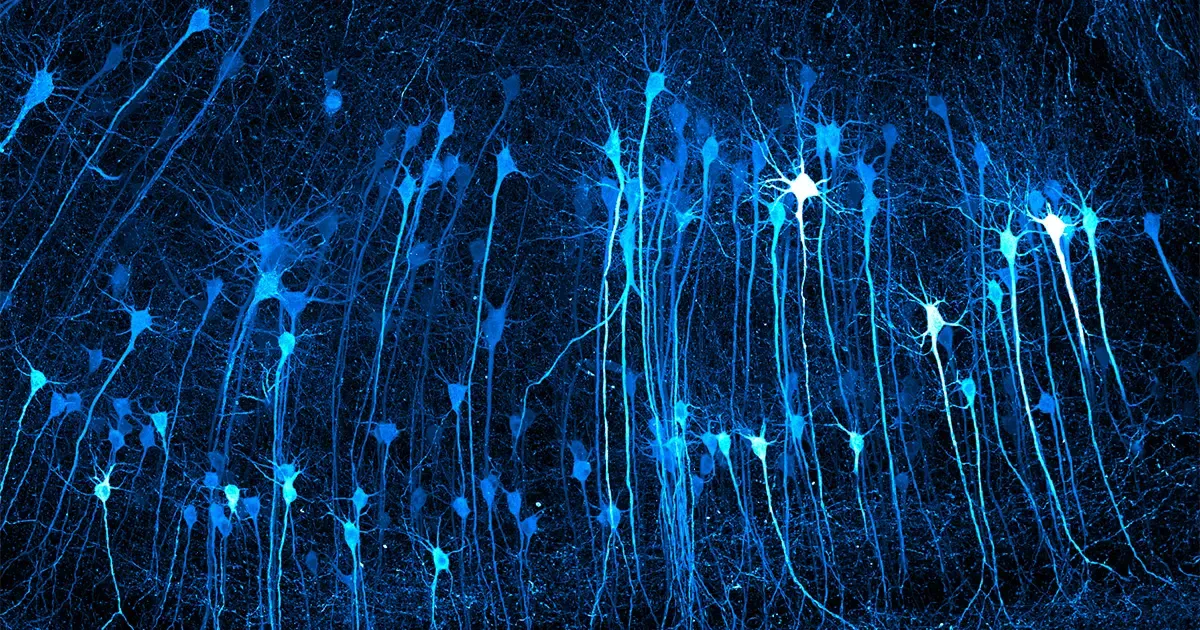
2026 Nikon Small World Winners Reveal the Hidden Machinery of Everyday Life
A mycologist's frozen Edinburgh garden became the backdrop for vivid views inside cells, a reminder of what advanced imaging now makes visible to researchers and the industries built on biology.

Study: 1 in 4 depression cases may be a body-clock problem, not a chemical one
A 10,000-person study finds standard antidepressants often fail these patients, but melatonin and morning sunlight may hit the real root cause.

Start-Up Says A.I. Designed a Virus to Attack One Patient's Superbug
If the claim holds up, personalized phage therapy could become a new frontline weapon against antibiotic resistance - but proof is far from final.