
Ebola fear grips 25,000+ displaced people in DRC camps
Overcrowding, lack of sanitation, and state absence create a perfect storm for a deadly outbreak in eastern Congo.
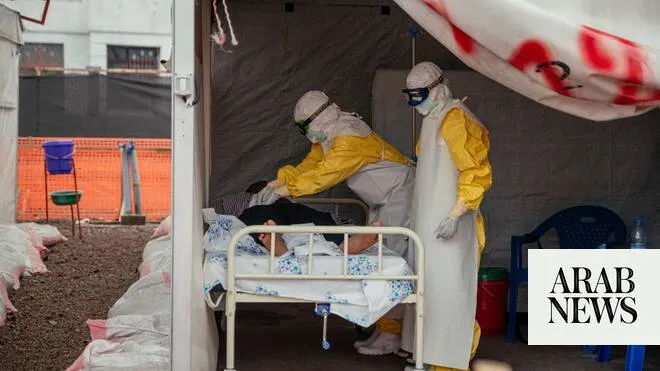
The World Health Organization (WHO) Director General, Tedros Adhanom Ghebreyesus, warned that the eastern Democratic Republic of Congo (DRC) faces a catastrophic collision of disease and conflict. The immediate consequence for international aid organizations and regional governments is the urgent need for massive financial and logistical intervention to prevent a humanitarian disaster.
In the Kingonze camp, where over 25,000 displaced people are crammed into a sprawl of tarpaulins and tents, the fear of Ebola is palpable. Residents are living in conditions that experts warn are a recipe for catastrophe, making the spread of the deadly virus almost inevitable. This dire situation was highlighted by Dorcas Mapenzi, who told AFP that if Ebola arrives, the community will be 'wiped out as we’re packed like sardines.' The camp, located on the outskirts of Bunia, the capital of the northeastern Ituri province, is currently free of recorded infections, but the underlying conditions-extreme overcrowding and abysmal sanitation-create a perfect storm for a devastating epidemic.
The crisis is set against a backdrop of profound instability. Nearly a million people are displaced across Ituri, a province in the desperately impoverished eastern DRC, which is plagued by decades of armed conflict. The World Health Organization (WHO) Director General, Tedros Adhanom Ghebreyesus, visited Bunia and issued a stark warning, calling attention to the region's 'catastrophic collision of disease and conflict.' He stressed that the ongoing fighting severely hampers critical efforts to contain the epidemic. Beyond the immediate health threat, Tedros called for increased international help and financial aid, emphasizing the need to address deep-seated community distrust of authorities and to actively combat the spread of false information regarding the virus.
The physical reality of life in these camps underscores the severity of the crisis. Sanitation is virtually non-existent. Residents like Mapenzi noted that children play near filthy toilets and that waste is often disposed of on the ground, amidst the tarpaulins serving as homes. Deborah Nzale, a widow, lives with nine people in a shelter barely three square meters. She questioned how such conditions could possibly allow for disease prevention, especially when public health messaging emphasizes the need for physical distancing to fight Ebola. This lack of basic infrastructure is compounded by the fact that the Bundibugyo strain of Ebola responsible for the current outbreak has no existing vaccine or treatment.
Containment efforts have therefore had to rely heavily on protective measures and rapid contact tracing, strategies that are severely undermined by the living conditions. Residents like Nzale described sleeping piled on top of each other, sharing sweat and close quarters. The lack of protective gear is a critical failure point. A poster at the entrance of Kingonze warns, 'Ebola really kills,' but residents like Budjo Amos complain that they do not even have the basic kits needed for protection. Amos, who fled common communal violence in the province, noted the absence of simple items like soap for handwashing, insisting that the most urgent need is clean water.
The state's response has been widely criticized for its delayed intervention. The outbreak was officially declared in the DRC and neighboring Uganda on May 15. As of May 31, the WHO reported 321 confirmed cases in the DRC, including 48 deaths, alongside nine confirmed cases and one fatality in Uganda. The sheer scale of the crisis is immense: Ituri’s military governor, Lt. Gen. Johnny Luboya Nkashama, stated that the province counts around 61 displaced persons camps housing nearly 970,000 people. He pleaded for the rapid deployment of specialized medical staff and equipment to prevent a disaster. This highlights a massive gap between the scale of the population and the resources available to the Congolese state.
Furthermore, essential medical infrastructure is critically lacking. Many hospitals in the region still lack basic equipment, particularly isolation tents necessary for patient care. The single borehole in Kingonze, which provides water for only a few hours a day, exemplifies the systemic failure. The state's absence in swathes of Ituri has created a vacuum that is being filled by desperation and fear. The pleas from the ground-for soap, for clean water, for medical tents-are not just local complaints; they are indicators of a systemic collapse in public health infrastructure, making the region acutely vulnerable to any infectious disease.
For international bodies and aid investors, the primary risk is not just the virus, but the failure of governance and infrastructure. The confluence of conflict, massive displacement, and poor sanitation creates a high-risk, low-control environment. The need for specialized medical personnel and equipment is immediate and overwhelming. The strategic implication is that any intervention must be multi-layered, addressing not only the biomedical crisis but also the foundational needs of clean water, sanitation, and security to even begin to stabilize the population and allow for effective disease control.
This story's Key Insights and Take-aways are locked.
Create a free account to unlock Executive Actions for one credit.
Register to UnlockAlways free for Executives Club members. Join the Club
More in Entertainment

Christopher Nolan’s “The Odyssey” posts his biggest Tuesday haul, surpassing “The Dark Knight’s” record
The film’s Tuesday breakout reframes Nolan’s box-office ceiling and forces competitors to rethink timing, budgets, and release strategy.

Kacey Musgraves cancels Aug. 20, 29, Sept. 2 Middle of Nowhere shows
Ticketmaster emails are telling fans refunds are coming, while the tour still starts Aug. 21 in Chicago.

Billie Joe Armstrong launches Epiphone Les Paul Junior and Marshall 1959BJA signature gear
Two limited releases turn decades of Green Day’s tone into branded hardware, including Marshall’s first artist amp in 14 years.