
Eiffel Tower operator orders early closure at 4 pm to manage third heatwave risk
France’s heatwave grind hits tourism operations: the Eiffel Tower will “exceptionally” shut early this weekend.
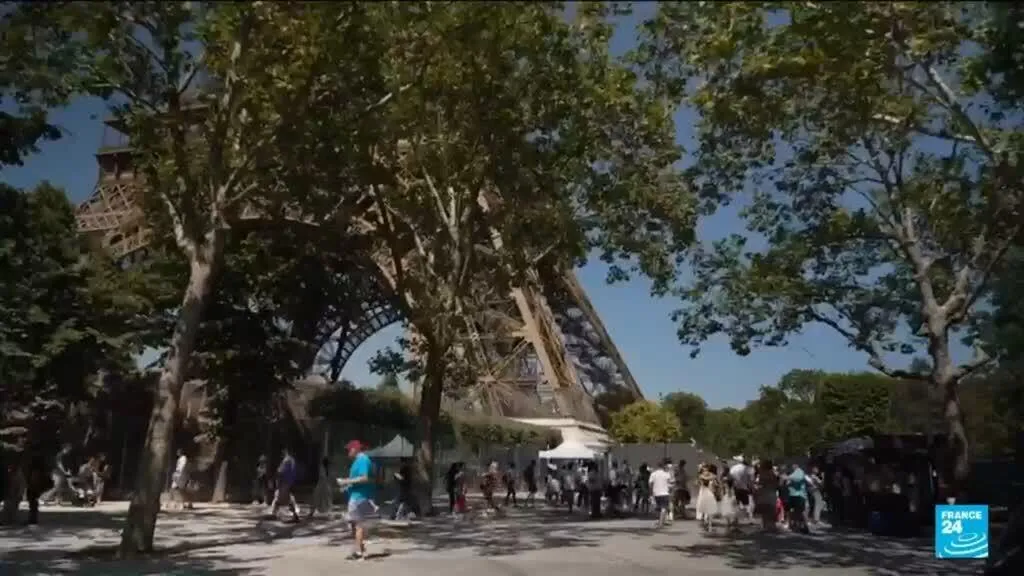
The operator of the Eiffel Tower said the latticed-steel monument will “exceptionally close” early over the weekend at 4 pm (1400 GMT). For decision-makers, it is a real-time stress test of public-facing infrastructure planning under repeated extreme heat.
France’s summer heat is not staying politely in the weather app. The operator of the Eiffel Tower said the latticed-steel Paris monument will “exceptionally close” early over the weekend at 4 pm (1400 GMT). The reason is straightforward and urgent: France has been gripped by a third heatwave since May.
That early shutdown matters more than it sounds. An iconic site like the Eiffel Tower is not just a tourist attraction, it is a high-visibility test of how operators manage safety, crowd flow, and on-site risk when conditions deteriorate faster than normal procedures. And because the closure is scheduled for 4 pm (1400 GMT), it also has a practical consequence for visitors, nearby businesses, and the operation’s revenue timing. This is not a vague “we might adjust later” statement. It is a specific, time-bound decision tied to extreme conditions.
To understand why this is an executive-level story, zoom out to what heatwaves do to operational reality. Elevated temperatures affect human comfort and health, but they also affect materials, maintenance windows, and the day-to-day feasibility of crowd management. For operators of public monuments and venues, the question usually becomes: what can you safely run, and what should you pause, even if the demand is there? When heatwaves stack, the institution does not get a clean reset. It gets another weekend with higher baseline stress, which can make “exceptional” closures less exceptional over time.
There is also a second layer that boards and senior leaders care about: the regulatory and compliance backdrop around public safety. Even when the source only gives the headline operational decision, the structure is familiar across public-facing infrastructure in Europe. Operators must demonstrate they can protect visitors in foreseeable hazards. Heat is not a surprise category. France has had repeated heatwaves since May, and a third one is underway. That repetition changes the internal conversation from “contingency planning” to “routine risk management.” In other words, decisions like this feed into an operator’s ongoing obligations around safety controls, staffing readiness, and procedures for extreme weather.
Then there is the market context, because closures like this ripple into a broader ecosystem. The Eiffel Tower is a magnet. When it closes early, the impact is not confined to the tower itself. Nearby hospitality, ticketing ecosystems, transportation patterns, and tour operators feel it. Even if some visitors redirect plans, those pivots take time. That is where operational decisions become commercial decisions, and commercial decisions become risk decisions. If the tower closes at 4 pm (1400 GMT), anyone running evening programs has to adjust quickly, and the operator has to anticipate knock-on effects on crowds, staffing schedules, and guest communications.
Executives at other venues and infrastructure operators will recognize the pattern. Extreme weather is increasingly a scheduling problem, not just a safety problem. The first-order action is the closure. The second-order work starts immediately afterward: how do you document what happened, evaluate whether the trigger thresholds were appropriate, and refine playbooks for the next heatwave? The third heatwave since May is a reminder that these events are not one-offs. They can create compounding operational friction, which can drag on both cost structures and service reliability.
There is one more strategic angle worth noting. Public landmarks are part of national identity, and they operate in the spotlight. When the Eiffel Tower says it will “exceptionally close” early, it is communicating with the public under stress conditions, and that communication becomes part of the brand. If the operator gets it right, the message lands as safety-first professionalism. If the operator waits too long, the story can become a failure of duty of care. Given the specificity of the time, 4 pm (1400 GMT), and the justification tied directly to the third heatwave since May, this reads as a controlled, preemptive move rather than a reactive scramble.
For leaders responsible for public-facing assets, the takeaway is simple and uncomfortable: heatwaves are now operational calendar events. The Eiffel Tower closure is a concrete example of how quickly “exceptional” conditions can force operational resets, even for global icons. Watch how other operators respond in real time, because the next heatwave will not pause for planning cycles. It will arrive. And when it does, the board will ask whether your triggers, staffing, and guest protocols are ready before you are forced to act at the last minute.
This story's Key Insights and Take-aways are locked.
Create a free account to unlock Executive Actions for one credit.
Register to UnlockAlways free for Executives Club members. Join the Club
More in Politics

Glacial collapse, not rain, killed 180 in Nepal's Himalayan flood
The Himalaya's extreme geography hid the true cause of Nepal's catastrophic flood, a glacial collapse that turned a geological battleground into a mass-casualty zone.
Iran’s Esmail Baghaei says Oman talks start shipping via Hormuz, not US talks yet
Temporary route plans with Oman aim to restart commerce while Tehran says Washington dialogue is not on the table.

Standards watchdog opens probe into Reform UK deputy leader Richard Tice over interests
The parliamentary standards commissioner says it began an investigation on 28 July into a possible undeclared interest.