
Elon Musk drops to $970.2bn as Tesla and SpaceX shares plunge by 4pm ET Wednesday
The first trillionaire stint ends fast, and markets force billionaire decisions in both rocket and EV capital stacks.
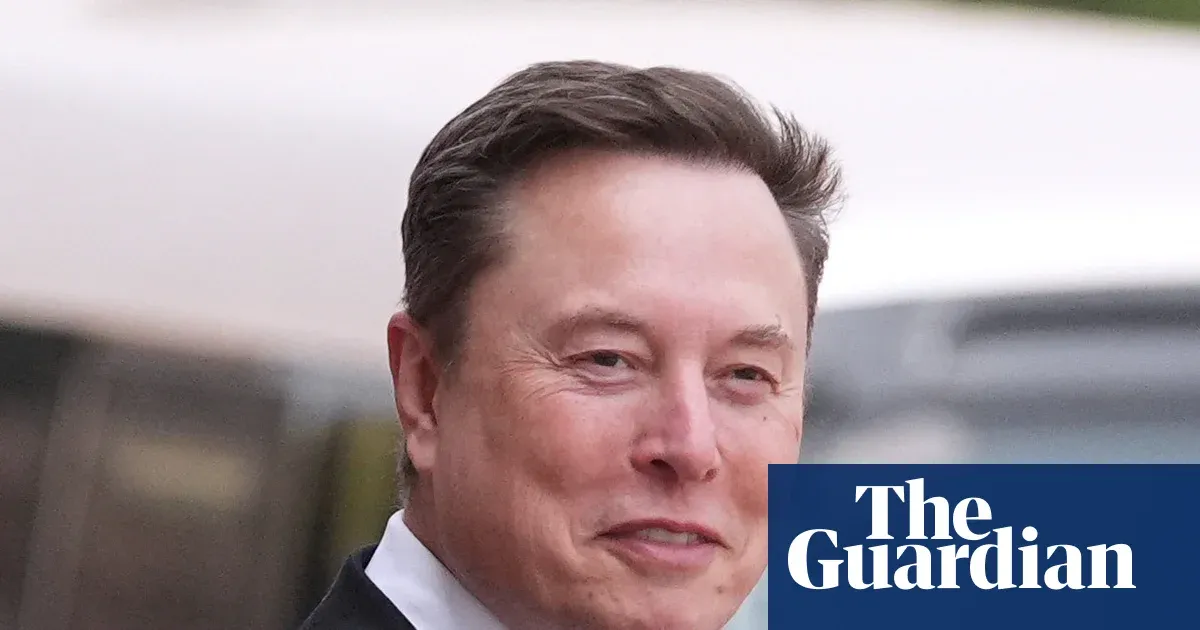
Elon Musk, tied to both Tesla and SpaceX, slid back below trillionaire status as shares fell by the close on Wednesday. As of 4pm ET, Forbes listed his net worth at $970.2bn after SpaceX's IPO briefly made him the first person worth more than $1tn.
Elon Musk is no longer a trillionaire. By the time markets closed on Wednesday, plunging shares in Tesla and SpaceX dragged his net worth down to $970.2bn, according to Forbes as of 4pm ET.
This is the market punchline to a very real, very recent headline: Musk reached trillionaire status on 12 June after SpaceX’s historic initial public offering (IPO), making him the first person with a net worth of more than $1tn. In other words, the same capital markets that turned SpaceX’s debut into a world-first wealth moment now pulled it back down, fast.
To understand why this matters, you have to look at how wealth and stock prices get entangled for founder-led companies. SpaceX, described as a rocket, satellite and AI company, had its IPO, and that debut immediately reset how the public markets value the assets, expectations, and risk profile embedded in Musk’s stake. The Guardian notes that in the weeks after the IPO, his fortune continued to hover around that gigantic figure. That “hover” is doing a lot of work: it signals volatility in valuation, not a smooth climb.
Then, Wednesday arrives and the volatility turns into a drop. Tesla and SpaceX shares both fell, and the article frames those plunges as the direct drivers of the retreat from trillionaire status. That sequence is a reminder that for high-profile founders with concentrated holdings, net worth can swing with relatively short bursts of selling pressure. It is not a slow-moving change in fundamentals. It is the market repricing momentum in real time.
For decision-makers at other growth companies, this is not just celebrity finance. It is a live case study in how liquidity events like IPOs can temporarily magnify valuation optics, and how quickly public-market sentiment can reverse. SpaceX’s IPO turned Musk into the first person to top $1tn. But a trillionaire label is not a permanent badge; it is a snapshot of market-implied value at a specific moment, subject to daily trading.
There is also a governance and board-level implication hiding inside the headline. When a founder’s personal wealth is tightly linked to two separate listed companies, market moves can create intense pressure across both ecosystems. For boards, that means shareholder narratives, analyst expectations, and risk perception do not stay neatly inside one company. Tesla’s share moves can affect how investors interpret the broader “Musk complex,” while SpaceX’s share moves can feed back into expectations for the rocket, satellite, and AI pipeline. Even when business fundamentals may not change overnight, the market often prices perceived momentum and uncertainty.
Regulatory framing plays in the background here, even if the article does not spell it out. IPOs bring heightened scrutiny, more formal reporting cycles, and more public sensitivity to everything from growth rates to capital intensity. SpaceX’s debut on the stock market is described as historic. Historic IPOs typically become pressure-cookers because public expectations rise with the new visibility. If there is any mismatch between expectations and what the market thinks it should see next, valuations can compress quickly.
The second-order implication for executives and investors is about capital allocation decisions. When valuations fall, the cost of capital effectively rises for companies trying to finance growth through equity or debt markets. Even if the founder’s personal wealth is not the same thing as the company’s balance sheet, public-market moves influence investor appetite and benchmark pricing. That can change how aggressively companies plan expansions, how they structure fundraising, and how they communicate progress to keep long-term narratives intact.
And for peers watching from the sidelines, the message is blunt. Turning one IPO into a world-first trillionaire moment is possible. But sustaining that kind of valuation requires more than a successful debut. The market can reverse quickly, and when it does, it can pull headline status along with it. Musk may have been the world’s first trillionaire in the immediate wake of SpaceX’s IPO, but as of 4pm ET on Wednesday he was back at $970.2bn. The gap between those two points is the real story executives should take seriously: public valuation is a living thing, not a trophy.
This story's Key Insights and Take-aways are locked.
Create a free account to unlock Executive Actions for one credit.
Register to UnlockAlways free for Executives Club members. Join the Club
More in Business

SK Hynix jumps 11% after seeking up to $29.4B in Nasdaq listing
The chip giant filed for a Nasdaq listing plan that could raise $29.4 billion, instantly reshaping investor expectations.

Micron revenue hits nearly $42B as AI memory lifts gross margins above 81%
Fiscal Q3 results crush estimates, prove AI memory is rewriting Micron's margins, and change the momentum math for the whole chip stack.

SpaceX sells $25B in debt under two weeks after IPO, despite $90B in orders
The satellite and rocket company’s quick $25 billion borrowing move signals how it plans to finance scale after going public.