
Elon Musk promises Grok Imagine will ship a historically accurate Odyssey movie by end-2026
A promised AI feature-length epic by 2026 collides with Musk’s Nolan backlash, and highlights the industry’s accountability fight.
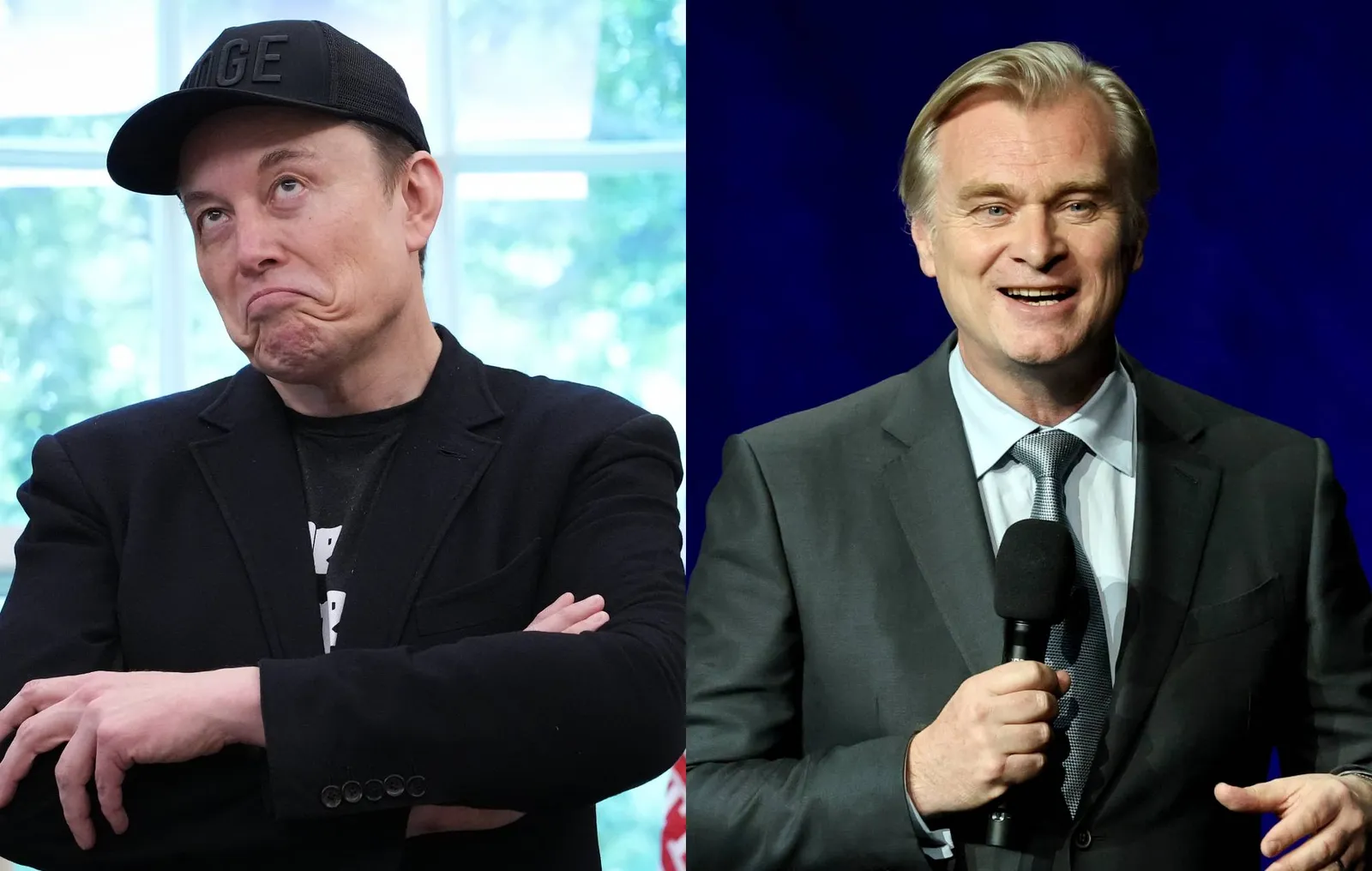
Elon Musk says his Grok Imagine will produce a full-length adaptation of Homer’s Odyssey that is “historically accurate,” by end of 2026. The move ramps up the debate over AI in film and piles pressure on studios, creators, and boards to define accountability.
Elon Musk has promised that his Grok Imagine tool will make a full-length movie adaptation of Homer’s Odyssey by the end of 2026, and he claims it will be “historically accurate” and “true to the art of Homer.” The commitment came on X (July 22), after Musk shared a three-minute sequence created by the account Heavy Pulp using Grok Imagine. The clip shows Odysseus and the nymph Calypso in a continuous handheld shot, with Heavy Pulp describing how it locks start frames from two perspectives so “the scene's geometry never drifts.”
Musk’s timeline is straightforward, and the stakes are not. “Before this year ends, Grok Imagine will make a full-length movie of The Odyssey that is historically accurate and true to the art of Homer,” Musk wrote. Exactly what he means by “historically accurate” is left open, but the core point is that he is betting a lot on AI going from short-form visuals to a feature-length production that can claim cultural legitimacy. If that pans out, it is not just a tech demo. It is a content strategy with a strong claim of authority, aimed directly at a mainstream cinematic attempt at the same source material.
To understand why this lands like a punch, you have to track Musk’s running war with Christopher Nolan’s Odyssey. Nolan’s film was released in cinemas last Friday (July 17) and stars Matt Damon as Odysseus. Before the movie came out, Musk attacked Nolan by alleging he was an “anti-white racist” who had lost his “integrity” by casting Lupita Nyong’o as Helen of Troy and Clytemnestra. Musk also backed transphobic posts about Elliot Page after some users incorrectly claimed Page had been cast as Achilles; Page instead plays the Greek soldier Sinon.
Nolan responded to the pre-release backlash by dismissing it as “irrelevant,” saying: “No one having [those conversations] knows what the film actually is yet.” He added that “What you have to do is honour the original text by interpreting it in the strongest way you personally can.” In other words, Nolan framed the criticism as people arguing past the actual work. Nyong’o, for her part, defended Nolan’s approach too, calling the source material a “mythological story” and saying, “Our cast is representative of the world. I’m not spending my time thinking of a defence. The criticism will exist whether I engage with it or not.”
Then there is the AI angle, which is where Musk’s promise stops being just cultural commentary and turns into a governance problem. Nolan has previously spoken about his “disdain for the encroachment of AI into the film industry,” describing it as “terrifying,” and arguing it “has to be about accountability,” with the line: “We have to hold people accountable for what they do with the tools that they have.” That accountability theme matters for execs because it is basically the bridge between creative workflows and regulatory exposure. When AI systems generate or influence art, the questions that follow are rarely only aesthetic. They tend to spill into provenance, disclosure, and liability: who is responsible for outputs, what safeguards were used, and what claims can be made about authenticity.
Musk’s “historically accurate” claim sits right on that fault line. The Odyssey is an ancient Greek epic poem attributed to Homer, believed to have been composed around the eighth century BC. Its story takes place after the Trojan War, but it is mythological and filled with gods and fantastical creatures, including a cyclops, sirens, the six-headed sea monster Scylla, and the goddess Circe who transforms Odysseus’ men into pigs. So, “accuracy” here can mean multiple things: fidelity to narrative events, adherence to textual style, or approximating historical context around culture and geography. The source does not define Musk’s criteria, which makes the bet riskier for anyone relying on AI to sell itself as “truth.”
Still, the market proof point for Nolan’s version is real enough to complicate the conversation. Despite the backlash, The Odyssey earned $264 million (or £196 million) during its opening weekend, making it the biggest live-action film of 2026 so far. NME’s review described the experience as “Less a case of them not making ‘em like they used to, watching the film leaves you with a sense that this sort of thing probably won’t be made at all for too much longer,” emphasizing “the sheer scale, ambition and weight.” That combination, the box office and the “different world already” ambition, is exactly what AI challengers tend to target: the authority of spectacle.
For boards and leadership teams in film, media, and AI tooling, this is a clear signal: the next content arms race will not just be about quality, it will be about claims. Musk is not only shipping visuals; he is publicly attaching a historical standard to a generative pipeline, with a deadline. If Grok Imagine delivers something that looks and performs like a mainstream “Odyssey,” executives will face a more intense demand for guardrails, disclosure standards, and accountability mechanisms, whether or not regulators have caught up. And if it fails, the fallout will still land on governance, because the promise itself raises the bar for what AI systems can be marketed to do.
Either way, the executive lesson is the same: when a high-profile founder combines a cultural property, a feature-length timeline, and a “historical accuracy” claim, the debate stops being theoretical. It becomes a product, a legal risk profile, and a reputation test, all at once.
This story's Key Insights and Take-aways are locked.
Create a free account to unlock Executive Actions for one credit.
Register to UnlockAlways free for Executives Club members. Join the Club
More in Entertainment

Ali G's 'stooge' says he was in on joke, outplayed Sacha Baron Cohen
A 54-year-old aspiring actor says he recognized Sacha Baron Cohen mid-shoot, kept his MAGA act up, and let the film-makers think they had fooled him.

Entertainer Russell Brand denies 7 sex charges amid accuser's 'couldn't breathe' claim
The alleged victim's account sharpens the reputational and legal stakes for Brand, his platforms, and any business tied to a public figure under criminal scrutiny.

Russell Brand's accuser 'bewildered and confused' as he denies 7 sex charges
The criminal case against the comedian is a live test of how media companies manage talent risk when serious allegations go public.