

Elon Musk reportedly pours $1bn into David Ellison's Skydance
Musk's reported stake lands alongside Laurene Powell Jobs as the $111bn Paramount-WBD merger redraws Hollywood.
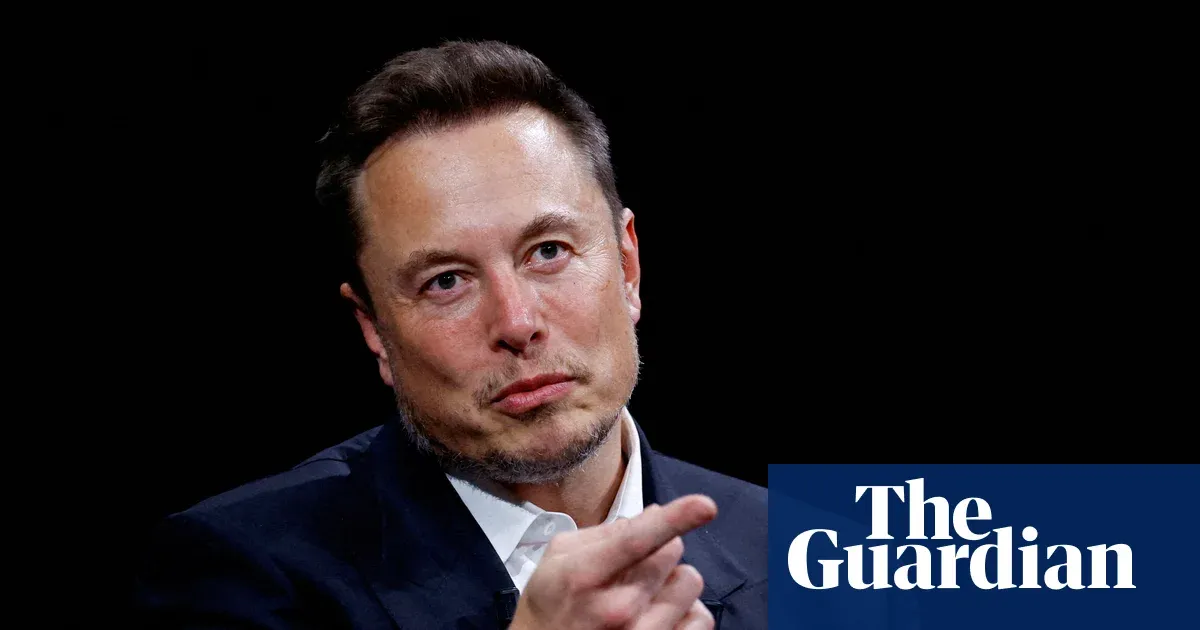
Elon Musk has reportedly invested approximately $1bn in Skydance, the media empire led by David Ellison, alongside fresh equity from existing investors including board member Laurene Powell Jobs. The infusion gives Skydance deep-pocketed backers at a moment when the $111bn Paramount-Warner Bros Discovery merger is reshaping the competitive landscape for every media company.
Elon Musk has reportedly invested approximately $1bn in Skydance, the media empire led by David Ellison, in a move first reported by Semafor. The investment lands alongside fresh equity infusions from existing investors, including board member Laurene Powell Jobs, the widow of Steve Jobs. For a company that just emerged from the largest consolidation wave in modern Hollywood, Musk's check is a loud signal that the tech world's most prominent billionaire sees media as a strategic battleground, not just a content business.
The $1bn figure is striking on its own, but the timing makes it more so. The investment comes after Paramount's $111bn merger with Warner Bros Discovery, a deal that redrew the studio map and left a smaller circle of giants fighting for streaming scale and library value. Skydance, which Ellison has built into a new media empire, now sits at the center of that reshaped landscape. Musk's capital adds firepower to a company that is already a major force in the reshaped entertainment economy.
For context, Ellison has spent years building Skydance into a serious player in Hollywood, and the reported investment arrives at a moment when the industry's economics are being rewritten. Streaming has upended the traditional studio model, pushing even the biggest names to chase scale through mergers and deep-pocketed backers. The $111bn Paramount-WBD combination is the clearest example yet: in the new media order, size is survival. Skydance, which started in film production and has since broadened its reach, now has more room to maneuver in a market where the largest players are spending billions on programming and technology.
The involvement of Laurene Powell Jobs is just as telling. As a board member and existing investor, she is choosing to double down at the same moment Musk enters. Powell Jobs, who has long been active as an investor and philanthropist, brings both capital and credibility. Her willingness to add fresh equity alongside Musk suggests the company's leadership sees a strategic window that requires immediate funding.
The source does not disclose the terms of Musk's investment or his intended role, and it would be speculation to guess at his strategy. What is clear is the direction of travel: the boundary between technology and entertainment is dissolving. Musk already commands one of the largest audiences on the internet through his social platform, and his companies span electric vehicles, spaceflight, and artificial intelligence. A stake in a media empire gives him a direct line into the cultural conversation at a time when content is becoming a moat for the biggest platforms. For a figure who has built his public persona on commanding attention, a stake in the story itself is a logical extension.
For executives and boards across media and tech, the message is straightforward. When the most prominent tech billionaire in the world writes a $1bn check to a Hollywood studio, it is a signal that capital views media as a strategic asset class, not a legacy business. Rivals that have been waiting for consolidation to settle may need to rethink their own capital plans. The same logic that drew Musk to Skydance, scale, distribution, and cultural reach, applies to every major media company.
There is also a regulatory dimension worth watching. Media mergers of this scale typically draw antitrust scrutiny from authorities in Washington and Brussels, and the Paramount-WBD deal is the kind of combination that invites questions about concentration of ownership. Musk's involvement adds another layer: a tech billionaire whose companies operate in heavily regulated industries now has a financial stake in a media empire. That combination is likely to attract attention from policymakers who have grown wary of concentrated power in both industries.
The bottom line for decision-makers: the consolidation wave in media is not finished, and the next round of deals will be funded by the deepest pockets in technology. Skydance, with Musk and Powell Jobs on its cap table, now has the financial muscle and the star power to be a buyer, not a seller, in whatever comes next. For everyone else, the question is no longer whether tech money will reshape Hollywood. It already has.
This story's Key Insights and Take-aways are locked.
Create a free account to unlock Executive Actions for one credit.
Register to UnlockAlways free for Executives Club members. Join the Club
More in Business

A flaw in PHP just forced governments to pull their own sites offline
European agencies from Belgium to Germany took websites dark to patch a critical weakness in the language behind almost 70% of the web, and the blast radius extends far beyond government portals.

BioWare shuts down, Mass Effect 5 dead after $55B EA buyout
The legendary RPG studio's closure lands months after a $55 billion investment group buyout of EA, raising tough questions for gaming's biggest acquirers.
Musk barred from the room as Tesla, SpaceX boards weigh $3.5 trillion merger
The CEO of both companies is a 'conflicted party' watching independent directors negotiate a tie-up that would create a $3.5 trillion giant he would own about a third of.