

Elon Musk's SpaceX gets US military's restricted space tracking data
The quiet data transfer hands Musk's company an orbital tracking edge, raising national security and competition alarms.
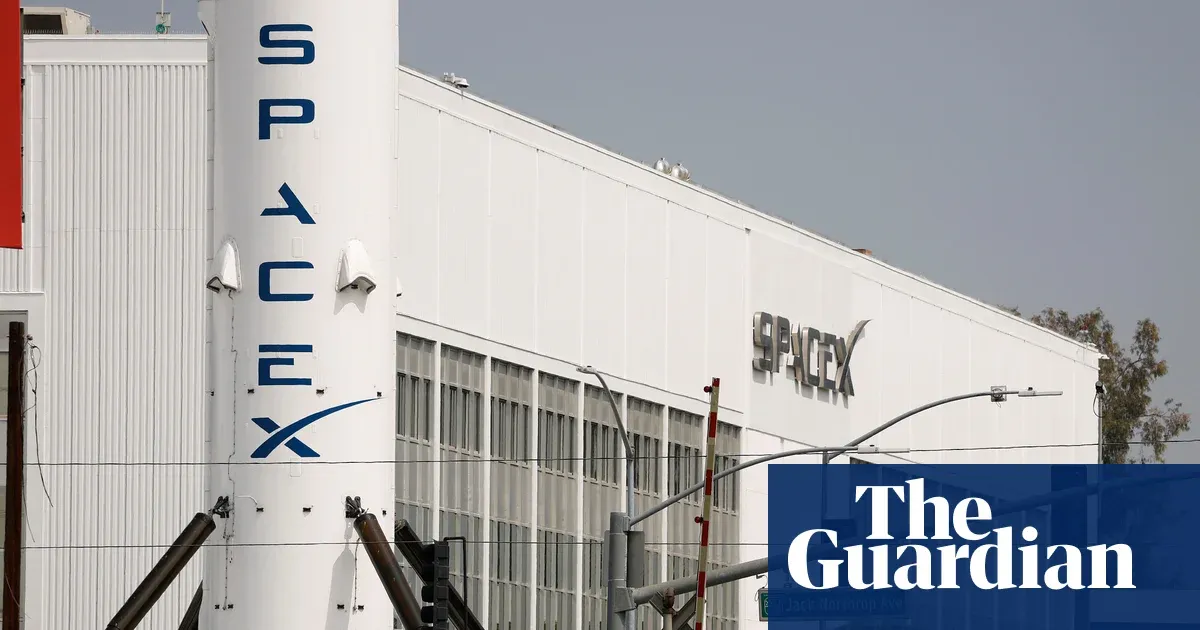
The US military has granted Elon Musk's SpaceX access to restricted space tracking data, giving the company an advantage in tracking objects in orbit. The move raises national security concerns and questions about the Trump administration's role in space traffic control.
The US military has quietly handed Elon Musk's SpaceX access to restricted space tracking data, according to The Guardian. The move gives the company a significant advantage in tracking objects in orbit, a capability that sits at the heart of the rapidly commercializing space economy. It also raises a fresh round of national security questions, with industry observers warning that the access could concentrate too much power in the hands of one company.
The decision comes amid growing scrutiny of the Trump administration's relationship with Musk, a controversial donor and one of the most powerful figures in the space industry. The Guardian reports that the access raises questions about whether the administration is attempting to hand over traffic control in Earth's orbit to Musk. For context, space traffic management has traditionally been a government function, with the US military tracking thousands of objects to prevent collisions and monitor threats. Giving a private company access to restricted data blurs the line between public safety and commercial advantage.
To understand why this matters, consider what the data actually enables. Space tracking data includes the positions, trajectories, and characteristics of satellites and debris in orbit. The military's restricted data is far more precise and comprehensive than what is publicly available. With this data, SpaceX can better protect its Starlink constellation, which already numbers thousands of satellites, from collisions. It can also offer superior tracking services to other satellite operators, potentially becoming the de facto traffic controller for low Earth orbit. That is a powerful commercial position, and one that competitors cannot easily replicate.
The national security concerns are equally significant. Space is now a contested domain, with the US Space Force responsible for protecting American assets in orbit. Handing restricted tracking data to a private company, especially one led by a figure as polarizing as Musk, raises questions about data security, insider threats, and conflicts of interest. Could the data be used to benefit SpaceX's bottom line at the expense of rivals? Could it leak or be exploited by foreign adversaries? Industry observers say the access introduces new vulnerabilities, even if the military has cleared it.
There is also a regulatory dimension. For years, policymakers have debated whether civil space traffic management should move from the Department of Defense to the Department of Commerce. The idea is to create a more transparent, commercial-friendly system. This move could preempt that debate by effectively giving SpaceX a privileged position. It also raises antitrust questions: if SpaceX controls both the largest satellite constellation and the best tracking data, it could squeeze competitors like Amazon's Project Kuiper or OneWeb. Regulators may need to examine whether this access creates an unfair moat.
For executives across the space industry, the implications are immediate. If you are a satellite operator, you now face a competitor with superior data. If you are an investor, you should consider how this shifts the risk profile of space companies. If you are a defense contractor, you may wonder whether the military will increasingly favor companies with close ties to the administration. The move also sends a signal to international partners and adversaries: the United States is willing to integrate commercial players into its space security architecture, but the terms of that integration are opaque.
The broader lesson is about data as a strategic asset. In the 21st century, control of information is often more valuable than control of physical infrastructure. SpaceX already dominates launch and satellite internet; now it is positioned to dominate space situational awareness. That concentration of power is exactly what the access raises concerns about. The Guardian's report is short on details, but the implications are vast. For decision-makers, the takeaway is to watch how this unfolds, and to consider how similar data advantages could reshape other industries.
Ultimately, the quiet transfer of restricted tracking data is a loud signal about the future of space governance. It suggests that the lines between national security, commercial enterprise, and political influence are becoming increasingly blurred. For CEOs and boards, the lesson is to map your own dependencies on government data and relationships. A single administrative decision can reshape the competitive landscape overnight. Those who are not paying attention may find themselves on the wrong side of a data gap.
This story's Key Insights and Take-aways are locked.
Create a free account to unlock Executive Actions for one credit.
Register to UnlockAlways free for Executives Club members. Join the Club
More in Science

2026 Nikon Small World Winners Reveal the Hidden Machinery of Everyday Life
A mycologist's frozen Edinburgh garden became the backdrop for vivid views inside cells, a reminder of what advanced imaging now makes visible to researchers and the industries built on biology.

Study: 1 in 4 depression cases may be a body-clock problem, not a chemical one
A 10,000-person study finds standard antidepressants often fail these patients, but melatonin and morning sunlight may hit the real root cause.

Start-Up Says A.I. Designed a Virus to Attack One Patient's Superbug
If the claim holds up, personalized phage therapy could become a new frontline weapon against antibiotic resistance - but proof is far from final.