

Elon Musk unveils a flying car, and SpaceX helped build it
The Tesla CEO's showcase at a SpaceX facility signals a future where road and rocket engineering converge.

Tesla CEO Elon Musk showcased a flying car at a SpaceX-owned facility, with SpaceX contributing to its development. The move reframes Musk's mobility bets for investors and rivals tracking his next scale-up.
Tesla CEO Elon Musk showcased the vehicle at a facility owned by his SpaceX company, according to the BBC, which helped develop the model. That single fact, reported by a major news outlet, is the closest the world has come to seeing Musk turn a decade of science-fiction jokes into a tangible machine. The showcase was not a full press event, not a product launch, and not a spec sheet. But by staging it inside a SpaceX facility, Musk linked the project to his rocket company's engineering DNA, a deliberate signal that this is not a toy, but a serious aerospace-adjacent venture.
For decision-makers, the immediate takeaway is that Tesla's ambition is no longer limited to the road. The vehicle appears to be part of Musk's broader portfolio, but the exact path to production remains unknown. The BBC's report, which anchors this story, gives no timeline, no price, and no certified range. What it does establish is that the project has advanced far enough to be physically shown to cameras, and that SpaceX, a company valued for its ability to land rockets and build spacecraft, is lending technical muscle. That alone separates this effort from a concept sketch by a startup with no manufacturing capability.
The context matters because the history of so-called flying cars is littered with vaporware. For decades, inventors have promised a vehicle that merges aircraft and automobile, and for decades, regulators have struggled to classify the machine. Is it a car that flies, or a plane that drives? The answer determines everything from driver's licenses to air traffic control. Musk's decision to involve SpaceX, which already navigates the Federal Aviation Administration's launch licensing regime, suggests he is thinking about certification from day one. A vehicle built by a company that routinely works with federal aerospace regulators, rather than an auto plant, would be closer to a licensed aircraft than a certified car.
There is also a competitive dimension. Musk is not the only billionaire chasing vertical takeoff. Aviation incumbents and a wave of urban air mobility startups have spent billions on eVTOL, or electric vertical takeoff and landing, vehicles. Joby Aviation, Archer Aviation, and established players like Airbus and Boeing are all working on electric aircraft. But none of them, until now, had the combined brand power of Tesla and SpaceX attached to a visible prototype. If Musk commercializes even a limited version of this vehicle, he collapses the distance between two industries that have historically been separate. The automotive supply chain, battery tech, and charging infrastructure that Tesla has built over two decades could be repurposed for aerial vehicles, while SpaceX's composite materials and propulsion experience could accelerate the airframe design.
The regulatory obstacle, however, looms larger than any engineering challenge. Airspace is controlled; roads are not. A car can be driven with a standard license, but an aircraft requires pilot certification, maintenance protocols, and insurance frameworks that do not exist for mass-market consumers. The FAA and its global counterparts have spent years writing rules for drones and eVTOL aircraft, but those rules assume professional pilots and defined operating zones. A vehicle that a consumer might park in a driveway, then fly to another city, creates a regulatory nightmare. Musk, who has dealt with federal agencies on everything from autopilot probes to rocket launches, has not spoken publicly about this hurdle in the showcase, but his decision to involve SpaceX signals he is aware of the arc of aerospace compliance.
There is also the question of internal strategy. Tesla is currently navigating cooling demand for its core models, price cuts that have squeezed margins, and the promise of a next-generation vehicle platform. A flying car, even in prototype form, refocuses the narrative. It tells investors that Tesla is still a company that does impossible things, not simply a carmaker cutting stickers. It also gives Musk a new field to recruit top talent. Engineers who dream of space, not just software, now have a reason to answer Tesla's job postings. For competitors, the showcase is a warning: the cost-of-entry has just risen. Any automaker or aviation startup that wants to claim a realistic flying car now has to match a project backed by both Tesla's battery supply chain and SpaceX's launch-proven engineering culture.
What remains unknown is just as important as what was shown. The BBC's report does not describe how the vehicle flies, how it transitions from ground to air, or whether it is a piloted craft or an autonomous one. Musk has previously spoken about autonomy as Tesla's core mission, and a fully autonomous flying vehicle would be exponentially harder to certify than a human-piloted one. The showcase may have been a staged proof of existence, a way to establish an early claim before regulators write rules that would freeze out newcomers. If that is the play, the strategy is already working. The conversation has shifted from whether a Tesla flying car could exist to what it would mean for the future of mobility.
For boards and C-suites across tech and transportation, the strategic stakes are clear. The boundary between ground and air is dissolving. Companies that treated urban air mobility as a niche bet must now watch a trillion-dollar challenger pull two of its most valuable engineering organizations into the project. The question is no longer whether the technology can be built. It is whether the regulatory system can keep up, and whether Musk will prove once again that he is willing to absorb massive cost, delay, and uncertainty to own a category that doesn't yet exist. The showcase is the first public proof that he is at the table. Everything else is negotiation.
This story's Key Insights and Take-aways are locked.
Create a free account to unlock Executive Actions for one credit.
Register to UnlockAlways free for Executives Club members. Join the Club
More in Business

Apple's $2,000 iPhone Duo opens preorders, taking on Samsung and Google
Apple's first foldable hits the market at a premium price, reshaping a category Samsung and Google have led.

Pope Leo XIV, first American pope, diagnosed with lung cancer
The 71-year-old Chicago-born pontiff underwent successful surgery on his right lung, and his diagnosis raises new questions about his AI-focused papacy and the Vatican's future.
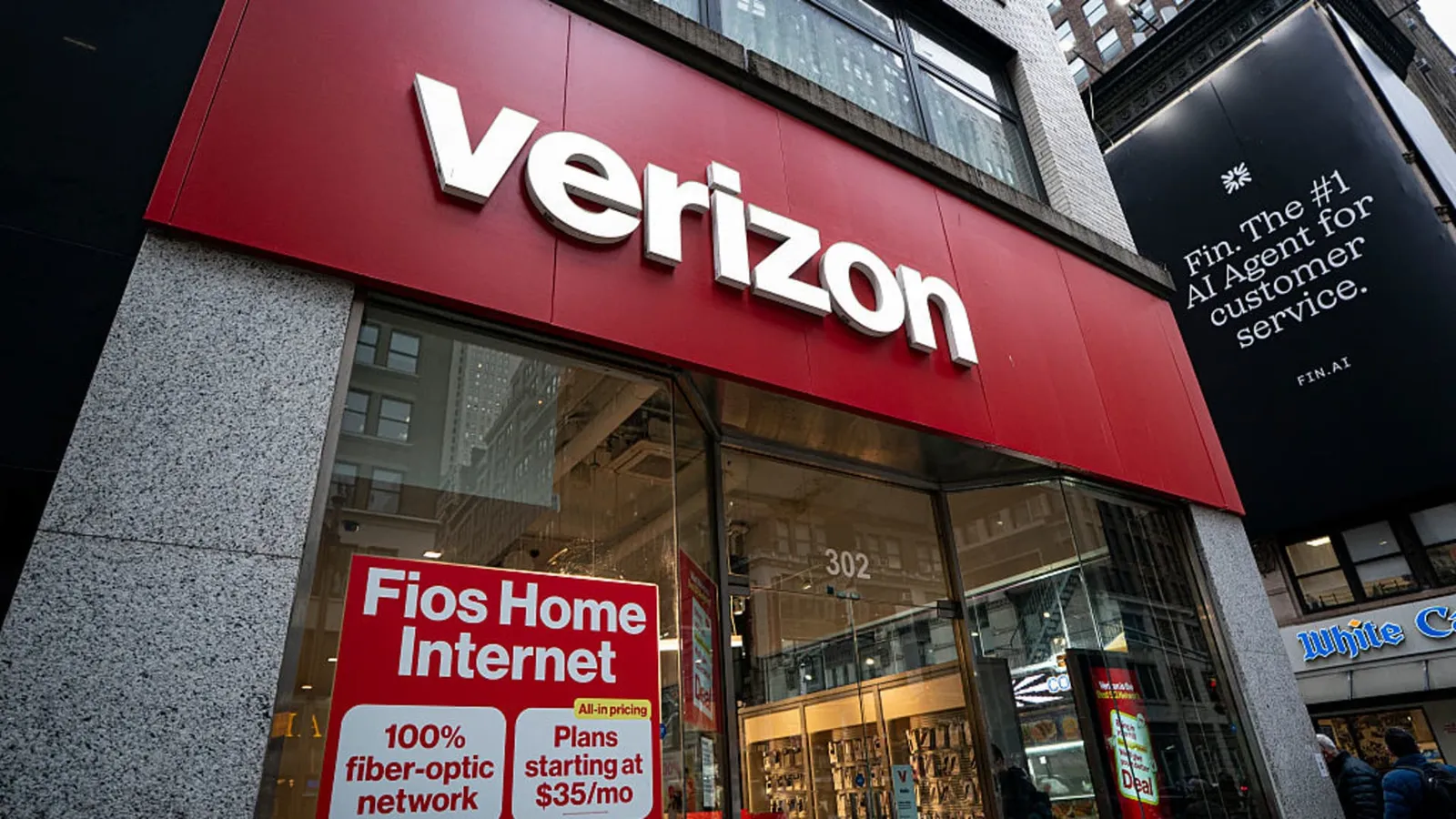
SpaceX spectrum deal sends Verizon to worst day since 2002
Starlink's push into mobile spectrum is spooking investors, and the sell-off shows how fast the telecom moat is eroding.