
Etihad Rail starts Abu Dhabi-Fujairah passenger trains on June 30, cutting trips to 1h45m
The UAE’s passenger rail rollout begins an intro phase in 2026, with full services targeted for 2027.
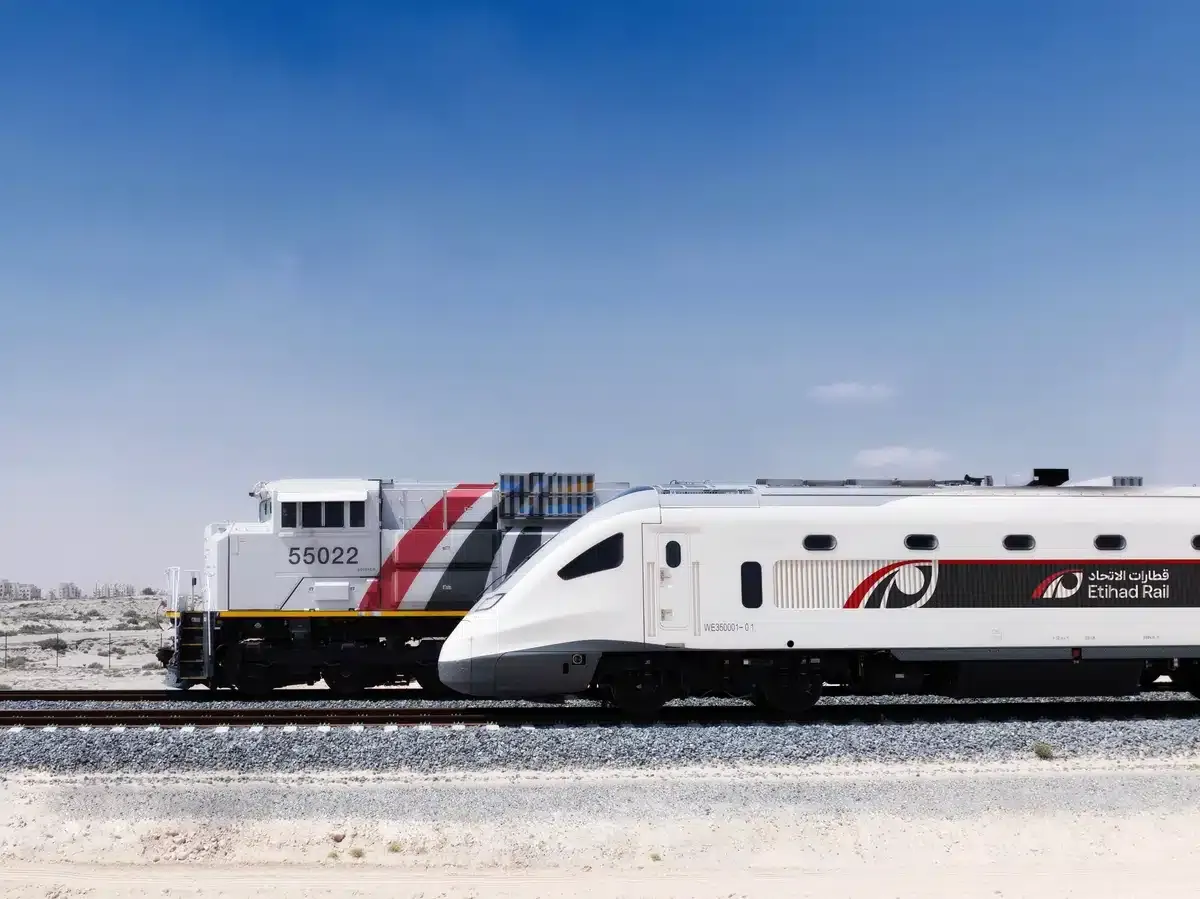
Etihad Rail says passenger rail services will begin with an introductory phase between Abu Dhabi and Fujairah on June 30, with trains taking 1 hour and 45 minutes. For decision-makers, it turns the UAE’s rail story from freight-only capability into a domestic travel platform aimed at reshaping mobility, tourism, and economic connectivity.
Etihad Rail has set a hard date for the UAE’s long-awaited passenger rail era: an introductory passenger service between Abu Dhabi and Fujairah will start on June 30. The operator says the journey time between the emirates will be cut to 1 hour and 45 minutes, immediately turning a headline promise into a schedule you can plan around.
This milestone matters because Etihad Rail is not just dabbling in commuter convenience. It is building toward passenger services being fully operational in 2027, which means the project is moving from “announced transformation” into an actual operating business that can change how residents and visitors move across the country. That shift from intention to implementation is the real event here, and it lands in a UAE market where transport choices influence everything downstream: retail footfall, hotel demand, time-to-meet for business, and the pace of tourism circulation.
To understand why June 30 and 2027 are the numbers to watch, it helps to zoom out on what Etihad Rail already has. The company’s freight operations are already transporting goods across the country. Freight rail is typically the harder proof to gain early because it requires logistics partnerships, track and signaling reliability, and operational discipline under real commercial load. Now Etihad Rail is using that installed capability as the runway for passenger service, where expectations are different. People care about schedules, comfort, security, and the “human” experience, not just whether cargo arrives. The project description leans into that passenger experience, including onboard work, reading, or relaxation spaces.
The planned network is meant to go beyond Abu Dhabi and Fujairah once it scales. Etihad Rail says the passenger railway will connect major cities and communities throughout the UAE, complementing the country’s existing transport infrastructure. It also expects to link 11 cities and regions across the UAE. The network’s trains are described as capable of reaching speeds of up to 200 km/h, which is the kind of performance specification that typically changes travel behavior because it compresses time. When domestic travel gets meaningfully faster, you do not just reduce commute pain. You re-price what is feasible, like short-notice trips for business meetings, weekend tourism patterns, or more distributed workforce mobility.
There is also a staging logic embedded in this announcement. Etihad Rail’s introductory operational phase beginning on 30 June 2026 connects Abu Dhabi and Fujairah in 1 hour and 45 minutes. That phased rollout matters for regulators and operators because passenger services bring a more complex risk profile than freight, from crowding and boarding to safety, security, and customer communications. The project’s stated timeline suggests an operational ramp that can validate passenger service readiness before full operational status in 2027. In other words, June 30 is not just a date, it is the first checkpoint on a journey toward full network delivery.
The announcement also points to visible political and institutional momentum. Khaled bin Mohamed bin Zayed inaugurated the MBZ City Passenger Train Station in Abu Dhabi and witnessed the unveiling of the UAE passenger rail network. That matters because large infrastructure rollouts in the UAE operate like national alignment exercises. When senior figures show up for station openings and network unveilings, it usually signals sustained attention, not a side quest. It is also a reminder that rail here is tied to broader “transform transportation and connectivity” objectives, including economic growth, tourism, and sustainable mobility.
Etihad Rail’s passenger offering description goes deep on amenities, which is a useful clue about what the operator thinks passengers will value first. The trains will have infotainment systems, charging stations, food and beverages, comfortable seating, and lots of legroom, plus an advanced air-conditioning system. The service is also described as having high levels of security and efficiency. This is the practical layer that can make or break adoption. In many transit projects, the technology and track performance are necessary but not sufficient. If the onboard experience does not feel premium and dependable, riders default back to cars, taxis, or flights where time certainty is higher.
For executives and boards tracking this sector, the second-order implications are straightforward even if the details are still unfolding. Passenger rail that is fully operational in 2027 can reshape domestic travel patterns, potentially increasing demand for hotels, dining, and retail near the stations it serves, including key destinations across the UAE such as Abu Dhabi, Dubai, Sharjah, Fujairah, and other connected areas. If you are in travel, logistics, commercial real estate, or infrastructure financing, this is a reminder that mobility projects are not just capital expenditures. They are demand generators with timing risk. Etihad Rail is effectively telling the market: plan for a new domestic travel rhythm starting June, and scale it nationwide by 2027.
This story's Key Insights and Take-aways are locked.
Create a free account to unlock Executive Actions for one credit.
Register to UnlockAlways free for Executives Club members. Join the Club
More in Business

SpaceX sells $25B in debt under two weeks after IPO, despite $90B in orders
The satellite and rocket company’s quick $25 billion borrowing move signals how it plans to finance scale after going public.

Accenture’s $4.18bn play fails as AI fears spark a 20% worst-ever stock plunge
On Thursday, Accenture hit its biggest one-day drop on record after forecasting worries that AI could hollow out consulting.

SpaceX stock jumps 3% after it overtakes Amazon’s market cap
CNBC says SpaceX’s shares surge following its IPO Friday, forcing investors to reprice what “space” and “AI” are worth.