
EU defense still leans on the US for Patriot, Tomahawk, F-35, and Starlink
DW breaks down EU efforts to build US-style counterparts and why the obstacles are still harder than governments admit.
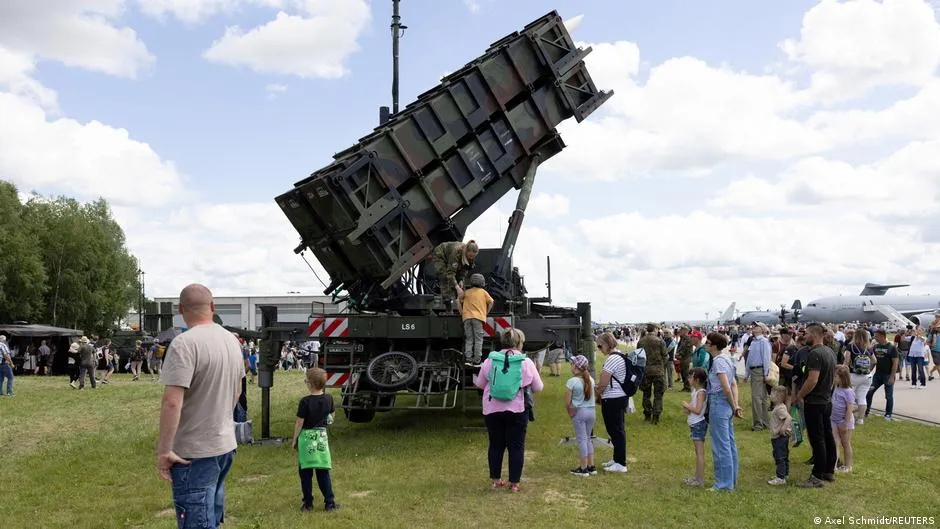
DW examines how EU governments are trying to reduce dependence on the United States by developing counterparts to Patriot and Tomahawk missiles, F-35 jets, and Starlink internet. The effort matters because decision-makers are racing to build capability and resilience while the US remains the default supplier.
EU governments say they want to cut their dependence on the United States for core defense and communications capability. But Deutsche Welle frames a blunt reality: EU defense is still heavily reliant on the US, including for the systems people associate with American power projection, air dominance, and networked operations.
DW highlights the exact areas where that reliance shows up. EU governments are attempting to develop counterparts to Patriot and Tomahawk missiles, F-35 jets, and Starlink internet. In other words, the “make our own” agenda is not about abstract strategy papers. It is about building replacements for specific US platforms and services that shape how militaries plan, fight, and stay connected.
This is the part that tends to get understated in political speeches: creating US equivalents is not just an engineering problem. It is a coordination, procurement, and industrial-base problem at EU scale. Multiple governments, different national priorities, and separate defense industries have to align on what to build, who pays, who owns what, and how the systems interoperate. Even when there is political will, timelines collide with budget cycles and platform development cycles. For executives and boards, this is a governance test, not a slideshow.
There is also the regulatory and standards layer that comes with systems like missiles, aircraft, and satellite connectivity. Patriot-style air and missile defense and Tomahawk-style strike capabilities do not live in a vacuum. They require sensors, command-and-control, training pipelines, logistics, and rules for integration with broader defense architectures. F-35 programs reflect that reality too, because aircraft capability is inseparable from maintenance ecosystems, software updates, and the way missions are planned. And Starlink-like connectivity is even less “just hardware,” because network performance, coverage, and service models depend on both infrastructure and operational requirements.
DW’s framing matters because it connects the dots between political ambition and operational dependency. European governments are not starting from scratch in the abstract, but from a lived pattern: the US is already the reference point for capability. When that is the baseline, any transition requires hard choices. Do you build a parallel system even if it lags, or upgrade what you already have while waiting for domestically developed alternatives? Do you commit early to shared programs or let national buying habits fragment the market?
The second-order issue is industrial capability and economies of scale. Defense programs can be expensive, and learning curves matter. If procurement is split across countries without sufficient volume, unit costs rise and timelines slip. That can create a feedback loop where the very attempt to reduce dependence keeps the EU tethered to US offerings, because the domestic alternatives are not yet at operational readiness. In business terms, it is like trying to replace a proven supplier while your internal manufacturing line is still qualifying. Every delay increases the pressure to keep the old arrangement running.
For decision-makers, there is also a strategic risk in the dependence itself. Heavy reliance on US-made systems means Europe inherits not only performance, but also the constraints of US production capacity, policy priorities, and broader geopolitical scheduling. The obstacle DW points to is therefore not merely “difficulty building capabilities.” It is the possibility that Europe’s transition could be slower than the threat environment or operational needs.
So what does this mean for peers in similar roles? It means the “reduce dependence” agenda should be treated like a portfolio of interlocking bets: missile defense, strike systems, fighter aviation, and resilient communications. Each part has its own procurement and integration challenges, but the combined effect determines whether EU militaries can operate independently or remain dependent on US systems as the default backbone. DW’s bottom line is straightforward and consequential: EU attempts to develop counterparts are underway, but obstacles remain, and US reliance is still the starting point.
This story's Key Insights and Take-aways are locked.
Create a free account to unlock Executive Actions for one credit.
Register to UnlockAlways free for Executives Club members. Join the Club
More in Politics

Glacial collapse, not rain, killed 180 in Nepal's Himalayan flood
The Himalaya's extreme geography hid the true cause of Nepal's catastrophic flood, a glacial collapse that turned a geological battleground into a mass-casualty zone.

Iran’s Esmail Baghaei says Oman talks start shipping via Hormuz, not US talks yet
Temporary route plans with Oman aim to restart commerce while Tehran says Washington dialogue is not on the table.

Standards watchdog opens probe into Reform UK deputy leader Richard Tice over interests
The parliamentary standards commissioner says it began an investigation on 28 July into a possible undeclared interest.