
Europe’s AC rush is colliding with net-zero rules, and the political fight is warming up fast
From 40C heat waves to France and the UK trading vows, demand is rising and regulators are under pressure.
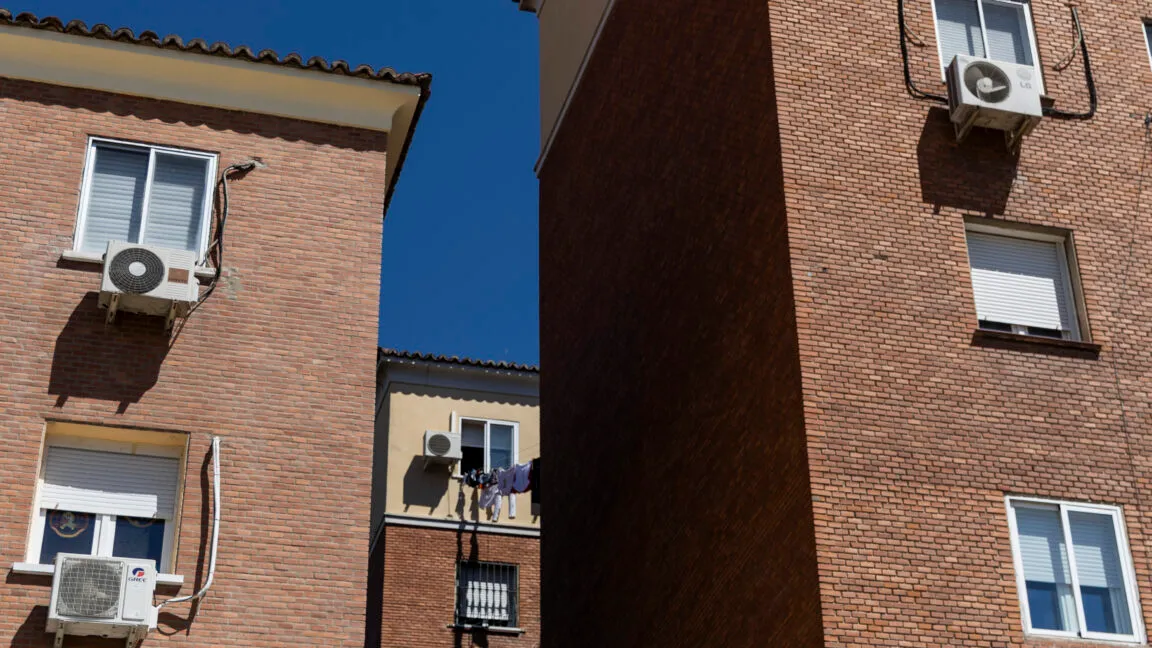
Across Europe, retailers saw shoppers break down the door for portable fans and air conditioners as temperatures rose above 40C at the end of June. With only about 20 percent of Europeans having AC at home (4 percent in the UK) and the IEA predicting two-thirds of households could own an AC by 2050, the culture-war battle over net-zero rules is set to shape markets and grid planning.
Europe is entering an AC reality check, and it started with a very unglamorous image: at the end of June, as temperatures climbed well above 40° Celsius across Europe, shoppers in France forced their way into stores to grab portable fans and ACs before they sold out. That is not just a comfort story. It is a market signal. When cooling is scarce, people do not wait for a perfect policy environment.
This is why the air-conditioning debate in Europe has shifted from personal preference to national strategy. The International Energy Agency (IEA) predicts two-thirds of households could own an AC by 2050, meaning today’s sales panic is a preview of long-term, continent-wide demand. Yet the regulatory and political system is still debating whether that demand should be steered, slowed, or enabled. Politicians are already turning AC into a weapon in broader culture wars, with Marine Le Pen pledging to roll out air-conditioning across France if her party comes to power, while the British Conservatives vowed to overturn net-zero rules that restrict AC installation in new builds. On the left, the argument goes the other way: AC would mainly benefit the rich, it would lock Europe into a high-energy cooling spiral like the US and Asia, and it would deepen inequality while increasing energy strain.
To understand why this is becoming existential for decision-makers, you have to start with adoption gaps. To date, only around 20 percent of Europeans have AC at home, and just 4 percent in the UK. Compare that with roughly 90 percent in the US, where electricity is considerably cheaper. Translation: Europe is not simply behind. It is operating with different baseline economics, different energy costs, and different housing and retrofit realities. But when heat waves push daily life into emergency mode, the comfort conversation becomes a productivity and health conversation fast.
That framing matters because the source is explicit about what AC is doing beyond “feeling nice.” It helps adults stay productive during extreme heat. It helps children concentrate in poorly ventilated schools. It helps people sleep when the air stays stiflingly warm long after sunset. And it can save lives. One research group estimated that air-conditioning prevented nearly 200,000 premature deaths among people over 65 in 2019 alone. Those are not theoretical benefits, and they are difficult for any political faction to dismiss without looking callous to the public.
Still, there is a second-order problem governments cannot ignore: energy and emissions. Even if the immediate priority is avoiding heat-related harm, a massive buildout of cooling can create a feedback loop of higher electricity demand, grid strain, and emissions depending on how power is generated. That is the core of the left-leaning critique mentioned in the source, that AC would lock Europe into the same high-energy cooling spiral seen in the US and Asia. The right-leaning critique is basically the inverse: net-zero rules that restrict AC installation in new builds are portrayed as blocking basic protection during extreme heat.
This is where the market gets tricky for executives. European demand is rising worldwide, but Europe’s household penetration is currently low. That combination is a recipe for policy whiplash: if rules tighten or loosen suddenly, the timing and volume of installs can swing, shifting revenue between retrofit players, new-build HVAC suppliers, and grid-adjacent infrastructure. On top of that, consumers are already behaving like supply will run out. The France store scenes are a reminder that in a heat wave, normal purchasing calendars disappear. Businesses that rely on predictable lead times will feel it first, and boards will be asked why strategy did not anticipate the speed of adoption under extreme weather.
If you are a CEO, CFO, or board member in energy, HVAC, building tech, or even facilities management, the bigger stake is that AC policy is turning into a proxy for everything: affordability, equity, emissions, and national competitiveness during climate stress. Marine Le Pen’s pledge to roll out air-conditioning across France if her party comes to power is not a technical footnote, and the British Conservatives’ vow to overturn net-zero rules is not just a regulatory tweak. Together, they signal that the rules governing where and when cooling can be installed may change under political pressure. Meanwhile, the left’s concerns about who benefits and how much energy is consumed provide an enduring counterweight, meaning the final compromise, if there is one, will likely be contested.
So yes, an “AC revolution” could be coming to Europe, but it will not arrive as a single technology breakthrough alone. It will arrive as a collision: intense heat driving demand, adoption gaps creating pent-up willingness to install, and culture-war politics deciding what regulations allow. For executives, the strategic question is not whether Europe will need cooling. It is how quickly the continent will scale it, who pays, and what energy system it is built on.
This story's Key Insights and Take-aways are locked.
Create a free account to unlock Executive Actions for one credit.
Register to UnlockAlways free for Executives Club members. Join the Club
More in Science

2026 Nikon Small World Winners Reveal the Hidden Machinery of Everyday Life
A mycologist's frozen Edinburgh garden became the backdrop for vivid views inside cells, a reminder of what advanced imaging now makes visible to researchers and the industries built on biology.

Study: 1 in 4 depression cases may be a body-clock problem, not a chemical one
A 10,000-person study finds standard antidepressants often fail these patients, but melatonin and morning sunlight may hit the real root cause.

Start-Up Says A.I. Designed a Virus to Attack One Patient's Superbug
If the claim holds up, personalized phage therapy could become a new frontline weapon against antibiotic resistance - but proof is far from final.