
“Evil Dead Burn” knocks “Army of Darkness” back into essential viewing
A new nod to Sam Raimi’s 1993 cult classic is making the boomstick era feel newly urgent again.
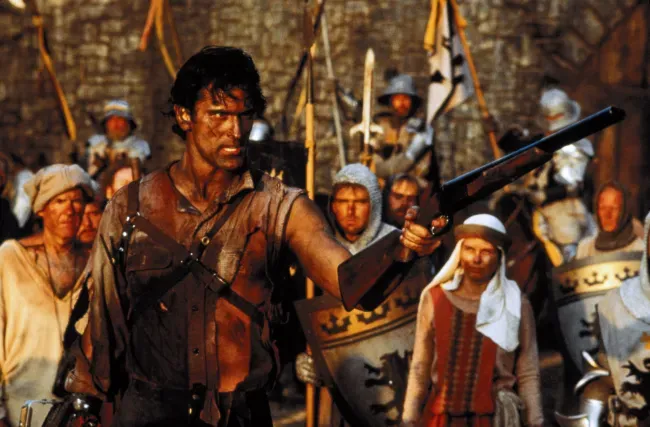
IndieWire points to “Evil Dead Burn” as the reason Sam Raimi’s slapstick, boomstick fantasy adventure “Army of Darkness” (1993) is getting essential attention again. For decision-makers in media and IP, it signals how quickly rediscovery campaigns can reframe what audiences treat as must-watch.
There is never a better time to revisit “Army of Darkness.” That is the blunt point IndieWire makes, and it is exactly the kind of claim that usually comes with a catch. In this case, the “catch” is that the movie is already 1993, already cult, already part of the cultural background radiation for people who like their fantasy with a punchline and a chainsaw. Yet “Evil Dead Burn” is just enough of a new spark to pull Sam Raimi’s profoundly silly, slapstick-heavy fantasy adventure back into the “essential viewing” conversation.
Why does that matter? Because “essential viewing” is not just a compliment. It is the modern currency of attention for catalogs, IP, and anything that lives beyond its release window. IndieWire frames “Evil Dead Burn” as the trigger that makes reconsideration feel timely again for “Army of Darkness.” The date is part of the logic here. When a 1993 film is re-entering the spotlight decades later, something is clearly changing in how audiences discover, rank, and share older titles, even when the story itself did not change.
Let’s decode what “revisit” really means in 2026 terms. Movie discovery no longer depends solely on theatrical releases, studio marketing cycles, or even one-time streaming bumps. Instead, it is driven by recommendation loops that can turn a niche title into a widely traded reference point. When a newer entry in the “Evil Dead” orbit, or a piece of content marketed around that universe, surfaces, it effectively gives existing fans and new viewers a reason to “go back.” That is the real second-order mechanism: not a resurrection of the original work, but a shift in audience behavior triggered by present-tense messaging.
For executives and operators, this is the kind of moment that tests how well a company understands its back-catalog as an asset. A 1993 cult fantasy adventure is not a “current quarter” product in the normal sense. But it can become a current conversation item, and conversations drive watchlists, re-uploads, re-mentions, and sales or licensing attention across platforms. “Army of Darkness” being called “essential viewing again” is basically IndieWire describing that behavioral loop happening in public. New context creates renewed retrieval.
There is also an incentive layer underneath the sentiment. Media companies do not just want viewers to like something. They want viewers to connect. When a franchise reference gives audiences a doorway to an older installment, it raises the odds that viewers will spend time in the IP ecosystem, not just pass through it. That is how “revisit” turns into compounding engagement. Even if “Evil Dead Burn” is what pulls people in, the older title benefits by being easier to justify. If you are browsing and someone frames “Army of Darkness” as essential, the decision becomes less about taste and more about social proof.
From a governance and regulatory angle, there is no direct claim in the IndieWire source about censorship, ratings changes, or enforcement actions tied to “Evil Dead Burn.” Still, this kind of resurfacing is worth noting for decision-makers because it intersects with how content is categorized, marketed, and distributed. Older films with cult followings can reappear in ways that attract broader audiences, and broader audiences can trigger broader scrutiny around what is being promoted and to whom. That does not mean anything improper is happening in this specific case. It simply means that when a classic comes back into wider view, standard rating, distribution, and advertising compliance processes stop being “set and forget” and start being “check every channel.” The audience mix can shift overnight when discovery changes.
Board-level implications? They are subtle, but they are real. A director, writer, or star is one lever. Back-catalog IP is another. In cycles where decision-makers obsess over what is new, a signal that older titles can become “essential” again is a reminder that relevance is not purely technological. It is also narrative framing. IndieWire’s framing suggests that “Evil Dead Burn” is doing a job that marketing teams often chase: making a past title feel like part of the present moment. If your organization owns or manages a library, this is a call to treat catalog discovery as a strategic system, not a passive warehouse.
And for peers in similar roles, the strategic stake is simple. You can either wait for relevance to return on its own, or you can build mechanisms that reintroduce older work when culture gives you an opening. IndieWire is telling us that for “Army of Darkness,” this opening exists right now, thanks to “Evil Dead Burn.” The movie is already there. The attention is what moved.
This story's Key Insights and Take-aways are locked.
Create a free account to unlock Executive Actions for one credit.
Register to UnlockAlways free for Executives Club members. Join the Club
More in Entertainment

12TB Steam 'teraleak' goes beyond Valve: GTA 3, Mafia 2 prototypes exposed
A 12-terabyte dump of Steam data reveals prototypes and builds of third-party classics like GTA 3 and Mafia 2, plus unreleased Valve content, rewriting game history.

LinkedIn's romance problem: 1 in 4 workers say dating on it is fair game
A new survey shows a quarter of U.S. employees treat the professional network as fair game for romance, even as LinkedIn bans it and removes hundreds of thousands of offending posts.

Enhypen's first No. 1 album breaks K-pop's Billboard 200 streak
The K-pop group's 98,000-unit debut tops the chart while Dolly Parton's catalog reentry shows how death reshapes streaming.