
Evolutionary anthropologist David Samson unpacks why humans sleep less than apes
The science points to what may have helped our ancestors, and what it could mean for modern rest and health.
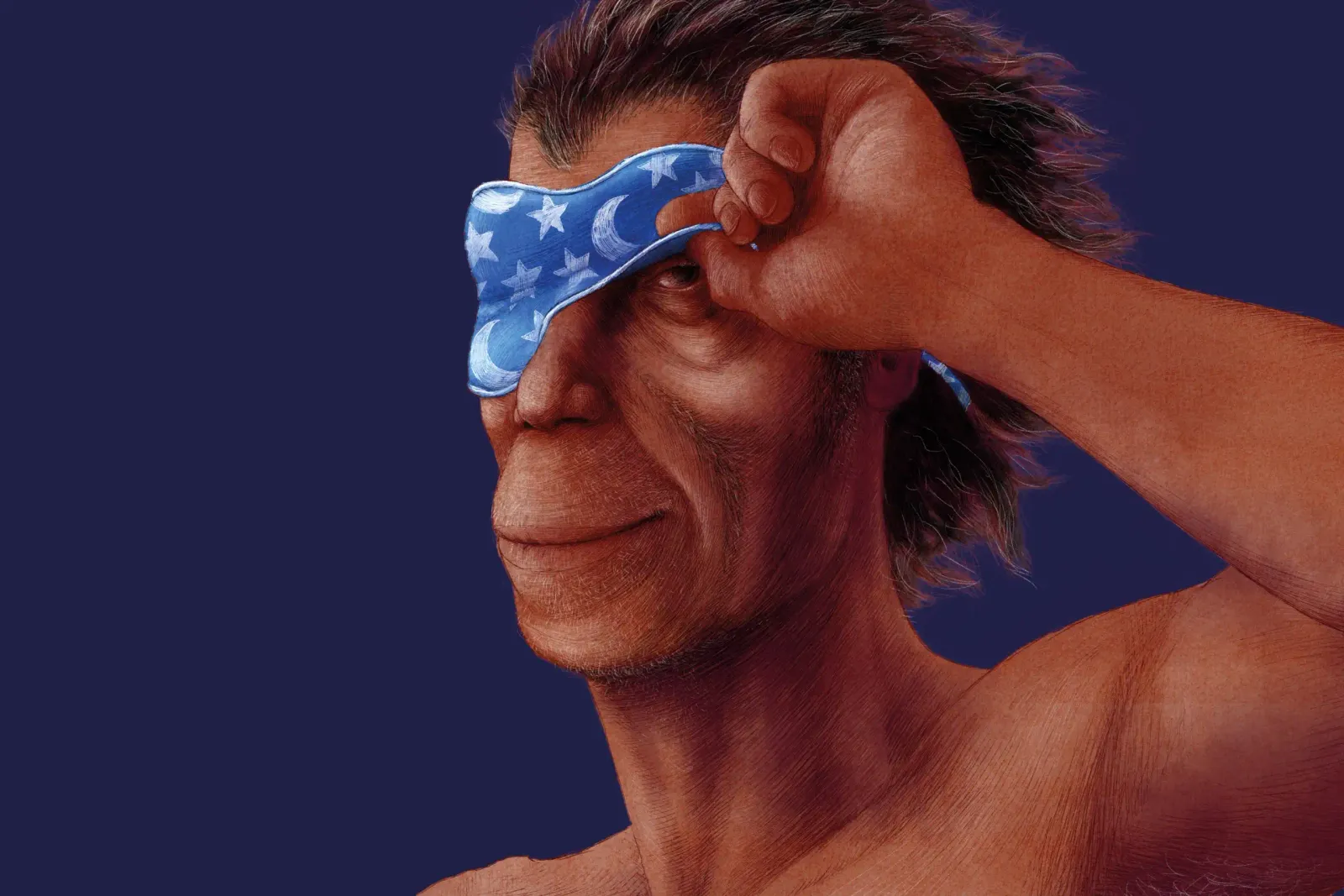
Evolutionary anthropologist David Samson explored humans sleep patterns in the ancient past to explain why we sleep less than other apes. His work highlights surprising ways this trait may have supported human success, with implications for how decision-makers think about health and performance.
Sleep is essential, and most of us feel it in our bodies before we can even explain it. Yet across evolution, humans stand out: we need so little sleep compared with other apes that it looks like a biological outlier. New Scientist points to the central question in plain terms: how did we evolve to function with less, and could that have been part of the reason humans pulled ahead?
To answer that, evolutionary anthropologist David Samson delved into our ancient past, using the logic of evolutionary explanation rather than modern self-experimentation. The key finding is not that sleep does not matter. It is that humans may have developed ways to get better outcomes from less sleep, rather than simply cutting sleep as an incidental feature. That distinction matters, because it reframes “low sleep” from a problem to a potential survival advantage that got selected over time.
This is where context helps executives and operators, not just scientists. In most organizations, the sleep conversation today is stuck in the shallow end: “people should sleep more” versus “we have deadlines.” But evolutionary tradeoffs do not work like that. If humans truly evolved to need so little of it, then sleep becomes a resource management problem: how did the human system preserve enough recovery, learning, and brain maintenance to keep individuals effective, while still freeing time for other high-stakes behaviors?
For context, evolutionary anthropologists generally approach questions like this by comparing patterns across related species and asking what environments could favor certain traits. Humans have lived in cognitively demanding settings where attention, coordination, and learning are life-or-death capabilities. If sleep demand went down in the lineage, there would likely be a compensating mechanism, such as changes in sleep structure, timing, or how quickly the body recovers. The surprising part, as Samson’s investigation suggests, is that “less” does not have to mean “worse.” It can mean “different,” with the goal of maximizing the returns on a limited biological window.
There is also a practical governance angle. Boards and leadership teams often treat human health initiatives as either employee perks or compliance tasks. But an evolutionary lens argues that sleep is not just a modern lifestyle issue. It is a deeply embedded constraint and capability. That can influence how companies design work systems, shift schedules, and wellness policies, especially in roles where fatigue risk is material. If the human lineage already normalized unusually low sleep needs relative to other apes, then the organizational question becomes: are we aligning with how human biology actually works, or constantly fighting it?
Regulatory framing can matter here too, even if this particular story is about evolution rather than policy. Safety and health standards increasingly recognize fatigue as a risk factor in transportation, healthcare, and industrial work. When regulators or insurers evaluate fatigue, they care about measurable outcomes like errors, near misses, and safety incidents. An evolution-based explanation can indirectly shape the conversation by turning fatigue from a purely behavioral failure into a performance and risk management design variable. Leaders who understand that sleep needs can vary by biology and history might push harder for systems that reduce chronic sleep debt, rather than relying on individual “grit.”
Second-order implications show up in talent strategy. Humans evolved with a sleep profile that is atypical among apes, which suggests the human brain and body can function under lower sleep assumptions than many species. Still, organizations today operate under modern light exposure, stimulation, and schedule constraints that evolution never engineered for. That tension is where leaders should pay attention: biology may provide an unusual baseline capability, but modern conditions can still overwhelm it. In other words, Samson’s work helps explain why the human system might tolerate less sleep than you would expect, while the real-world challenge remains the same: consistently protected recovery.
For other decision-makers, the strategic stake is simple. If humans sleep less than other apes, the common workplace “fix” of longer hours may not just be exhausting, it may be misaligned with the evolved operating range of the human body. Samson’s investigation into our ancient past is a reminder that performance is not just willpower and training. It is also biology, and biology is sometimes the oldest competitive advantage we have.
This story's Key Insights and Take-aways are locked.
Create a free account to unlock Executive Actions for one credit.
Register to UnlockAlways free for Executives Club members. Join the Club
More in Science
2026 Nikon Small World Winners Reveal the Hidden Machinery of Everyday Life
A mycologist's frozen Edinburgh garden became the backdrop for vivid views inside cells, a reminder of what advanced imaging now makes visible to researchers and the industries built on biology.
Study: 1 in 4 depression cases may be a body-clock problem, not a chemical one
A 10,000-person study finds standard antidepressants often fail these patients, but melatonin and morning sunlight may hit the real root cause.

Start-Up Says A.I. Designed a Virus to Attack One Patient's Superbug
If the claim holds up, personalized phage therapy could become a new frontline weapon against antibiotic resistance - but proof is far from final.