
FBI builds replica Alabama small town to stage realistic cyberattacks in-house
Inside a concealed facility, the Bureau created a full training environment to pressure-test defenses like the real world does.
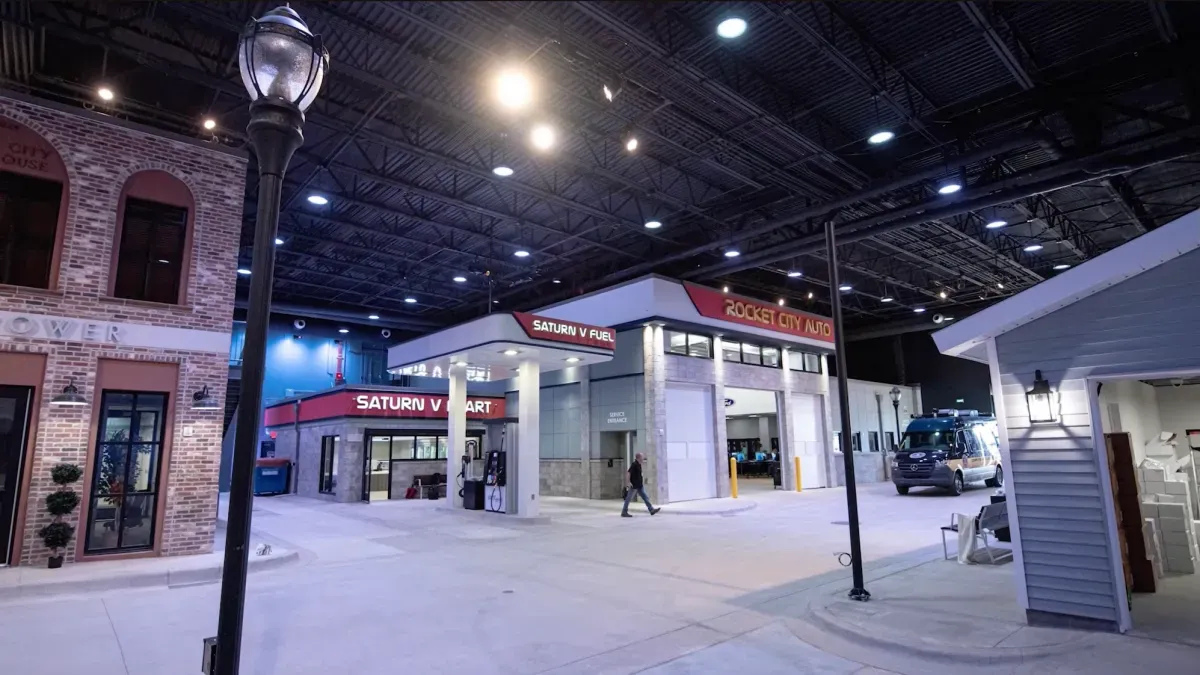
The FBI built a replica small town inside a building in Alabama as a dedicated cyber training ground for simulating cyberattacks. For decision-makers, it signals how seriously regulators are treating hands-on realism in cyber readiness and response.
Hidden inside a building in Alabama, the FBI has created its own replica small town. Not as a gimmick, not as a marketing stunt. As a dedicated cyber training ground for simulating real-world cyberattacks.
That single detail matters because it answers a question most companies never get to test under pressure: what does “realistic” mean when attackers can probe, escalate, and pivot across a complex environment? By constructing a whole small-town setting, the FBI is effectively trying to reproduce the messy conditions that show up in actual incidents, where victims are not one isolated system but a web of interconnected services, people, and processes.
To understand why this is interesting to executives, zoom out to how cyber risk training usually works. Organizations commonly rely on tabletop exercises, which are useful for coordination but limited in how they reveal technical failure modes. They also run simulations that may be constrained by time, scope, or the difficulty of capturing the full operational context. In contrast, a small town environment suggests a more immersive approach, where “attack” is not just a single event. It is a sequence that forces responders to navigate systems under strain and make decisions while conditions shift.
The FBI creating its own replica environment also hints at how cyber readiness is becoming more operational, not just policy-based. Over the last few years, regulators have increasingly emphasized the gap between documented plans and demonstrated capability. The reason is straightforward: cyber incidents rarely follow the script. If a plan assumes one kind of access, one type of interruption, or one clean failure boundary, attackers exploit exactly the places where reality differs from the paperwork. A replica small town is one way to narrow that gap by letting training reflect the same messy reality defenders will face.
There is also an incentive angle here for decision-makers across industries. When a regulator invests in realism, it changes what “good” looks like for everyone else in the ecosystem. Even if the FBI is building this specifically for its own training, the broader signal is that hands-on, scenario-driven practice is becoming a baseline expectation. That can influence how boards oversee cyber budgets, how audit and compliance teams measure preparedness, and how executives judge vendor claims about incident response.
Second-order, this kind of effort tends to ripple outward. First, it reinforces that cyber defense is not only about preventing intrusion. It is about detecting, containing, and responding in conditions that mimic operational life. Second, it can increase the perceived importance of cross-system visibility and coordination, because a town-like environment naturally encourages complexity. Third, it raises the stakes for organizations that outsource too much of their cyber capability or treat exercises as one-off checkboxes, since the benchmark for “real-world” can drift upward as more sophisticated training methods appear.
From a strategic standpoint, executives should treat this as a useful reference point for what regulators are prioritizing when they build capability internally. The source tells us the FBI created a replica small town in Alabama specifically to simulate real-world cyberattacks. That implies the Bureau believes that simulation must be more than abstract. It has to feel like the real thing, because the moment of truth is not when a team reads an incident plan. It is when the incident is already unfolding and time is compressing.
For peers in similar roles, the takeaway is clear: cyber readiness has to be testable in environments that resemble the complexity of actual operations. If the FBI is going to extraordinary lengths to create a dedicated setting for realism, boards and leadership teams should assume the bar will continue to rise, and that credibility will be measured by demonstrated readiness, not just intent.
This story's Key Insights and Take-aways are locked.
Create a free account to unlock Executive Actions for one credit.
Register to UnlockAlways free for Executives Club members. Join the Club
More in Technology

Nvidia's $89B data center quarter: the 9 companies cashing in
The AI buildout is minting fortunes beyond GPUs, and memory, cloud, and cooling suppliers are riding the same wave.

A YouTuber dissected the iPhone Duo and thinks he found crackgate's cause
CuriousHagi's teardown of Apple's foldable reveals a gear-like hinge that may explain why screens crack in the same spot within hours.

Google quietly links your phone number to every Android account on your SIM
Adding a SIM now ties your phone number to all Google accounts - and future accounts inherit it. Here's the security and privacy stakes.