
FCC petition calls SpaceX and Blue Origin’s orbital datacenters “catastrophic” for Earth
A new US petition asks regulators to scrutinize pollution risks from proposed orbital datacenters requiring FCC approval.
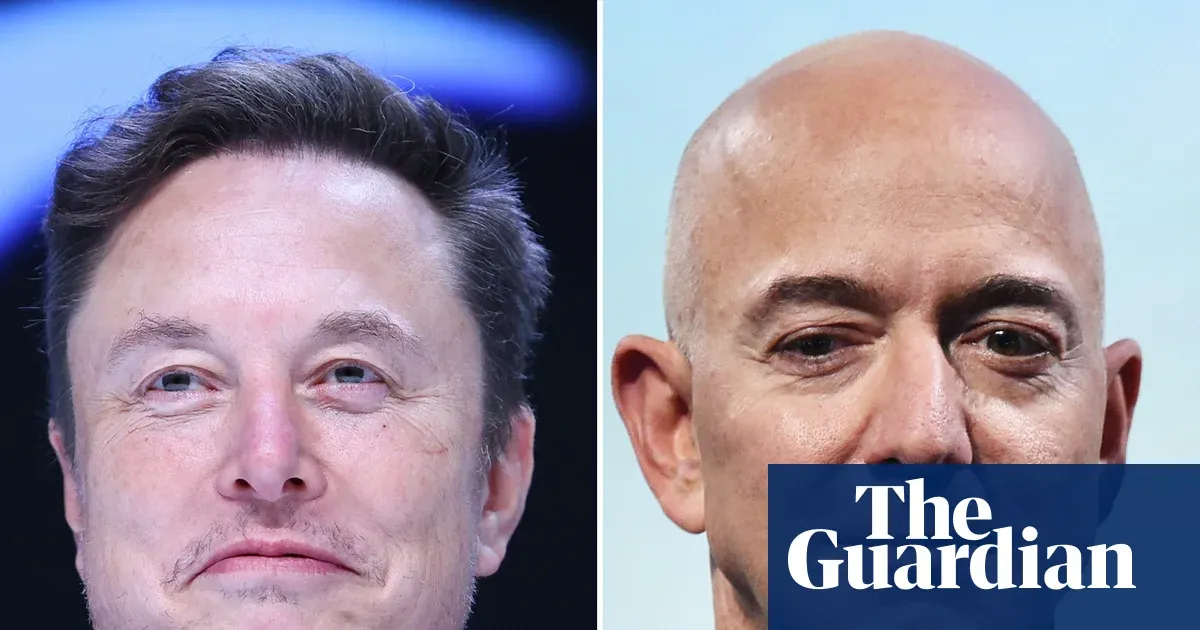
Space industry experts and environmental groups backed a new US petition demanding a review of space datacenter plans from SpaceX, Jeff Bezos’s Blue Origin, and others. The push centers on pollution concerns that could alter the Earth’s atmosphere and forces the FCC approval process into a much bigger public and regulatory spotlight.
A new US petition is demanding that the Federal Communications Commission (FCC) review space datacenter plans proposed by SpaceX, Jeff Bezos’s Blue Origin, and other companies, warning the environmental impact could be “catastrophic” for the planet. The petition argues these projects would release staggering levels of pollution that could probably alter the Earth’s atmosphere, not just create localized environmental harm.
The core issue is straightforward and also unsettling: these companies have collectively proposed millions of “orbital datacenters,” and they are pressing forward with plans that require FCC approval. The petition’s backers say pollution from satellites and rockets burning up on re-entry appears to be accumulating in the stratosphere at alarming levels, with potential unknown effects.
Why this suddenly matters beyond the environmental debate is because the space industry is in a phase where business logic and regulatory reality collide. Orbital datacenters are pitched as the next step in scaling connectivity and computing capacity in space, but scaling is exactly what turns environmental risk from a “per launch” question into a “system-wide” one. If many missions are approved, and if millions of assets are part of the architecture, then even small changes in atmospheric chemistry can become a high-stakes policy question. The petition frames the stakes in planetary terms, but the mechanism it points to is operational: what happens when satellites and rockets burn up, and what compounds they deposit.
According to the source, pollutants released during re-entry include black soot, rare metals, aluminum oxides, and other pollutants, with unknown effects. That matters to decision-makers because the central regulatory question is not only “is there pollution?” but also “where does it go, how does it behave, and what long-term consequences does it create?” The stratosphere is not the same place as the lower atmosphere. Changes there can have broader, slower-moving impacts, which increases the difficulty of measuring risk in time to guide approvals.
There is also a second layer for the boardroom: the petition is not targeting a single program or one company’s pilot. The source states that tech companies have collectively proposed millions of orbital datacenters. That collective posture can change the dynamics of regulators, because it signals a market-wide shift rather than an isolated experiment. Even if one company’s risk mitigation is credible, a regulator responding to a petition about cumulative effects may demand a more comprehensive environmental review across the category.
Under the FCC approval process, the industry typically operates with a mix of technical filings and compliance expectations, but environmental arguments can reframe what regulators consider “acceptable” and “necessary.” A petition that calls the outcome “catastrophic” for the planet is a rhetorical escalator, but it is grounded in a specific claim from experts and environmental groups: pollution from satellites and rockets burning up upon re-entry is accumulating in the stratosphere, and the specific byproducts are described rather than left vague. The presence of environmental groups alongside space industry experts signals that the concern is being treated as serious across different stakeholder cultures, which raises the odds that the FCC review becomes more public, more contested, and more procedural.
For executives at companies pursuing similar architectures, the strategic stakes are immediate. If the approval process becomes slower, more demanding, or conditional on additional environmental analysis, the timeline for capital deployment and network rollout gets pressured. If public scrutiny intensifies, partnerships, financing, and customer negotiations can also get tougher, because customers often want assurance that regulatory risks are contained. Meanwhile, if other companies in the space datacenter race are already shaping filings and infrastructure plans, the petition could become a market-wide forcing function, potentially pushing the entire category toward clearer environmental monitoring expectations.
In plain terms, the petition is asking the FCC to do something that space operators may not want but cannot ignore: treat atmospheric pollution impacts as a gating issue for orbital datacenters. The outcome could determine not just which projects move forward, but also how the industry defines acceptable risk as it scales from startups and pilots into a system that, by the petition’s account, could involve millions of orbital assets. If you are building in space, this is the moment where environmental science, public policy, and business timelines stop being separate conversations.
This story's Key Insights and Take-aways are locked.
Create a free account to unlock Executive Actions for one credit.
Register to UnlockAlways free for Executives Club members. Join the Club
More in Technology

Google quietly links your phone number to every Android account on your SIM
Adding a SIM now ties your phone number to all Google accounts - and future accounts inherit it. Here's the security and privacy stakes.

Hijacker AI 'Skynet mode' runs 100,000 attack steps against exposed models
Symantec caught a criminal AI agent that borrows other models, steals data, and mines crypto; the only relief is no confirmed victims yet.

Nvidia's AI-financier shift faces its first big test as neoclouds stumble
A rout in neocloud stocks is forcing investors to weigh Nvidia's hidden exposure as both supplier and lender to the AI buildout.