
Finland powers through wind and solar lulls with the world’s largest sand battery
A small town in Finland is using the world’s largest commercial sand battery to solve intermittency.
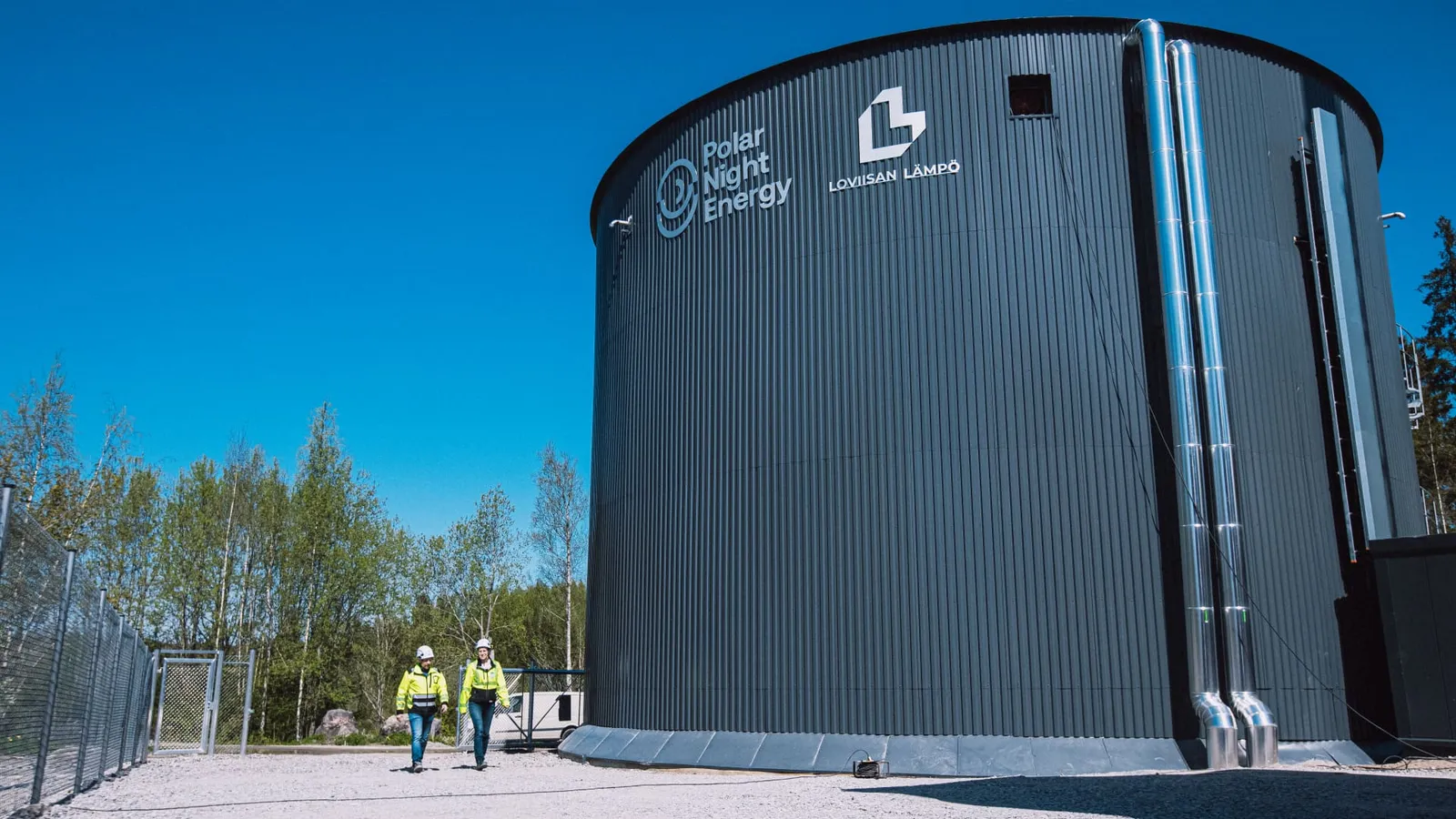
A small Finnish town is turning to the world’s largest commercial sand battery to address intermittency, one of renewable energy transition’s biggest headaches. For decision-makers, this signals a real push toward firm, dispatchable storage that can keep the grid stable when generation swings.
A small Finnish town has turned to the world’s largest commercial sand battery to tackle a major hurdle in the energy transition: intermittency. In plain English, the problem is simple even when the solution is not. Wind and solar can be plentiful at one moment and scarce the next, and the grid still needs electricity on demand every hour of every day.
This sand battery approach is the town’s answer to that gap. Instead of relying on the grid to “wait it out” when renewables dip, it uses stored energy to smooth the swings. The headline is the key: it is not a pilot in a lab somewhere, it is framed as the world’s largest commercial sand battery, deployed to make the renewable mix more reliable.
To understand why this matters, you have to zoom out to how grids actually operate. Electricity is not like water in a reservoir you can draw from later. Grid operators balance supply and demand in real time, and when supply drops, the system has to respond quickly or risk instability. That is why storage has become such a central piece of the renewable transition. Battery systems, pumped hydro, thermal storage, and other options all aim to do one job: keep energy available when generation is delayed by weather or time of day.
But storage is also expensive and politically complicated. The energy transition has spent years selling renewables as the solution to decarbonization, while quietly grappling with the follow-up question: what happens when the sun sets or the wind stops. Intermittency is not a theoretical concern. It drives grid planning, influences capacity procurement, and determines whether renewable penetration can rise without reliability penalties. The Finnish decision, as described, shows one way that local actors are trying to close the reliability gap using thermal storage based on sand.
Sand batteries also highlight a different kind of industrial logic. Thermal storage is often positioned as a way to decouple storage from the most constrained resources or supply chains that can affect certain battery chemistries. Sand is abundant, and the idea of storing energy in heat and then releasing it later is conceptually straightforward. Of course, “conceptually straightforward” does not mean “easy to deploy.” Turning that concept into a commercial system that can operate at scale is the hard part, and the article’s framing that this is the world’s largest commercial sand battery is meant to signal that the deployment is no longer just a curiosity.
There is a regulatory angle too. Governments and regulators are increasingly focused on both carbon reduction and reliability, and they typically treat storage as a tool to meet system needs, not just a sustainability accessory. When a local municipality or utility chooses a specific storage technology, it can influence permitting, grid interconnection requirements, and how planners model future capacity. Even if the town is small, the decision becomes a datapoint for other regions asking the same question: how do you keep the lights on without rolling back renewable targets when output is variable?
For boards, CFOs, and operators, the second-order implication is that intermittency is now forcing procurement decisions with real technology consequences. When the grid cannot rely on renewables alone, storage becomes a line item that can determine whether projects hit timelines and whether operating costs behave. If sand storage can provide firming capacity at competitive cost and performance, it can shift how energy companies think about the storage mix, not just the generation mix. That matters for capital allocation decisions in renewables-heavy strategies, because the “total system cost” is what ultimately determines returns.
For peers watching the market, the strategic stake is straightforward: the energy transition does not fail because renewables are “bad.” It fails when systems cannot reliably integrate them. This Finnish town’s move toward the world’s largest commercial sand battery is a reminder that the path forward is increasingly about storage scale and dispatchability. Intermittency is the headache. The sand battery is the attempt to take the pain away.
This story's Key Insights and Take-aways are locked.
Create a free account to unlock Executive Actions for one credit.
Register to UnlockAlways free for Executives Club members. Join the Club
More in Technology

Google quietly links your phone number to every Android account on your SIM
Adding a SIM now ties your phone number to all Google accounts - and future accounts inherit it. Here's the security and privacy stakes.

Hijacker AI 'Skynet mode' runs 100,000 attack steps against exposed models
Symantec caught a criminal AI agent that borrows other models, steals data, and mines crypto; the only relief is no confirmed victims yet.

Nvidia's AI-financier shift faces its first big test as neoclouds stumble
A rout in neocloud stocks is forcing investors to weigh Nvidia's hidden exposure as both supplier and lender to the AI buildout.