
Fiona Sperry launches Wreckreation 2 nine months after release, despite studio closure
Burnout veteran Fiona Sperry forms When Tides Turn to build Wreckreation 2, even after Three Fields was placed on redundancy notice.
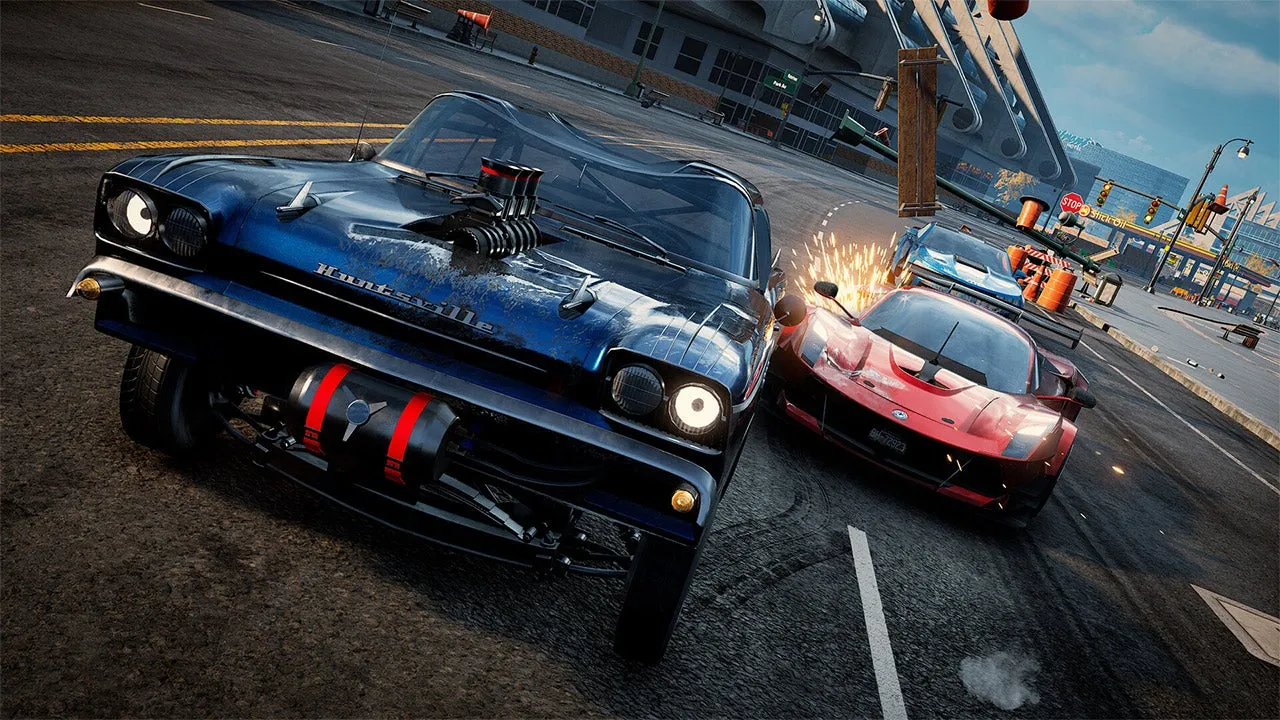
Former Criterion Games boss Fiona Sperry is backing Wreckreation 2, announced nine months after Wreckreation launched. The sequel is being developed by a new studio, When Tides Turn, reportedly staffed with veterans from Three Fields Entertainment, with no precise release date yet.
Fiona Sperry is moving on to Wreckreation 2 just nine months after the first game arrived, even though the original shipped into a messy aftermath for its developer. The former head of Burnout developer Criterion Games announced the sequel is on the way, despite the fact that the entire team at Three Fields Entertainment was placed on notice of redundancy immediately after Wreckreation’s release, and that no further support from publisher THQ Nordic was forthcoming. That is a rare kind of reset, and it signals that someone is betting the story is not done, even if the first chapter struggled.
The sequel is being developed by a new studio called When Tides Turn, which is reportedly staffed by veterans of Three Fields Entertainment. According to Rock Paper Shotgun, Wreckreation 2 has only been in development for about three months, and it is aiming for PC, PS5, and Xbox Series X|S, but it still has no precise release date. If you are tracking execution risk, this is the tension: a follow-up in the same franchise timeline being built by a new entity, on a short runway, after a shockingly abrupt staffing situation for the original team.
To understand why this matters, you have to look at what Wreckreation already represented. The first game is described as more compact than its predecessor’s enormous yet bland and one-note rural map, shifting toward something with more urban environments. Even the pitch for its style leans into arcade DNA, with Wreckreation explicitly recreating modes, sound effects, and parts of Burnout Paradise’s on-screen presentation. That matters because it tells you where the sequel’s “why now” could be coming from. When a game borrows aggressively from a stronger brand’s feel, the upside of a sequel is clarity: tighten handling, vary events, and make the content loop less repetitive. The downside is that the comparison never stops.
And the comparison is not theoretical. IGN’s November 2025 review of Wreckreation said its “unpredictable handling, dull open-world map, [and] samey event structure” made it tough to recommend. The review also reported that it “feels like a supermarket brand homage to a series of better arcade racers, built with the user-generated content tools of another game.” In other words, the reception was not just lukewarm. It was specific, which is exactly what publishers and boards care about when they decide whether to greenlight a sequel or walk away.
So why announce Wreckreation 2 after a redundancy notice and a lack of further support from THQ Nordic? The incentives here are worth reading closely. Publisher support is one lever, but studio founders and experienced teams can also self-assemble around a bet, especially when they believe the production learnings are real. The source notes that, prior to Wreckreation, Three Fields Entertainment (the earlier UK-based studio) made Dangerous Golf, plus the Burnout-adjacent racers Danger Zone and Dangerous Driving. That history suggests a team with working familiarity in the collision of driving physics, arcade presentation, and game-mode design. When you see veterans regroup into When Tides Turn, the second-order implication is that the skills were not the problem. The pipeline, timeline, scope, or support might have been.
This is also a capital and risk-management story, even without new funding figures. When a publisher does not provide “further support,” teams can lose momentum, and development time becomes more expensive because schedules slip and systems have to be reworked without the full stack. A sequel developed in about three months, by a newly formed studio, implies a leaner strategy. It can also imply tradeoffs: smaller scope, faster iteration cycles, and heavier reliance on reusable tools and prior internal knowledge. For decision-makers across the sector, it is a reminder that game development is not just creative. It is organizational, and organizational decisions can be as disruptive as engine decisions.
There is an additional angle for executives: brand signaling. Announcing Wreckreation 2 publicly ties Sperry’s credibility to the franchise’s ability to move past the specific critiques. IGN’s review called out handling unpredictability, map sameness, and event structure repetitiveness, plus the “homage” perception. If the sequel is more urban and more compact, those are concrete changes. But they only matter if they land in play, not just in marketing. A sequel that looks “more Burnout Paradise” must still escape the label of being a budget imitation, otherwise the narrative simply shifts from “first game disappointed” to “second game did not fix it.”
For peers in similar roles, the strategic stake is simple: Wreckreation 2 is an example of how veteran-led follow-ups can restart momentum after a studio’s abrupt reorg moment. If you run product for live-service adjacent projects, or you sit on a board deciding how much support to extend after a launch, this is the question the market will ask next. When support ends and teams get notified, does the franchise die? Or does it reconstitute, regroup, and try again with a sharper scope? With When Tides Turn still early in development, the answer is not written yet, but the move already tells you where Sperry believes the upside lies.
This story's Key Insights and Take-aways are locked.
Create a free account to unlock Executive Actions for one credit.
Register to UnlockAlways free for Executives Club members. Join the Club
More in Entertainment

12TB Steam 'teraleak' goes beyond Valve: GTA 3, Mafia 2 prototypes exposed
A 12-terabyte dump of Steam data reveals prototypes and builds of third-party classics like GTA 3 and Mafia 2, plus unreleased Valve content, rewriting game history.

LinkedIn's romance problem: 1 in 4 workers say dating on it is fair game
A new survey shows a quarter of U.S. employees treat the professional network as fair game for romance, even as LinkedIn bans it and removes hundreds of thousands of offending posts.

Enhypen's first No. 1 album breaks K-pop's Billboard 200 streak
The K-pop group's 98,000-unit debut tops the chart while Dolly Parton's catalog reentry shows how death reshapes streaming.