
Fossil trackways hint at animal handedness, possibly the earliest evidence yet
A new fossil find could rewrite when animals first showed consistent behavioral preferences, with ripple effects for how scientists interpret evolution.

Scientists studying recently uncovered fossils propose they may contain the earliest evidence of behavioral handedness in animals. For decision-makers, the consequence is not just a scientific timeline update, but a shift in how future research programs will be funded and evaluated.
Scientists propose that recently uncovered fossils may be the earliest evidence of behavioral “handedness” in animals. In plain English, handedness here means a consistent preference for using one side or one “choice” over another, not something related to writing or culture. The provocative part is timing: if the fossils really do show early handedness, they could push back the evolutionary origins of a behavior most people assume is more recent and more complex.
To understand why this matters, you have to translate “earliest evidence” into how science works. Evidence like this is the raw material for evolutionary models, and those models then guide what labs test next and what funders prioritize. If these fossils are truly the earliest signs of behavioral sidedness, they become a reference point that other studies must calibrate against. The research pitch, as framed by the report, is simple but high stakes: a fossil record snapshot is now being argued as the earliest behavioral proof, which can change what researchers think they should look for in other deposits.
Behavioral handedness shows up in modern animals in different forms, but fossils are a special problem. Most behaviors do not fossilize neatly. You do not find “preference” as a gene or an organ in rock. What scientists usually hope for is indirect evidence: patterns in trace fossils, movement, or other physical signatures that imply the animal behaved in a repeated, biased way. That is why the phrase “earliest evidence” is such a big deal. It implies the trace or signature is interpretable, repeated enough to matter, and old enough to challenge prior assumptions about when such consistent behavior emerged.
Zoom out to the meta-story that executives and boards should care about: research ecosystems run on credibility and comparative advantage. A finding that claims priority in time, like “earliest evidence,” instantly becomes a gatekeeping benchmark. If it holds up under scrutiny, it can steer grant review standards, influence which kinds of fieldwork are funded, and shape how collaborations form between paleontology groups and neurobiology or biomechanics labs. If it does not hold up, it can still redirect momentum, because negative or contested results are also data, especially in fields where interpretations can swing.
There is also an incentive structure behind how this gets debated. Fossil interpretations are rarely settled on first publication. Other scientists must try to reproduce the reasoning using the same fossils, or find similar signatures in nearby sites. That means follow-up studies are likely to focus on whether the proposed handedness pattern can be explained by alternative factors, like uneven preservation, substrate effects, or random variation. In organizational terms, this is where leadership discipline matters: teams need to be prepared for additional analysis, new sampling, and potentially revised claims.
For investors and operators in science-adjacent spaces, the second-order effect is that “timeline revisions” can affect entire portfolios. Companies and non-profits supporting research often allocate based on scientific direction, not just immediate experiments. A shift in understanding animal behavioral evolution can reweight which technologies are pursued, which datasets are prioritized, and which partnerships look strategically aligned. Even if this is not a regulated industry, it still behaves like one: credibility, validation pathways, and peer scrutiny function like regulatory gates for claims.
Finally, the strategic stakes for peers in leadership roles are clear. Whether you run a research lab, a foundation, a biotech platform, or a university institute, your world depends on what becomes the accepted baseline. If these fossils are taken seriously as the earliest evidence of handedness, then future work will be judged relative to them. That can create momentum for the researchers involved, but it can also raise the bar for anyone else entering the question. The upshot is that a single fossil discovery can have outsized influence, not because it answers everything, but because it changes what “early” means and forces everyone to update their mental model of animal behavior over evolutionary time.
This story's Key Insights and Take-aways are locked.
Create a free account to unlock Executive Actions for one credit.
Register to UnlockAlways free for Executives Club members. Join the Club
More in Science
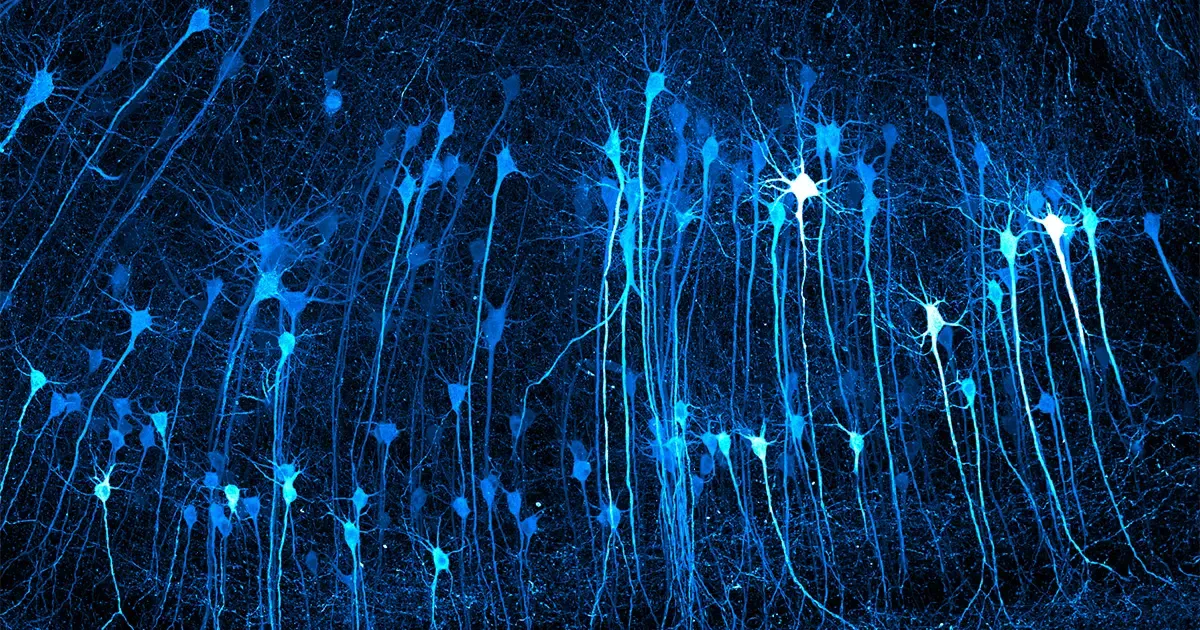
2026 Nikon Small World Winners Reveal the Hidden Machinery of Everyday Life
A mycologist's frozen Edinburgh garden became the backdrop for vivid views inside cells, a reminder of what advanced imaging now makes visible to researchers and the industries built on biology.

Study: 1 in 4 depression cases may be a body-clock problem, not a chemical one
A 10,000-person study finds standard antidepressants often fail these patients, but melatonin and morning sunlight may hit the real root cause.
Start-Up Says A.I. Designed a Virus to Attack One Patient's Superbug
If the claim holds up, personalized phage therapy could become a new frontline weapon against antibiotic resistance - but proof is far from final.