

France’s hospitals and aged care homes take the brunt as heat hits 40°C
A prolonged heatwave is overwhelming care capacity, straining mortuaries, and turning daily temperature spikes into a system risk.
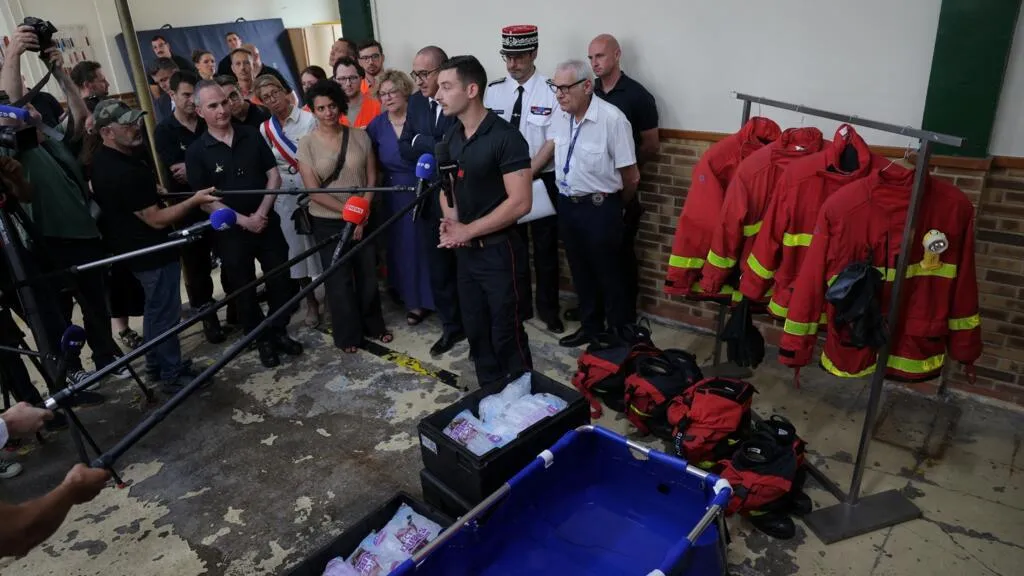
France 24 reports that overburdened hospitals and overwhelmed mortuaries are being hit hardest as temperatures touch 40°C during prolonged, intense heatwaves. The consequence for decision-makers is clear: healthcare operations, staffing, and surge planning must treat extreme heat as ongoing demand, not a one-off event.
France’s healthcare system is getting its toughest stress test from something it cannot out-build: the weather. France 24 reports that overburdened hospitals and overwhelmed mortuaries are being pushed as temperatures reach up to 40°C during prolonged and intense heatwaves.
The stakes are not theoretical. The report frames this as millions of people suffering in extreme conditions, which means the strain is happening at human scale, not just in emergency department spreadsheets. When heat runs hotter, longer, and more frequently, the pressure shifts from “incident response” to “continuous operations,” including how quickly hospitals can move patients through care and how mortuaries can handle excess mortality.
To understand why this matters for executives, start with the basic economic reality of healthcare capacity. Hospitals are not infinite buffering machines. They rely on a mix of beds, clinical staffing, diagnostic throughput, transfer logistics, and facility constraints that do not scale smoothly during sudden demand spikes. Heatwaves change demand shape, too. Even if a wave of cases does not look identical to a pandemic surge, it still crowds emergency care, increases the workload on wards dealing with dehydration, cardiovascular strain, and other heat-related complications, and lengthens time to discharge when outpatient and community support are also stressed.
Mortuaries are a different kind of constraint, but just as operationally binding. France 24’s mention of overwhelmed mortuaries is a reminder that “capacity” is not only about treatment. It is also about dignified handling and the systems that support it, including refrigeration, staffing, and coordination with public services. When a heatwave is prolonged, the backlog does not reset overnight. It accumulates, and once a system is behind, every additional hot day compounds the gap.
Why is this happening now, and why does it feel permanent? The report calls prolonged and intense heatwaves the new normal. For decision-makers, that phrase is doing a lot of work. It suggests the old planning assumption, the one that treated extreme events as rare outliers, is losing validity. Instead, heat becomes an ongoing operational variable that must be modeled like recurring demand, similar to seasonal peaks, but with higher volatility.
There is also an execution issue. Overburdened hospitals do not exist in isolation from aged care homes. Heat affects older populations disproportionately, and the care ecosystem is interdependent. A bottleneck in community and aged care can feed hospitals. At the same time, if hospitals cannot discharge efficiently because home-based supports are overwhelmed or because patients require additional monitoring, the inpatient backlog can tighten. This is the second-order effect that catches boards and senior leadership teams: the system pressure is networked, not siloed.
For French healthcare leaders and regional administrators, the immediate challenge is to treat extreme heat as a governance-level risk, not merely a public health bulletin. That means thinking in terms of surge capacity and continuity planning for both clinical operations and post-acute and mortuary workflows. It also means aligning communications and coordination across facilities, because a heatwave is, by design, a synchronized stressor across geography.
Strategically, the broader lesson for peers is simple. If temperatures can touch 40°C during prolonged, intense heatwaves, then preparedness is no longer optional, and it is not confined to hospitals alone. The systems that manage beds, staffing, and patient flow must also connect to aged care capacity and the infrastructure that handles excess mortality. For executives, the question shifts from “How do we respond when it gets bad?” to “What changes today so the system can absorb the next hot stretch without breaking?”
This story's Key Insights and Take-aways are locked.
Create a free account to unlock Executive Actions for one credit.
Register to UnlockAlways free for Executives Club members. Join the Club
More in Politics

Kemi Badenoch says Andy Burnham’s Britain ambitions are “too small” after business rates cut
A business rates change for pubs and clubs triggers a sharper Conservative-versus-Labour fight over who is backing growth.

Trump pushes tariffs again after legal defeats, sparking GOP unease
Despite losing court fights, the administration moves forward, leaving Republicans to manage the political and market fallout.

Wilbur Ross warns Trump’s Iran exit is a midterms lose-lose: oil prices or “weak” withdrawal
The former commerce secretary tells Fortune the Strait of Hormuz is where voters decide whether “peace” is believable.