
France signs up Nextcloud, but users still live inside Microsoft Office
A sovereign storage rollout hit a familiar wall: file sync is doable, Office lock-in is not.

Benoît Piédallu, National Project Manager of Shared Digital Services at France's Ministry of Education, described the Nextcloud adoption effort at Nextcloud's annual summit in Munich. The ministry is building federated storage and account management, yet desktop use remains optional, meaning many users can still choose Microsoft.
Digital sovereignty in France is officially real, at least on paper. At Nextcloud's annual summit in Munich last week, Benoît Piédallu, National Project Manager of Shared Digital Services at the French Ministry of Education, laid out a rollout that is moving at scale: the ministry started initial work to adopt Nextcloud in 2018, accelerated urgency in 2020 when the COVID-19 pandemic turned up the stakes, and then went all-in by signing contracts with Nextcloud in 2024. The project now has slightly more than 400,000 accounts set up, with an ambition to reach 1.2 million users. Piédallu also gave the practical details that matter for operations: each account could be allocated 100 GB of storage, which could total a potential 120 PB, while average consumption currently sits at around 3 GB per account. So yes, sovereign storage and account management are getting built.
But the reason this story is more than a feel-good open-source win is what Piédallu admitted right after the numbers. The ministry's vision includes federated storage and account management, yet the project does not include desktop applications. That means users can keep using whatever they want on their desktops, including Microsoft Office. And that is where the “Microsoft gravity well” shows up in plain language: Piédallu noted that users are used to Microsoft Office, and Office works best in a Microsoft ecosystem, which makes removing dependencies on non-European technology harder. He even summarized the feedback loop bluntly: people say Nextcloud is not working, the ministry responds that users should just use different software.
If you are building or investing in government IT, this distinction is the whole chessboard. Nextcloud can handle storage and file synchronization. That is a big deal, especially when you are trying to reduce dependence on non-European technology and meet sovereignty goals that are often framed around the idea that nobody should be able to “switch off or shut down” services from the outside. Piédallu put that principle front and center: “Nobody should be able to switch off or shut down our services from the outside,” and “Nobody should be accessing our services from the outside.” In other words, the ministry is targeting control, not just convenience.
Still, the ministry's journey has not been theoretical. Piédallu referenced what he described as “a little incident with OVH,” a “little fire” that destroyed all their data in 2021. That kind of event is exactly why sovereign infrastructure programs exist. When you are trying to keep public services resilient, you do not just evaluate software features. You worry about failure modes, lock-in risk, and whether your critical systems can be controlled and operated without relying on external parties you cannot fully influence.
The operational picture gets even more interesting when you zoom in on adoption mechanics. Piédallu said that so far there are 80,000 sync clients persistently connected. That suggests users are actively interacting with the storage layer, not just passively signing up. Yet the ministry is still dealing with the reality that software ecosystems pull users in. Removing dependencies is not only about “where your files live.” It is about where the workflows live. Office is still the default productivity interface for many organizations. Even when a sovereign storage stack is available, users can keep their day-to-day productivity tied to Microsoft because the desktop experience is familiar and deeply integrated.
Piédallu also described the government context around shifting away from American tools and reducing dependence on non-European technology, which is why the Nextcloud work is politically and strategically sensitive. The ministry signed contracts in 2024 and is now trying to translate those contracts into actual user behavior, not just deployed infrastructure. At the same time, Nextcloud itself has been working on desktop-adjacent productivity options. Piédallu referenced the Nextcloud Hub 26 spring release, which includes Euro-Office. That suite may help, particularly for people who want a more coherent “office” experience than a pure sync-and-store model.
The European policy layer adds pressure, and also complexity. The EU wants to increase digital autonomy through the European Technological Sovereignty Package, while analysts have warned that it could complicate matters for customers. In the ministry's case, the complication is visible: a sovereign storage and collaboration foundation can be rolled out, but migration away from office applications is a different project with different user adoption dynamics, training needs, and compatibility expectations. The ministry experience is, in that sense, a blueprint and a warning. It shows sovereign file storage can work at scale. It also shows that convincing users to give up the tools they already know may be the harder part.
For executives and boards, the takeaway is not “open source is hard” or “Microsoft is unbeatable.” It is more specific and more useful: sovereignty programs that stop at infrastructure can stall when the desktop workflow remains optional and users continue to choose the ecosystem that delivers the best experience for them. If you are planning enterprise or public-sector digital autonomy initiatives, the French Education Ministry's numbers, timeline, and constraints point to the same operational question: can you control both the data plane and the productivity plane, or will the productivity plane keep dragging the organization back into old dependencies?
This story's Key Insights and Take-aways are locked.
Create a free account to unlock Executive Actions for one credit.
Register to UnlockAlways free for Executives Club members. Join the Club
More in Technology

Nvidia's $89B data center quarter: the 9 companies cashing in
The AI buildout is minting fortunes beyond GPUs, and memory, cloud, and cooling suppliers are riding the same wave.
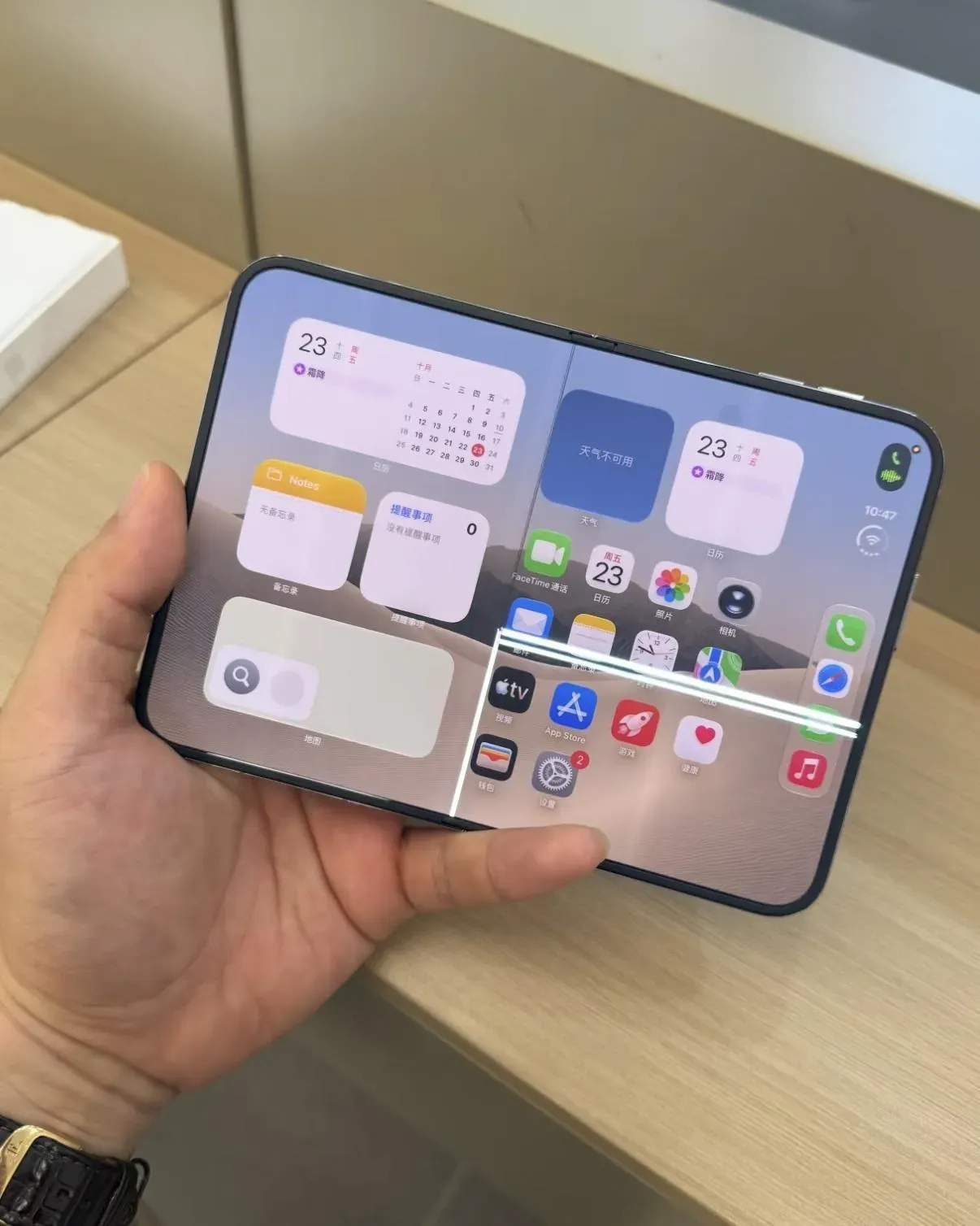
A YouTuber dissected the iPhone Duo and thinks he found crackgate's cause
CuriousHagi's teardown of Apple's foldable reveals a gear-like hinge that may explain why screens crack in the same spot within hours.

Google quietly links your phone number to every Android account on your SIM
Adding a SIM now ties your phone number to all Google accounts - and future accounts inherit it. Here's the security and privacy stakes.