
Ghana still needs witchcraft-accusation laws, six years after a 90-year-old killing
Activists say justice is incomplete, pushing regulators and courts to close the legal protection gap.

Ghana is facing continued pressure to enact laws protecting victims of witchcraft accusations, six years after the killing of a 90-year-old woman. For decision-makers, the unresolved justice process signals a durable risk for communities, courts, and the rule-of-law institutions tasked with preventing harm.
Six years after the brutal killing of a 90-year-old woman accused of witchcraft, activists say justice in Ghana remains incomplete. The case shocked Ghana and the world, but the core problem did not go away: without clear, enforceable legal protections, accusations can still escalate into real-world violence, and accountability can remain fuzzy.
That is the uncomfortable lesson embedded in the headlines. Activists are effectively arguing that the legal system has not finished its job. If Ghana still needs laws to protect victims of witchcraft accusations, then courts and lawmakers are not just handling an individual tragedy. They are addressing an ongoing risk pattern, where fear and allegations can bypass due process and push vulnerable people into harm.
To understand why this matters beyond one case, zoom out to how accusations function in many societies. Witchcraft allegations often move quickly because they are emotionally legible, socially reinforced, and harder to disprove using standard evidence. That speed can collide with slower institutions like courts. When the legal pathway is unclear, people can default to informal “justice,” leaving victims with incomplete protection and survivors with few practical remedies.
For executives and board-level leaders, the connection may not feel immediate, but it is real. When communities experience unresolved legal protection, instability does not stay local. It affects how organizations operate in regions, how staff and contractors are supported, and how risk managers think about duty of care. In environments where accusations can spiral, companies can face reputational risk, operational disruptions, and increased compliance pressure from stakeholders who want demonstrable steps toward safeguarding vulnerable populations.
There is also a governance angle. The fact that activists are still calling for laws six years after a widely reported killing suggests a regulatory timeline that did not fully land the intended outcomes. Lawmaking can stall for many reasons, including competing priorities, legislative capacity, evidentiary debates, and the challenge of translating sensitive social issues into enforceable statutes. But from an institutional standpoint, the longer the gap persists between a shocking incident and complete legal protection, the more it can become a credibility issue for rule-of-law systems. People judge institutions by whether they prevent the next harm, not whether they recognize the last one.
Put differently, this is the difference between symbolic recognition and structural prevention. Activists arguing for witchcraft-accusation victim protections are pushing for prevention mechanisms: clearer definitions, better victim safeguards, and procedures that reduce the chance that accusations become a substitute for evidence. For lawmakers and legal institutions, the strategic stake is narrowing the space where vulnerable people fall through cracks. For peers in similar roles, it is a reminder that legal reform is not a one-off event. It is an ongoing project that must convert public attention into durable protection.
And if you are thinking, “Why is this in the same broadcast as everything else?” the answer is that tonight’s edition also covered North Africa’s severe heatwave, with temperatures nearing 49 degrees Celsius, plus cultural programming in Kigali through five days of screenings, workshops, and industry discussions at The Kigali Cinema Junction. That juxtaposition is a reminder that crisis and reform do not arrive neatly. Heatwaves stress systems, while legal gaps stress them differently. Both can reveal how ready institutions are to protect people when pressure hits.
In that sense, Ghana’s situation is a governance test. The unresolved justice claim after the killing of a 90-year-old woman accused of witchcraft is not just a moral headline. It is a prompt to see whether protection can be made concrete through law. And for decision-makers anywhere watching similar dynamics, the message is the same: when legal systems do not close protection gaps, harm does not pause, and “six years later” becomes a warning label for the next case.
This story's Key Insights and Take-aways are locked.
Create a free account to unlock Executive Actions for one credit.
Register to UnlockAlways free for Executives Club members. Join the Club
More in Politics

LA County: DOJ's 20,000 'noncitizen' voter list is 'unreliable,' includes U.S.-born
Preliminary review by Los Angeles County election officials finds errors in the federal list, raising the stakes for voter roll integrity ahead of November.

Trump's $1.5B Pentagon chip investment lands in North Carolina
A $1.5 billion defense infusion for North Carolina chipmaking signals a new era of Pentagon-backed reshoring - here's what it means for the industry.
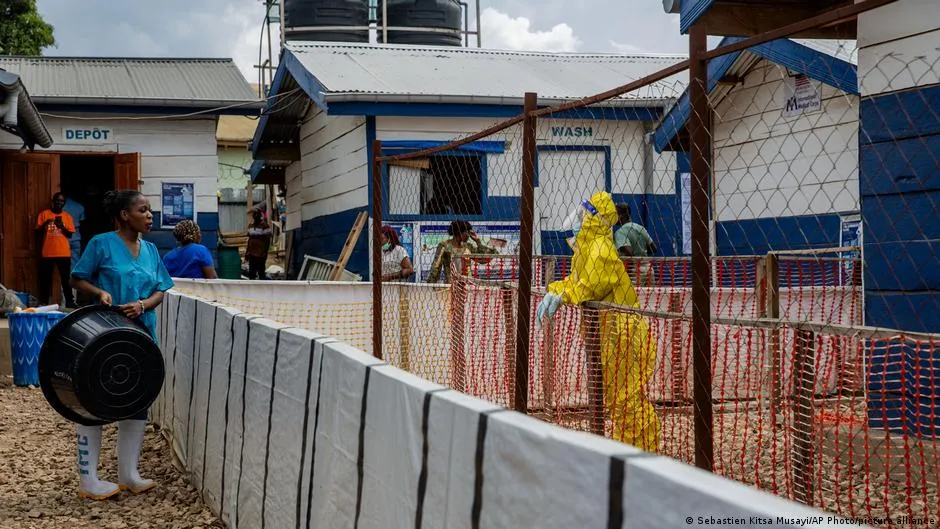
Nigeria confirms first Ebola case in Abuja, a woman just off a Uganda flight
Health Minister Muhammad Ali Pate says the patient flew in from Uganda, putting Africa's latest outbreak on Nigeria's doorstep.