
Google adds selfie sign-ins for accounts, but blocks Workspace, kids, and Advanced Protection Program
Face videos can become your backup access method, if you set it up early and accept storage and encryption terms.
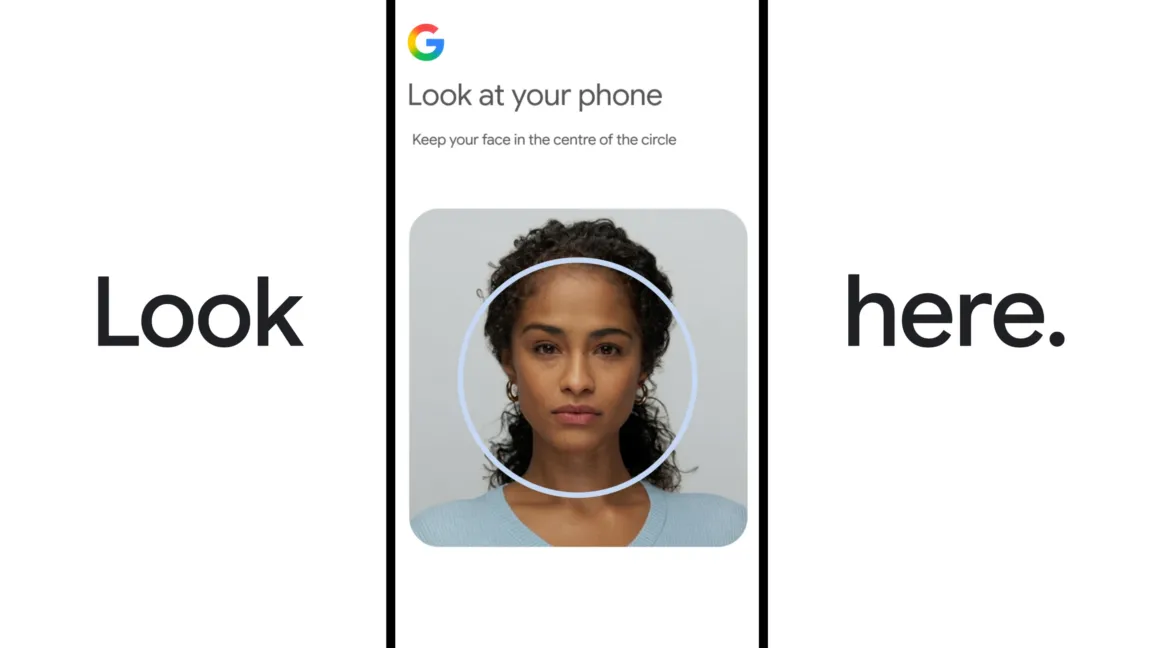
Google is rolling out an account recovery option where you can sign in using a selfie video you record ahead of time. The move changes account access workflows, with clear exclusions for Workspace, child accounts, and any account enrolled in Google’s Advanced Protection Program.
Locked out of an account is annoying, but Google just made it stranger and more useful: you can sign into your account using a selfie video. The feature only works if you set it up ahead of time, meaning your future login crisis depends on a choice you make now.
Once enabled, selfie sign-in becomes a new path for regaining access. Google’s approach is straightforward on the mechanics, even if it sounds sci-fi in practice. You record a video of your face as part of configuration, and Google stores that selfie video on its servers so it can be used later for account access. The privacy framing is just as important as the promise of convenience, and Google’s landing page includes the usual disclaimers about privacy and data access. It also says the company will keep the video encrypted and will not use it for other purposes unless you opt in. For busy decision-makers, the headline is clear: recovery is moving from “remember a password” to “pre-authorize an identity signal,” and the identity signal lives in Google’s infrastructure.
To understand why this matters, zoom out to how account recovery typically works. Google already offers a handful of ways to regain access if you forget your password or lose an authenticator, including recovery contacts and backup codes. Those methods are not perfect, and they usually force tradeoffs between security and usability. Recovery contacts can be slow or unavailable when life happens. Backup codes degrade over time and can be lost. Authenticator loss is a classic failure mode for consumers and a perennial headache for security teams.
In that context, selfie sign-ins are an attempt to reduce recovery friction by shifting the failure point. Instead of hoping a user remembers credentials or preserves recovery artifacts, Google asks the user to take an additional step up front: set up selfie sign-in in advance. That sequencing is key. It is an operational design choice that will likely determine adoption, because the people who need recovery most are often the people least likely to preconfigure it. Still, for those who do set it up, the system could turn account recovery into a quicker, more intuitive process. The benefit is not just convenience. Faster recovery can reduce time out of work accounts, reduce support ticket load, and help keep users from abandoning services when they hit a lockout event.
But Google is not making this option universally available, and the exclusions are where the real governance story lives. Google says you will have to verify that your account type is supported, and you cannot configure selfie sign-ins for Workspace accounts, child accounts, or any account enrolled in Google’s Advanced Protection Program. That set of constraints signals that Google is segmenting risk tolerance and compliance expectations by account population. Workspace accounts are often used in enterprise and regulated contexts, child accounts come with additional protections, and Advanced Protection Program enrollment is explicitly about heightened security guarantees. In other words, Google is offering a new recovery mechanism, but not a one-size-fits-all identity layer.
The feature also carries a data retention and security implication. Google’s configuration requires you to record a video, and Google stores that selfie video on its servers. That means selfie sign-in is not merely a local biometric check. It is a server-side asset that Google can potentially access as part of authentication or verification later. Google’s landing page says the video is encrypted and not used for other purposes without opt-in, but executives and boards should still take the broader lesson: identity signals now become managed data objects in the account security stack.
For leaders evaluating comparable products, the second-order effect is governance workload. If more recovery flows rely on identity media, organizations may need new policies for enrollment, user consent, incident response, and vendor oversight. Even when the vendor states the video is encrypted and restricted, internal stakeholders will still ask the same practical questions: Where does the biometric data live? How is it protected? Who can access it? What are the opt-in boundaries? What happens if a user cancels? And crucially, how does this fit with enterprise identity policies?
Finally, there is an adoption and product strategy angle. By requiring preconfiguration and blocking certain account categories, Google is shaping the rollout into a controlled environment rather than an open-ended biometric experiment. That balance matters because it reduces risk exposure while still testing whether a more human recovery method actually improves outcomes. For peers watching this space, the strategic stake is simple: if selfie sign-ins prove effective, other platforms will pressure the market to offer similar backup access options. The winners will be the ones that deliver convenience without treating biometric-like data as an afterthought.
This story's Key Insights and Take-aways are locked.
Create a free account to unlock Executive Actions for one credit.
Register to UnlockAlways free for Executives Club members. Join the Club
More in Technology

Google quietly links your phone number to every Android account on your SIM
Adding a SIM now ties your phone number to all Google accounts - and future accounts inherit it. Here's the security and privacy stakes.

Hijacker AI 'Skynet mode' runs 100,000 attack steps against exposed models
Symantec caught a criminal AI agent that borrows other models, steals data, and mines crypto; the only relief is no confirmed victims yet.

Nvidia's AI-financier shift faces its first big test as neoclouds stumble
A rout in neocloud stocks is forcing investors to weigh Nvidia's hidden exposure as both supplier and lender to the AI buildout.