
Google open-sources its 3D emoji set, handing raw.OBJ files to builders
World Emoji Day brings a practical giveaway for VR creators, plus a lesson about why 3D design is harder than 2D.
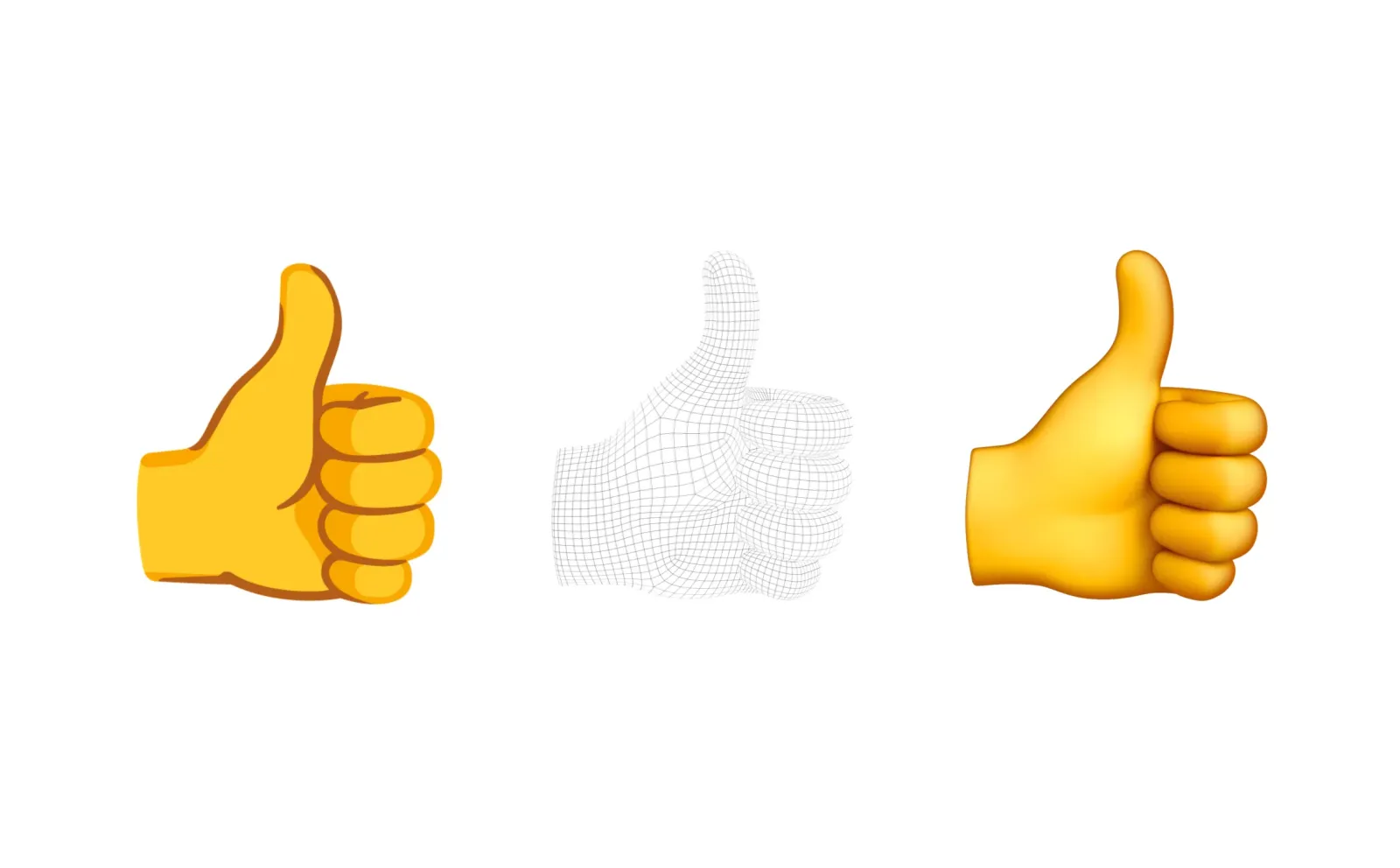
Google is open-sourcing its 3D emoji set and shared details about how it designed the models, as part of World Emoji Day on Friday. The move matters for decision-makers building or investing in immersive experiences, because it reduces friction for new VR content.
Google just made its 3D emoji available for anyone to use, and it is more than a feel-good internet update. As part of World Emoji Day on Friday, the company announced it is completely open-sourcing the emoji set, “handing over raw.OBJ files to the community so they can use them to build immersive VR worlds.”
That single sentence is the business story. If you are a creator, developer, or studio working in immersive environments, the ability to start with ready-to-use 3D assets can compress timelines and lower the cost of experimentation. Instead of designing emoji-like characters from scratch, teams can focus on the actual experience: how the emojis move through a scene, how they scale in VR, and how they show up in real-time rendering. Google is basically dropping building blocks into the ecosystem.
There is also a less obvious technical lesson hiding in the update: 3D design forces you to answer questions that a 2D illustration can ignore. In 2D, a smiley face is usually just a shape on a flat plane. In 3D, suddenly the geometry and physical intuition matter. Is the smiley face actually a sphere? Is it a mask sitting on something? Is the object a flat disc? The Verge points to this “behind-the-scenes look” as part of Google’s rationale for how it approached the models.
Why should executives care about the philosophy of “sphere versus mask” anyway? Because that design philosophy determines how portable the asset is across use cases. A model that is conceptually and geometrically consistent is easier to rig, animate, and integrate into different VR contexts. If the asset is ambiguous in form, teams spend more time interpreting it, converting it, or compensating for mismatched dimensions and proportions. In other words, open-sourcing raw files is useful, but the real long-term value is what those files imply: a coherent design that others can build on.
This also lands at an interesting moment for the wider industry. The last few years have made one thing clear: consumer adoption of immersive tech is uneven, but developer tooling and content pipelines keep evolving. Platforms and ecosystem leaders try to seed supply, because the fastest way to get users to stick is to reduce the “what can I do here?” problem. When a major company releases a set of 3D assets, it is not just about goodwill. It is about increasing the number of places those assets can appear, and by extension increasing the number of experiments other teams will run.
Now, open-sourcing carries its own governance and risk questions, even when it looks simple. The source emphasizes that Google is handing over raw.OBJ files to the community. OBJ is a common 3D file format, which matters because it is widely supported across tools and pipelines. For a company deciding whether to rely on external assets, compatibility reduces operational friction. It also changes the legal and compliance surface area you need to think about, because “open-sourcing” typically shifts some responsibility to downstream users to ensure proper attribution, comply with any included licensing terms, and integrate the assets safely into production environments. The Verge piece focuses on the files and the intent, but the decision point for execs is straightforward: even a fun asset can become part of a larger product workflow, so you need to be sure your team can use it without surprises.
There is also a second-order competition angle. When Google releases a standardized set of 3D emoji models, it sets a reference point for quality and format. Other platforms or developers may respond by creating their own 3D emoji sets, improving on stylistic choices, or building new tools that leverage emoji-like assets. That can raise expectations in the same way that open datasets and developer libraries can accelerate a whole category. Even if Google’s models are “just emojis,” they can act like a starter kit that lowers the barrier for more immersive communication features.
For decision-makers, the strategic stake is about throughput. In immersive projects, timelines often bottleneck on asset creation, iteration cycles, and integration headaches. Google is offering a shortcut: raw 3D files that can be used to build immersive VR worlds. If you are an operator or investor evaluating teams building AR/VR communication, social, or user-generated content, this update is a reminder that ecosystem leverage is not only about hardware. It is also about assets, formats, and the small engineering choices that make building faster and cheaper. The emoji in the headline is the cute part. The real point is the pipeline advantage for whoever can move quickest from asset to experience.
This story's Key Insights and Take-aways are locked.
Create a free account to unlock Executive Actions for one credit.
Register to UnlockAlways free for Executives Club members. Join the Club
More in Technology

Google quietly links your phone number to every Android account on your SIM
Adding a SIM now ties your phone number to all Google accounts - and future accounts inherit it. Here's the security and privacy stakes.

Hijacker AI 'Skynet mode' runs 100,000 attack steps against exposed models
Symantec caught a criminal AI agent that borrows other models, steals data, and mines crypto; the only relief is no confirmed victims yet.

Nvidia's AI-financier shift faces its first big test as neoclouds stumble
A rout in neocloud stocks is forcing investors to weigh Nvidia's hidden exposure as both supplier and lender to the AI buildout.