
GOP reconciliation faces hurdles on a $95B party-line budget, Rob Burgess says
Republican strategist Rob Burgess explains why a $95 billion budget reconciliation push is harder than it looks.

NPR's Leila Fadel interviews Republican strategist Rob Burgess about the GOP's efforts to advance a $95 billion party-line budget reconciliation bill. The struggle over the bill's path matters for anyone tracking how fast Republicans can turn budget framing into actual policy changes.
NPR's Leila Fadel spoke with Republican strategist Rob Burgess about Republican efforts to move forward with a $95 billion party-line budget reconciliation bill, and the conversation quickly centers on one uncomfortable reality: getting to “yes” is not the same thing as getting to “pass.” Burgess frames the political and procedural hurdles the GOP faces in turning a party-line budget tool into something that can clear the finish line.
The headline number, $95 billion, is the policy-making equivalent of a loaded briefcase. Budget reconciliation is designed to move large fiscal priorities through Congress using special rules. In practice, those rules still have to be navigated, aligned, and defended by the party in real time, with enough votes and enough discipline to keep the package from unraveling. Burgess's point, as presented in the NPR conversation, is that Republican momentum can run into structural friction. Even when the ambition is clear and the price tag is set, lawmakers still face hurdles that can slow or block movement.
To understand why this matters, you have to remember what reconciliation is supposed to do. It is a legislative pathway built around budget policy. That matters because budgets and spending levels often become the scaffolding for policy changes. When a bill is framed for reconciliation, the objective is usually to package policy into a fiscal vehicle that can pass under procedures that are different from normal legislation. That can make reconciliation attractive to parties that want speed, because it can reduce some of the procedural obstacles that slow other bills.
But speed can be conditional. In the reconciliation world, the party not only has to agree on the policy goals, it has to keep the coalition intact under a process that turns parliamentary details into political pressure. Any mismatch between what a group of members wants and what the bill ultimately delivers creates leverage for opponents, or at minimum increases the risk that the bill loses enough support to fail. That is the “hurdles” theme embedded in Burgess's discussion: even a party-line budget reconciliation bill can be derailed by the realities of vote counting, timing, and the need to keep internal alignment.
There is also the second-order effect executives and investors often underestimate: fiscal legislation is not just a political event, it is a signal that can change planning assumptions across industries. A $95 billion reconciliation bill signals that Republicans intend to move meaningful budget priorities. Markets and companies that rely on stable expectations for taxes, spending, regulation, and consumer incentives typically care about both the direction of change and the probability it actually lands. When the path is uncertain, it can create a “wait-and-see” posture. That can affect procurement timelines, hiring decisions, capital allocation, and even lobbying priorities.
This is where the Burgess framing becomes especially useful for decision-makers tracking political risk. If reconciliation is facing hurdles, the practical implication is that uncertainty remains in the timeline. Policy frameworks that executives build around can be delayed, revised, or scaled. Even if the final direction does not drastically change, timing alone can matter. In regulated sectors, delays can mean extended compliance planning under current rules. In tax-sensitive models, delays can mean businesses hold off on certain investments until there is clarity. In government contracting and public finance, uncertainty can affect bidding and budgeting cycles.
The stakes are not limited to Congress. Budget reconciliation shapes the boundaries for what is considered “in bounds” for the budget vehicle. That means a party's ability to pass the bill can influence which policy ideas get packaged now versus later. It can also influence how quickly other stakeholders reorient their expectations, from advocacy groups to trade associations, from state governments to corporate boards. When Burgess highlights hurdles, the message is that the GOP's process is the battlefield, not just the policy content.
For executives sitting on boards, or for leaders who manage government-facing strategies, the practical takeaway is simple: the presence of a $95 billion reconciliation bill does not automatically translate into certainty. The procedural hurdles and political alignment required to move forward determine whether the policy scaffolding becomes real law or stays a negotiating artifact. Burgess's discussion with NPR underscores that, in Washington, even party-line ambitions can hit resistance that shows up as delays, concessions, or outright failure to advance.
This story's Key Insights and Take-aways are locked.
Create a free account to unlock Executive Actions for one credit.
Register to UnlockAlways free for Executives Club members. Join the Club
More in Politics
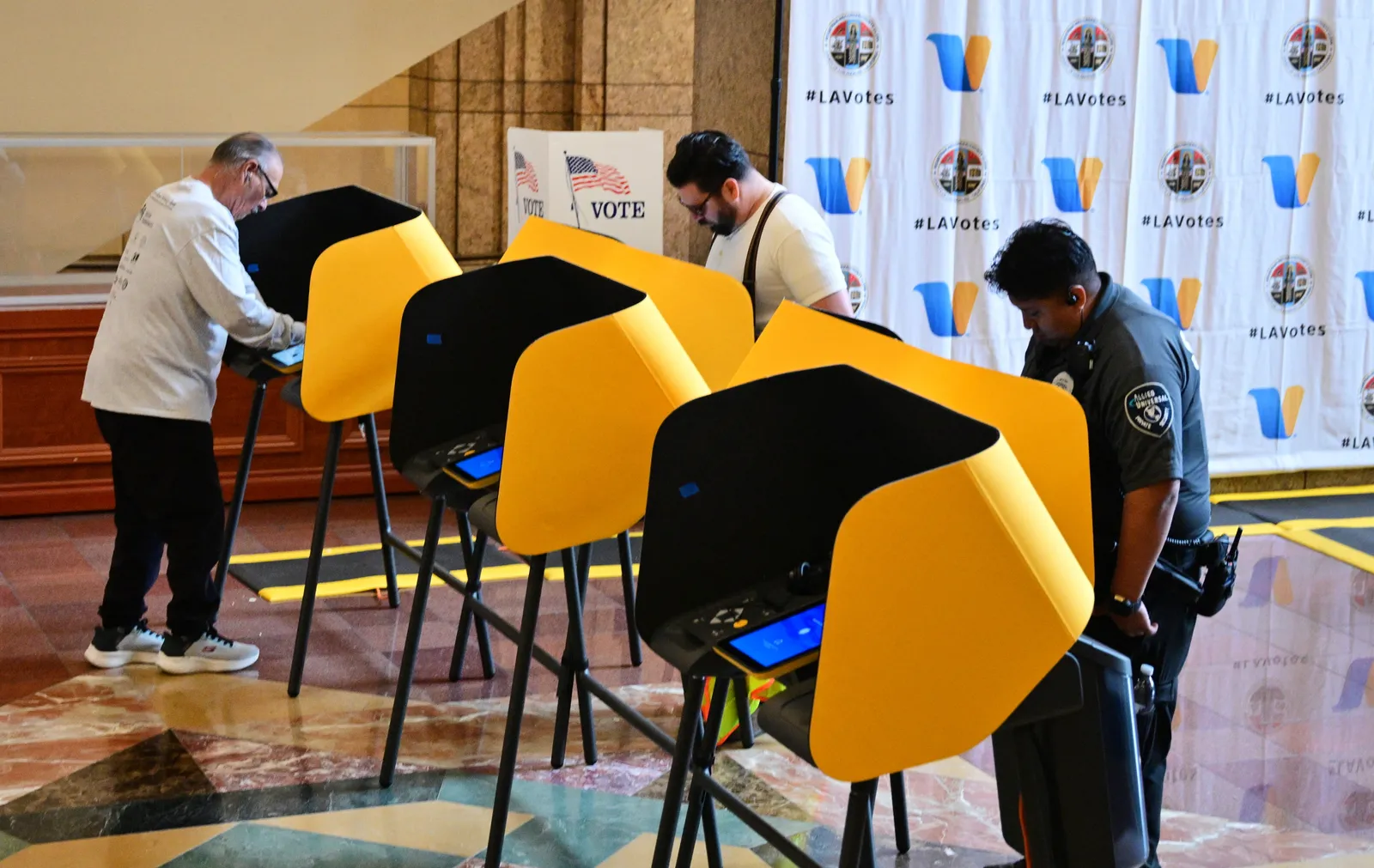
LA County: DOJ's 20,000 'noncitizen' voter list is 'unreliable,' includes U.S.-born
Preliminary review by Los Angeles County election officials finds errors in the federal list, raising the stakes for voter roll integrity ahead of November.
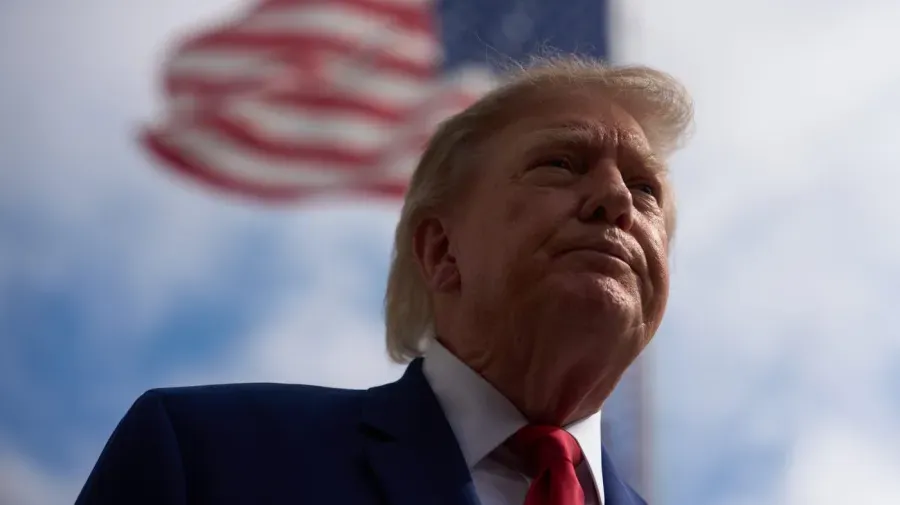
Trump's $1.5B Pentagon chip investment lands in North Carolina
A $1.5 billion defense infusion for North Carolina chipmaking signals a new era of Pentagon-backed reshoring - here's what it means for the industry.

Nigeria confirms first Ebola case in Abuja, a woman just off a Uganda flight
Health Minister Muhammad Ali Pate says the patient flew in from Uganda, putting Africa's latest outbreak on Nigeria's doorstep.