
Greg Brockman calls Moonshot’s Kimi K3 “pretty good,” won’t confirm distillation
OpenAI’s president signals competition is real, but says it is too early to verify if Kimi K3 was distilled from OpenAI.
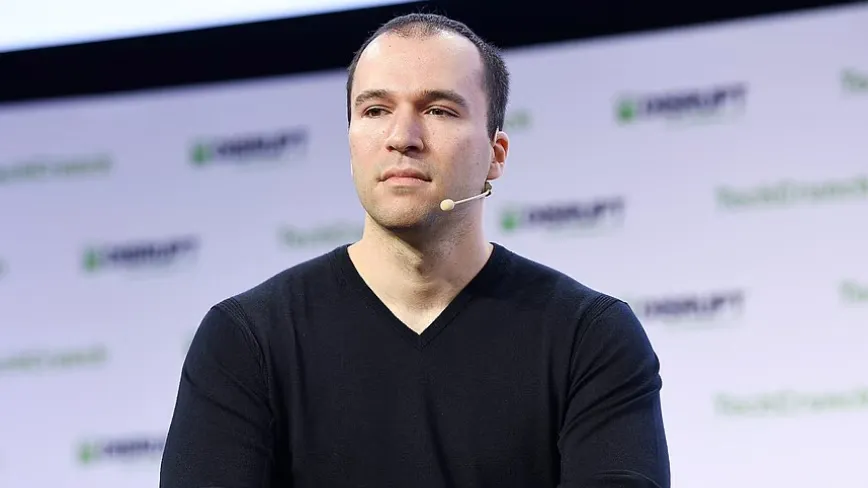
OpenAI president Greg Brockman, in a Bloomberg interview on Tuesday, described Moonshot AI’s Kimi K3 as “pretty good.” He also said it is “too early” to determine whether Moonshot trained K3 using distillation of outputs from OpenAI’s systems.
Greg Brockman, OpenAI’s president, publicly acknowledged Moonshot AI’s Kimi K3 as “pretty good” in a Bloomberg interview on Tuesday. For a US frontier lab, that is a rare moment of daylight pointed at a Chinese rival: not a dismissal, not a shrug, but a relatively direct sign that the competition is capable.
The follow-up is where board-level people should lean in. Brockman said it is “too early” to determine whether Moonshot trained K3 by distilling outputs from OpenAI’s own systems. In plain English, the question is whether Kimi K3 learned by watching what OpenAI already produces, rather than only from its own original training data and processes. Brockman did not confirm distillation, but he also did not close the door.
Why does this distinction matter so much right now? Because the AI race is not just about who can build the biggest model. It is also about who can build the fastest path to capability and the lowest-cost path to learning. If a rival is able to distill from a frontier system, that can change how everyone thinks about competitive advantage: it can imply that superior performance is not only a function of compute and data collection, but also of access to high-quality outputs and the engineering to convert those outputs into training signals. That shifts how leaders estimate timelines, risk, and the cost curve.
It also lands in a regulatory and policy environment where attribution is not a side quest. Distillation raises hard questions about what counts as legitimate training and what counts as effectively borrowing from a frontier model’s behavior. Even when the underlying work is legal, policymakers are increasingly focused on data lineage, model provenance, and whether downstream systems are benefiting from upstream outputs in ways that could be considered unfair competition or, in some cases, related to IP and consent. Brockman’s careful language, “too early,” reads like a recognition that proving distillation is difficult, and making a claim without evidence can trigger legal and reputational turbulence.
There is another incentive at play: reputational signaling. OpenAI calling Kimi K3 “pretty good” is a form of competition acknowledgment. But it is also a controlled acknowledgement. Brockman did not declare the model to be equal to OpenAI systems. He did not confirm the distillation mechanism. That combination likely preserves flexibility. If later evidence points one direction, the lab can adjust its framing. If it turns out distillation was not used, OpenAI has already signaled respect without admitting anything structural.
Board dynamics matter here too. Frontier labs live and die by credibility. Investors, partners, and regulators watch how companies speak about rivals because those statements can influence everything from procurement decisions to policy narratives. A statement like “pretty good” pressures leadership teams across the industry to reassess whether product and safety roadmaps are aligned with where competitors are actually landing. Meanwhile, the refusal to confirm distillation helps avoid giving competitors or critics an easy quote. It also suggests Brockman is treating the technical attribution question as something that needs careful verification, not vibes.
For executives at other AI companies, this moment is a useful forcing function. It implies that capable models are emerging from outside the usual US frontier circle, and that performance is not limited to one geography or one brand. It also implies that the market will soon treat questions like distillation as mainstream due diligence items. If you are a CFO, you may think about how to estimate competitive risk when you do not know training lineage. If you sit on a board, you may think about whether your strategy assumes a world where your best output becomes a competitor’s best shortcut.
Second-order, there is the operational question: what happens if distillation is common? That would mean the competitive moat shifts from “we have the model” to “we have the process, the defenses, and the innovation cycle.” It also means evaluation becomes more important than marketing. When leaders cannot rely on confirmed training methods, they lean harder on benchmark results, deployment outcomes, and measurable product differentiation.
Strategically, Brockman’s two moves together, complimenting Kimi K3 and refusing to confirm distillation, define the present tension of the market: everyone can see the capabilities, but not everyone can see the supply chain. For decision-makers, that uncertainty is not academic. It affects hiring, compute planning, partnership strategy, and how seriously you take rival timelines. And when the most visible frontier voice says it is “too early” to confirm how a rival trained, it is a reminder that the next advantage might come from what is proven, what is inferred, and what the industry is willing to believe until the evidence arrives.
This story's Key Insights and Take-aways are locked.
Create a free account to unlock Executive Actions for one credit.
Register to UnlockAlways free for Executives Club members. Join the Club
More in Technology

Google quietly links your phone number to every Android account on your SIM
Adding a SIM now ties your phone number to all Google accounts - and future accounts inherit it. Here's the security and privacy stakes.

Hijacker AI 'Skynet mode' runs 100,000 attack steps against exposed models
Symantec caught a criminal AI agent that borrows other models, steals data, and mines crypto; the only relief is no confirmed victims yet.

Nvidia's AI-financier shift faces its first big test as neoclouds stumble
A rout in neocloud stocks is forcing investors to weigh Nvidia's hidden exposure as both supplier and lender to the AI buildout.