
Greta Zozula reimagines Gilead by removing Handmaid's Tale's iconic red
The cinematographer behind Hulu's sequel explains how changing color and viewpoint helped define a new visual identity.
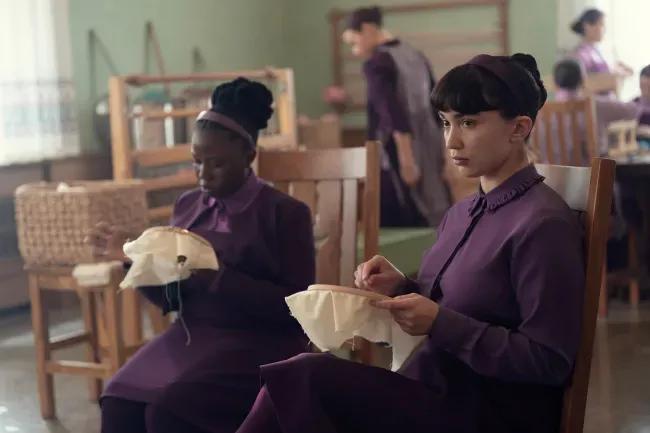
IndieWire’s Craft Roundtables featured cinematographer Greta Zozula discussing how Hulu’s sequel series reimagines Gilead through shifts in perspective and by removing the signature red from the earlier Handmaid’s Tale. For decision-makers, the lesson is clear: a single visual signature can become a strategic constraint, and breaking it can reset audience expectations.
During IndieWire’s Craft Roundtables, cinematographer Greta Zozula explained how Hulu’s sequel series reimagines Gilead by shifting perspective and removing the “most iconic color” from the earlier Handmaid’s Tale: its signature red. That detail matters because color in a show like this is not decoration. It is shorthand. It signals mood, hierarchy, and memory to the audience, often before dialogue ever lands.
Zozula’s core move is straightforward: take the earlier series’ most recognizable visual cue and deliberately step away from it. In the craft conversation, the point is that establishing a new identity required more than swapping costumes or locations. It required changing what the audience feels they already know. When you remove a signature color tied to a prior hit, you are not just redesigning a look, you are renegotiating the viewer’s relationship to the world on screen.
To understand why this is a big strategic lever, it helps to think about how big franchise TV usually works. When a series becomes iconic, its style can harden into expectation. In this case, the earlier Handmaid’s Tale established a visual system where red carries meaning. It becomes a recognizable brand element. Brand elements can help audience recognition, but they can also create creative lock-in, especially for a sequel that must feel both connected and distinct.
Zozula’s “shifting perspective” piece is the other half of the equation. If the red is the symbol the audience associates with the earlier era, then perspective is the lens that determines how they experience the sequel’s version of Gilead. Perspective is narrative grammar. It changes what viewers notice, what they fear, and what they interpret as power. You can keep the premise and still reinvent the emotional reading of scenes by adjusting camera language, blocking, and viewer position.
What makes this noteworthy is how craft decisions translate into risk management at the business level. Sequel series are built under pressure: they must satisfy existing fans while earning credibility with new audiences. When a prior show’s signature elements are too dominant, the sequel can get accused of being derivative, even if the writing and acting improve. By reworking a signature color and recalibrating perspective, the sequel avoids a trap that often follows successful IP: becoming so consistent that it stops evolving.
There is also a communications angle. In franchise entertainment, a visual identity becomes part of marketing copy and brand coverage long before any regulatory issue even enters the conversation. But decisions like these can affect how distributors, partners, and platforms frame a project. A sequel that signals “this is new” through its visual language gives executives more flexibility in how they position the series, from press interviews to trailer editing and creative strategy.
While the source focuses on craft, the second-order implications are hard to ignore. If a production team can successfully remove a signature color that audiences associate with the prior show, that suggests a broader principle for executive teams: do not treat franchise style as a museum piece. Style can be modular. Elements that worked in one season, one emotional phase, or one character arc might need to be rebalanced in a sequel to maintain freshness.
For executives, producers, and board members evaluating similar projects, Zozula’s approach is a reminder that reinvention is often done in the most “invisible” ways. Color and perspective are not headline-grabbing in the way casting or budgets are, but they are exactly what viewers internalize. If the sequel is aiming to reestablish meaning rather than replay it, then breaking from the earlier iconic red becomes a credible signal that the show is rewriting its own grammar.
In short, Zozula’s Craft Roundtable explanation boils down to a strategic creative decision: establish a new visual identity for Gilead by shifting perspective and removing the signature red that defined the earlier Handmaid’s Tale. For decision-makers, it is a case study in how to balance continuity with novelty. If you get the visual language right, you reduce the risk that the audience reads your sequel as a retread. If you get it wrong, the franchise can feel trapped in its own legacy. Zozula’s work shows a path out of that trap.
This story's Key Insights and Take-aways are locked.
Create a free account to unlock Executive Actions for one credit.
Register to UnlockAlways free for Executives Club members. Join the Club
More in Entertainment
DTF St. Louis sneaks “Aquarius/Let The Sunshine In” into Emmy Title Design politics
The opening credits go grounded, malleable, and non-flashy. That’s exactly why awards season should pay attention.

“Last Night” (1998) is a top apocalypse pick on Amazon Prime Video
The 1998 cult favorite delivers real stakes, even if you missed it the first time around.

George Lucas lands a role in Minions 3, Illumination confirms.
The Star Wars creator will voice a character in “Minions & Monsters,” and hints at what could come next.