

Gritt exits stealth with $34M to automate solar plant construction’s toughest tasks
A new robotics startup wants to speed up one of the messiest parts of the clean energy buildout, starting now.
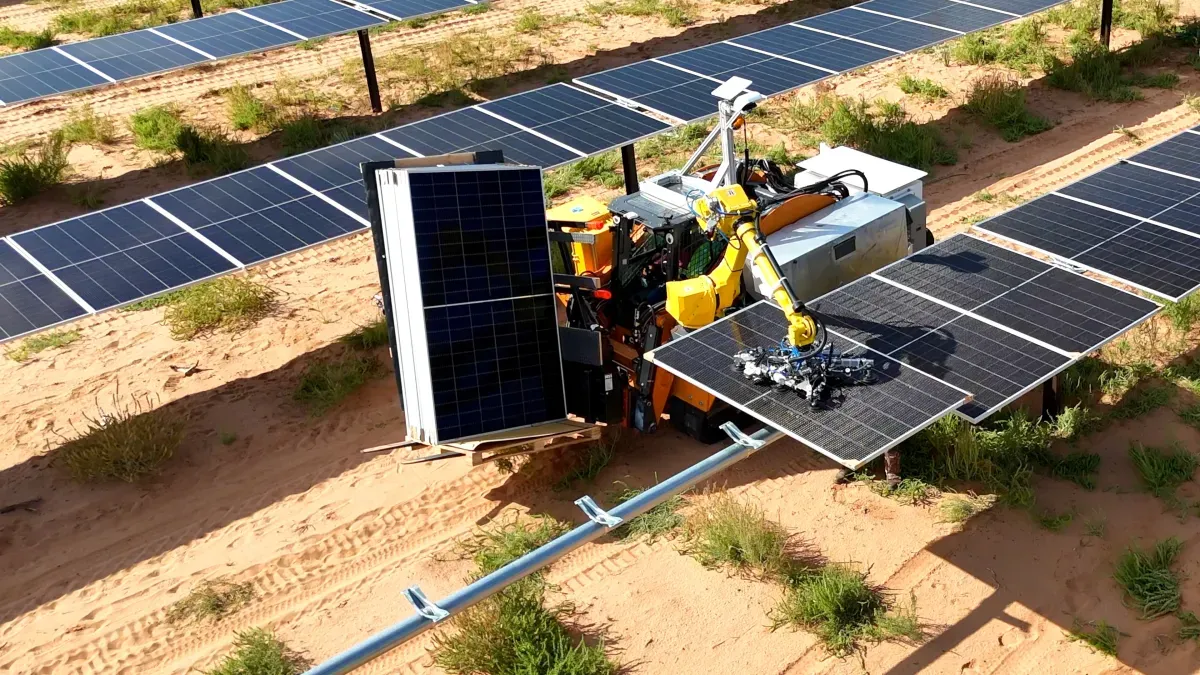
Gritt is exiting stealth with $34 million and a plan to automate the hardest tasks on construction sites, specifically for building solar plants. For decision-makers, the move signals more capital flowing into construction robotics at the exact moment solar demand and jobsite complexity are both rising.
Gritt is coming out of stealth with $34 million, and the company’s bet is blunt: automate the hardest tasks on construction sites, with an initial focus on building solar plants. That $34 million matters because robotics startups live or die by the unglamorous stuff. Not prototypes. Not demos. The messy, repeatable work that has to happen under real-world conditions, in real sequences, with real safety constraints.
So what does Gritt mean by “hardest tasks”? The core claim from TechCrunch is that Gritt intends to automate difficult site work. That framing matters more than the headline number because construction is not a single problem. It is coordination. It is tolerances. It is timing. Solar projects, in particular, are built by assembling many elements across large physical spaces, often involving uneven terrain, shifting logistics, and strict sequencing. Automating the toughest tasks is a way of saying, “We will go where manual labor is expensive, slow, and error-prone.” If Gritt can consistently reduce friction at the jobsite, the company is not just chasing efficiency. It is trying to shrink the calendar between planning and producing power.
Zoom out, and $34 million landing in robotics for construction is a category tell. Solar is one of the biggest growth areas in clean energy, and every megawatt has to be built physically, not just modeled. Even when solar technology itself is improving, the bottleneck can shift to deployment and construction capacity. That means automation can become a competitive lever for project developers and EPCs (engineering, procurement, and construction firms). If tasks can be automated or sped up, projects can absorb demand without proportionally scaling crews.
The other reason this matters is that jobsite robotics is where pilots get crushed. The reason most robotics efforts struggle is that the environment is not a lab. Construction sites are dynamic: materials show up on uneven schedules, conditions change, and safety requirements cannot be treated like optional guidelines. For investors and board members reading this kind of announcement, the stealth-to-funding arc is the part that usually signals seriousness. Gritt has already decided it needs capital now, which typically implies it has moved past early-stage exploration and is targeting deployment-grade progress.
Regulatory background is the quieter piece but still part of the risk equation. Construction work is governed by safety rules, permitting requirements, and compliance expectations that vary by jurisdiction. Robotics on a site does not erase those obligations. It changes how compliance is demonstrated. That can mean more documentation, more testing, and more coordination with site safety and permitting processes. Even without specific regulatory claims in the source, the practical takeaway is clear: automation efforts in construction must be designed to fit within existing safety and operational frameworks, not bypass them.
There are also second-order implications for adjacent players. If Gritt’s approach truly targets the “hardest tasks” and not just narrow, controlled operations, then the competitive pressure could move upstream. Construction robotics platforms can pressure contractors to rethink workflows, schedule buffers, and how they train and deploy human workers. That can lead to faster standardization, but also to internal resistance. Boards at contractors and project developers will care about integration: not just whether robots can do a task, but whether the task fits into the rest of the build.
Finally, the strategic stakes for peers are straightforward. Gritt’s stealth exit with $34 million is a reminder that capital is being allocated to reduce jobsite labor friction, specifically for solar plant builds. For founders, it is a signal that the market is searching for automation that works under pressure. For investors, it is a prompt to assess whether the team can translate funding into real deployments. For executives across construction, energy, and EPC, it is a heads-up that the cost and timeline of solar may increasingly depend on who wins the robotics integration race. If automation can shave meaningful time from construction, then the advantage accrues to whoever can scale it without breaking safety, quality, or delivery timelines.
This story's Key Insights and Take-aways are locked.
Create a free account to unlock Executive Actions for one credit.
Register to UnlockAlways free for Executives Club members. Join the Club
More in Technology

Google quietly links your phone number to every Android account on your SIM
Adding a SIM now ties your phone number to all Google accounts - and future accounts inherit it. Here's the security and privacy stakes.

Hijacker AI 'Skynet mode' runs 100,000 attack steps against exposed models
Symantec caught a criminal AI agent that borrows other models, steals data, and mines crypto; the only relief is no confirmed victims yet.

Nvidia's AI-financier shift faces its first big test as neoclouds stumble
A rout in neocloud stocks is forcing investors to weigh Nvidia's hidden exposure as both supplier and lender to the AI buildout.