

Gritt lands $26M Series A for AI construction robots to speed solar farms
San Francisco startup exits stealth with $32M total, led by Obvious Ventures, betting robotics will reshape solar build timelines.
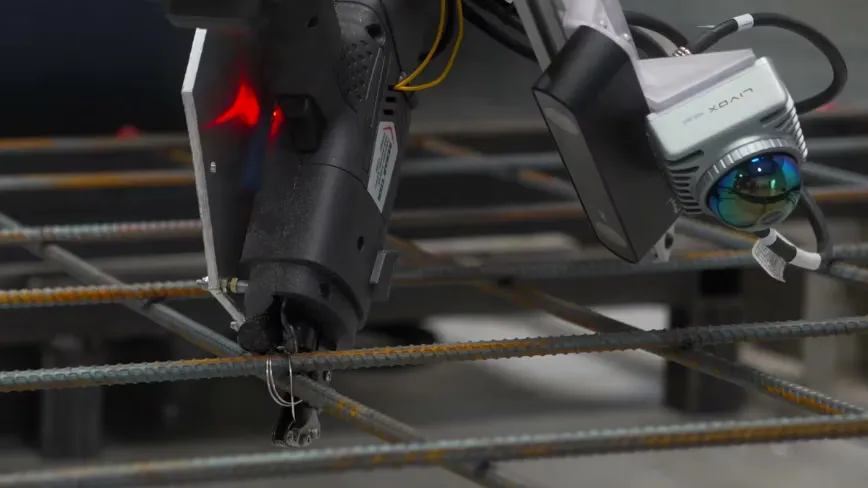
San Francisco-based Gritt exited stealth with just over $32 million in combined pre-seed and Series A funding, starting with AI-powered robotic systems for solar farm construction. The $26 million Series A was led by Obvious Ventures, with Union Square Ventures and Active Impact Investments participating, giving investors and project developers a new acceleration lever for large-scale builds.
Gritt, a San Francisco-based company, just exited stealth with just over $32 million in combined pre-seed and Series A funding to deploy AI-powered robotic systems on large-scale construction sites, starting with solar farms. The headline number that matters is the $26 million Series A led by Obvious Ventures, with Union Square Ventures and Active Impact Investments also participating.
In other words: this is not “AI for construction” as a vague research pitch. It is capital and product intent aimed at real work on big sites, where schedule slippage is expensive and margins get squeezed. Gritt’s approach is to bolt AI-powered robotics onto existing construction equipment, then use that to build faster. That detail matters because it signals a go-to-market strategy: integrate instead of replace.
To understand why this funding round is a bigger deal than it sounds, zoom out to how solar farms get built. Solar projects have a chain of dependencies, from site preparation to mounting structures to electrical work. Any delay in field operations can cascade into downstream issues: equipment availability, contractor scheduling, and ultimately the commercial timeline for power generation. Robotics that can compress the “hands-on” construction cycle can be valuable even if they only modestly improve productivity, because the real constraint is often coordination and time on site, not theoretical capability.
The financing structure also tells a story about risk allocation. Gritt’s exit from stealth comes with “just over $32 million” combined pre-seed and Series A, with the Series A at $26 million. That split implies the company already cleared early technical and execution hurdles well enough to earn a large institutional bet. For decision-makers, the practical question becomes: can Gritt’s systems deliver repeatable output across different site conditions, equipment types, and contractor workflows? If yes, the company is not just selling robotics. It is potentially selling a measurable schedule advantage.
Now add the competitive and adoption reality. Construction is famously sticky. Contractors and project owners do not switch toolchains lightly, especially on safety-critical sites. That is why “bolt onto existing construction equipment” is more than a product description. It is a reduction in switching cost. It lets a site keep familiar machinery while layering in automation. From a procurement standpoint, that can shift the debate from “Are you reinventing construction?” to “How quickly can you integrate and how reliable is it when the schedule is under stress?”
There is also an investor lens here. Obvious Ventures led the Series A, with Union Square Ventures and Active Impact Investments participating. Those names are not just trophies. They reflect a network that tends to back companies where operational leverage, not just novelty, is the core thesis. In board terms, it is a signal that the round is likely evaluated on field readiness, deployment velocity, and cost per unit of construction progress, not only on model performance.
Second-order implications are where this gets interesting for peers, especially anyone funding or governing infrastructure-adjacent tech. If AI robotics successfully accelerate solar construction, it can change bargaining power in procurement, because developers may prefer vendors who reliably shorten timelines or reduce labor intensity. It can also reshape internal planning at utilities and developers, as the forecast for commissioning dates becomes less sensitive to labor availability. Over time, that could make robotics a baseline expectation in certain segments of the build process, not a specialty add-on.
For executives watching these trends, the strategic stake is simple: whoever can convert AI into predictable construction throughput can influence project economics. Gritt is starting with solar farms, which is a high-visibility market with repeatable deployment patterns. If the company can scale its AI-powered robotic systems from initial deployments to more sites without turning integration into a recurring headache, it may become a procurement category of its own. And if that happens, boards and investors in construction, energy infrastructure, and robotics will have to update their assumptions about where the next productivity gains will come from.
This story's Key Insights and Take-aways are locked.
Create a free account to unlock Executive Actions for one credit.
Register to UnlockAlways free for Executives Club members. Join the Club
More in Technology

Google quietly links your phone number to every Android account on your SIM
Adding a SIM now ties your phone number to all Google accounts - and future accounts inherit it. Here's the security and privacy stakes.

Hijacker AI 'Skynet mode' runs 100,000 attack steps against exposed models
Symantec caught a criminal AI agent that borrows other models, steals data, and mines crypto; the only relief is no confirmed victims yet.

Nvidia's AI-financier shift faces its first big test as neoclouds stumble
A rout in neocloud stocks is forcing investors to weigh Nvidia's hidden exposure as both supplier and lender to the AI buildout.