

Guild Wars 3 hires Kazuma Jinnouchi, the Star Wars and Halo composer
ArenaNet’s soundtrack lead choice signals how it plans to win attention and retention in a brutal MMORPG market.
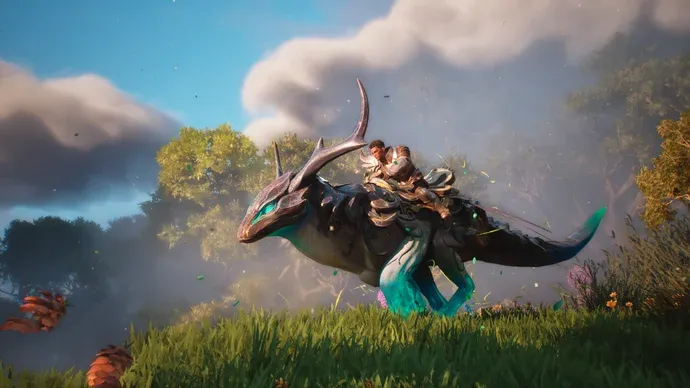
ArenaNet has confirmed Kazuma Jinnouchi as lead composer for its upcoming MMORPG Guild Wars 3, with him collaborating on the game’s soundtrack. His portfolio includes work on Star Wars, Metal Gear, and post-Bungie Halo projects, which raises the bar for how Guild Wars 3 will present itself.
ArenaNet has confirmed Kazuma Jinnouchi as the lead composer for its upcoming MMORPG Guild Wars 3, and he is collaborating on the soundtrack. This is not a generic “we hired talent” announcement. Jinnouchi is known for work on Star Wars, Metal Gear, and post-Bungie Halo games, so the choice is basically ArenaNet putting a recognizable emotional brand on the door of an MMO that still has to earn every minute of players’ attention.
For decision-makers, the key part is the timing and the signaling. Guild Wars 3 is “upcoming,” which means there is no finished product to judge yet. So when a company brings in a composer with a resume like this, it is choosing a lane: trying to turn the game’s identity into something instantly legible to an audience that tracks quality across franchises, not just genres. Music is one of the fastest ways games create memory. It is also one of the hardest to fix late, because you can’t slap a new musical voice on a live brand without major rework. ArenaNet is effectively locking in creative direction early.
To understand why executives should care, it helps to remember how MMORPGs compete in 2026 attention markets. These games are not just fighting other MMOs. They are competing with a full ecosystem of entertainment, including shooters, co-op games, and every platform trying to own a slice of your evenings. In that environment, launches and content drops are only part of the story. The other part is retention, the long middle where players decide whether a game still feels worth returning to. Audio and sound identity matter there because they make worlds feel consistent, even when players are doing mundane tasks for progression.
There is also a board-level reality behind soundtrack announcements. Production teams have multiple levers to pull as a project moves from planning to execution: narrative scope, art direction, system complexity, and yes, production quality like music. A named, high-profile creative lead is a classic way to coordinate internal priorities. It gives designers, cinematics teams, and gameplay leads something stable to build around. When a composer with experience across massive, story-forward franchises is brought in as lead, the expectation tends to be that Guild Wars 3 will aim for a cinematic emotional cadence, not just functional background tracks.
The fact pattern matters too: this announcement frames Jinnouchi specifically as “lead composer,” with him collaborating on the soundtrack. That implies the relationship is not purely advisory or a one-off track. It signals that the company is using him as a central creative node. In practical terms, that can reduce mismatch risk. Games often stumble when audio direction drifts away from gameplay pacing, UI states, and character moments. Having a single lead who can shepherd the soundtrack through those interactions is one of the quieter ways studios protect cohesion.
Second-order implications show up in how studios talk to their communities and partners. When you recruit someone known for Star Wars, Metal Gear, and post-Bungie Halo work, you create a narrative hook that extends beyond fandom. It tells players that the studio is not designing the game in isolation. It is drawing from proven craft in high-visibility properties. For ArenaNet, that can help in the earliest marketing cycles, where the goal is to generate interest before mechanics are fully understood. For partners and talent pipelines, it can also act as a signal about the seriousness of the project.
Even though the source does not mention regulatory issues, there is still a governance-adjacent angle executives typically weigh in creative hiring. Music rights, licensing, and asset management can become operational constraints later, especially as a live game scales to new regions and distribution models. While nothing new is claimed here, the broader industry context is that soundtrack choices influence how easily teams can ship updates, re-use themes across content, and manage rights for derivative uses. Bringing in a lead composer early helps operational planning because the studio can standardize how music is authored and integrated.
For peers running or investing in MMORPGs, the strategic stake is simple. You can’t outspend the whole market every quarter, but you can out-craft identity. ArenaNet’s decision to confirm Kazuma Jinnouchi as lead composer for Guild Wars 3 is an identity bet. It is also a risk bet: if the game ultimately lands, the soundtrack can become part of the reason players stay; if it misses, a high-profile lead will raise the baseline expectation from day one. Either way, it makes clear that ArenaNet is preparing Guild Wars 3 to compete on more than systems and features.
This story's Key Insights and Take-aways are locked.
Create a free account to unlock Executive Actions for one credit.
Register to UnlockAlways free for Executives Club members. Join the Club
More in Entertainment

Ali G's 'stooge' says he was in on joke, outplayed Sacha Baron Cohen
A 54-year-old aspiring actor says he recognized Sacha Baron Cohen mid-shoot, kept his MAGA act up, and let the film-makers think they had fooled him.

Entertainer Russell Brand denies 7 sex charges amid accuser's 'couldn't breathe' claim
The alleged victim's account sharpens the reputational and legal stakes for Brand, his platforms, and any business tied to a public figure under criminal scrutiny.

Russell Brand's accuser 'bewildered and confused' as he denies 7 sex charges
The criminal case against the comedian is a live test of how media companies manage talent risk when serious allegations go public.