
Haaland’s Norway moment: 260 international goals is plausible, if time and math align
Erling Haaland could reach an absurd international total, and the pathway depends on minutes, match counts, and performance.
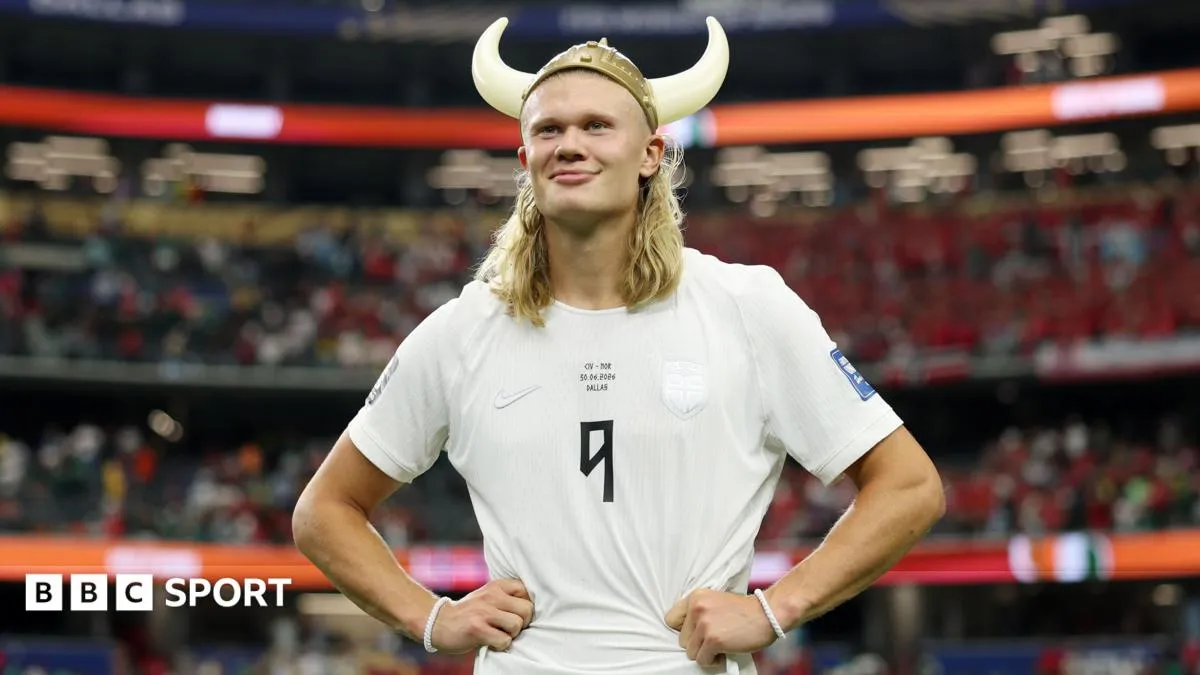
Erling Haaland is delivering for Norway on a bigger stage yet, and the BBC Sport piece asks how many international goals he could realistically end up with. The consequence for decision-makers is a reminder that international goal records are shaped by both talent and the unglamorous constraints around selection, fixtures, and longevity.
Erling Haaland’s impact on the pitch is already hard to ignore. The BBC Sport question is not “can he score,” it is “how many,” and specifically whether Haaland could end up with 260 international goals.
That number sounds like pure internet fan math until you unpack what has to be true for a player to stack that kind of tally for a national team over time. The core idea behind the possibility is simple: international goal totals are not just about finishing ability. They are also about how consistently a striker gets picked, how many matches the team plays in the relevant window, how long the player stays healthy and influential enough to keep starting, and whether his goal rate remains high as competition and match styles change.
Haaland is currently positioned to deliver on Norway’s biggest stage yet, according to the BBC Sport framing. “Biggest stage” matters because international tournaments and high-stakes qualifiers tend to compress the schedule and raise the frequency of matches that matter. For executives and operators who think in systems, that is the first lesson in the Haaland scenario. A player’s output is not created in a vacuum. It is produced at the intersection of team strategy, coaching decisions, and the match calendar that comes with qualification cycles and tournament formats.
There is also a second-order angle that often gets lost when people talk about goal records: international football has structural limits that do not exist in club football. Club seasons are long, leagues run on predictable schedules, and there is usually a stable rhythm of domestic and European fixtures. International football is more episodic. Teams only play when qualifiers and tournaments roll around, and the rest of the time is occupied by domestic club obligations, travel, injuries, and recovery. That means a striker’s runway for international scoring is tightly coupled to fitness management and to whether managers trust the striker to start and play enough minutes in the matches that actually count.
If you are a board member or a senior football executive, the “defying logic” part of the BBC Sport title is a signal to look beyond raw talent. A player reaching 260 goals would require not just moments of brilliance, but an extended sequence of reliable selection and production. The higher the total, the more the math depends on longevity, not just peak performance. Over time, even elite forwards face changes in role and game plan. National teams sometimes adjust tactics around their best attackers, but they also evolve their opponents’ scouting. That can either sustain the goals or gradually reduce the number of high-quality chances.
So what does 260 really mean in practice? It means the player would likely need both a high goal rate and a long international career window where scoring opportunities keep coming. And since international football is built around qualifying cycles and tournament participation, the number of matches in his prime years matters as much as the minutes he plays. If Haaland’s national-team involvement remains central across those cycles, the pathway becomes less fantastical and more like a compounding advantage.
The other implication is how record-setting changes behavior around the player. National teams, managers, and even federation decision-makers can become more focused on maximizing that striker’s impact, whether that is through lineup choices, chance creation priorities, or how risk is managed when the team needs results. Even when the tactical details differ, the incentive is consistent: when a team has a forward capable of carrying match outcomes, it tends to organize itself to give him the best shot at doing that again and again.
For peers in similar roles, the strategic stake is not whether Haaland will definitely get to 260. The stake is recognizing what the BBC Sport piece highlights: extraordinary international goal tallies are a product of both excellence and system conditions. If you are running a football operation, you can learn from the structural constraints, then apply that lens to your own talent planning. Great performance matters, but the real scoreboard is built by availability, fixture volume, trust in starting roles, and the long-run ability to keep output high as the calendar moves from one cycle to the next.
This story's Key Insights and Take-aways are locked.
Create a free account to unlock Executive Actions for one credit.
Register to UnlockAlways free for Executives Club members. Join the Club
More in Entertainment

Extraction 3 starts filming on Netflix, with Chris Hemsworth and Idris Elba returning
The hit action franchise is back in production, turning Netflix’s blockbuster sequel plans into a live, measurable pipeline.

Matthew Needham voices The Joker in Batman: Caped Crusader Season 2
Prime Video confirms the casting from Comic-Con, with Season 2 launching July 31 alongside the new game.

Amazon’s Batman game launches July 31 with Prime, using phones as controllers
Batman: Caped Crusader - Chronicles drops alongside Season 2, and Prime members get it at no extra cost.