
Hackers make Doom run on stock Neo Geo, using a fake frame buffer and big compromises
Two Neo Geo projects prove the “impossible” claim was wrong, but the port only works by bending graphics hard.
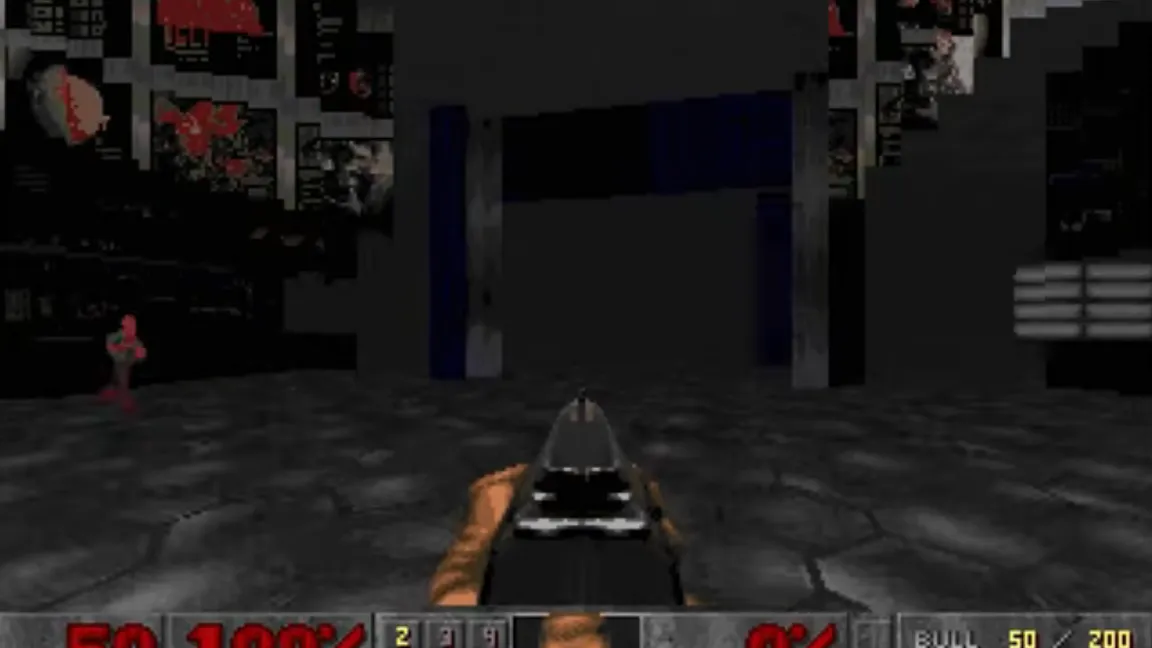
After Modern Vintage Gamer (MVG) argued Doom was functionally impossible on the Neo Geo, two newer projects showed meaningful progress on stock hardware. The Doom64KB effort by coder FrenkelS, plus another effort, push Doom-like gameplay by exploiting the console’s fix layer memory to mimic a frame buffer.
Last month, Modern Vintage Gamer (MVG) made a confident claim: Doom was functionally impossible to run on the Neo Geo. The reason sounded technical and final, tied to how the console handles visuals with sprites and to its lack of a conventional frame buffer. The punchline is that dedicated hackers did not just challenge that statement. They built prototypes that actually run Doom-like code paths on stock Neo Geo hardware.
Two recent projects now demonstrate that “impossible” was more of a dare than a verdict. They do not deliver a modern, no-compromise port, and both require significant graphical compromises. But for executives and product leaders thinking about legacy platforms, sunk cost, and what “can we do it?” really means, the core lesson is immediate: clever coding plus targeted tricks can force old systems to behave in unexpected ways.
The Doom64KB project, created by coder FrenkelS, is the clearest example of how the trick works. FrenkelS adapted an earlier Doom port they had designed for 16-bit PC processors like the 8088 and 286. In other words, this was not a random miracle built from scratch. It was engineering with reuse, then retooling the engine for the Neo Geo’s constraints.
From there, the Neo Geo code makes a kind of proto-frame-buffer using the console’s fix layer. The fix layer is display memory typically used for menus and HUD information on top of gameplay. On a normal path, you would not treat that region like a full-screen rendering target. But the project effectively repurposes that memory to approximate the missing frame buffer concept. That matters because a frame buffer is what many rendering pipelines rely on to prepare a full image, then show it. Without it, you either redraw constantly in a way the hardware supports or you simulate a buffer using whatever memory area gives you the right control.
There is another non-obvious consequence embedded in the Doom64KB approach: it shifts the problem from raw compute to display architecture. On legacy hardware, the bottleneck is rarely just “how fast can the CPU run code.” It is also about what the graphics subsystem can store, rearrange, and scan out. By using the fix layer, the project is choosing a trade: it gains a practical rendering mechanism, but it forces limitations that would not pass as a mainstream, marketable, '90s-era console port without compromises.
MVG also outlined those compromises in the original discussion, and the new work is consistent with that reality. Even if it looks like Doom if you squint, it is not the kind of Doom port that would comfortably satisfy most players who expect the full fidelity of PC versions. The projects are more like proofs of capability than turnkey products. Still, in terms of credibility, they are valuable. They show that with enough targeted optimization, “functionally impossible” claims can unravel.
Zoom out and this becomes more than retro gaming trivia. Boards and leadership teams routinely face the same structure of questions: a platform has an architectural constraint, a platform has a missing component, and an early assessment says the goal is blocked. The Neo Geo story is a reminder that constraints are not binary. They can be worked around by rethinking where data lives, where frames are assembled, and which existing subsystems are repurposed. Second-order, it suggests that when teams evaluate feasibility, they should look for alternative pipelines, not only for direct feature parity.
Strategically, these projects also underline a different kind of incentive. Hackers are motivated by novelty, mastery, and community proof. Businesses are motivated by distribution, support costs, and player expectations. The gap between those incentives is why the Doom ports stand as technical progress while still falling short of “marketable, '90s-era console port” quality. For executives in modern companies, the takeaway is not that every “impossible” claim is wrong. It is that the right path often starts with a constraint audit that focuses on the hardware’s quirks, not its missing pieces.
Ultimately, Doom running on stock Neo Geo hardware is the headline outcome. The bigger story is the method: adaptation from older Doom ports, then using the fix layer as a proto-frame-buffer to bend display behavior into something playable. It is a reminder that legacy systems can surprise you, but only when someone is willing to accept compromises and build the pipeline anyway.
This story's Key Insights and Take-aways are locked.
Create a free account to unlock Executive Actions for one credit.
Register to UnlockAlways free for Executives Club members. Join the Club
More in Technology

Google quietly links your phone number to every Android account on your SIM
Adding a SIM now ties your phone number to all Google accounts - and future accounts inherit it. Here's the security and privacy stakes.

Hijacker AI 'Skynet mode' runs 100,000 attack steps against exposed models
Symantec caught a criminal AI agent that borrows other models, steals data, and mines crypto; the only relief is no confirmed victims yet.

Nvidia's AI-financier shift faces its first big test as neoclouds stumble
A rout in neocloud stocks is forcing investors to weigh Nvidia's hidden exposure as both supplier and lender to the AI buildout.