

Hasbro books $56m video-game write-down, kills several 2028+ titles
A $56 million impairment charge confirms Hasbro cancelled multiple games beyond 2028. Here is what that signals to investors and operators.
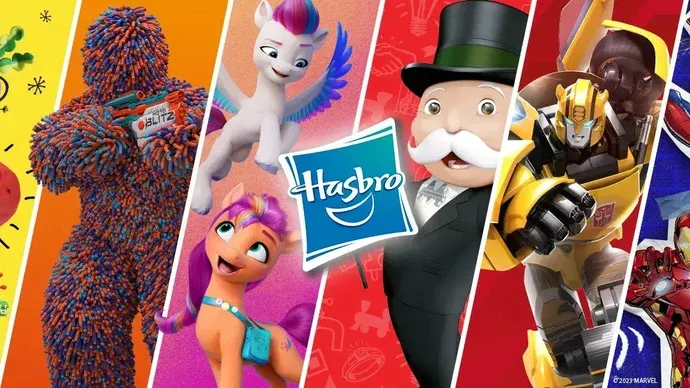
Hasbro recorded a $56 million impairment charge against its video game portfolio, confirming it has cancelled several games scheduled for release in 2028 and beyond. For decision-makers, the move is a concrete marker of how the company is pruning long-dated bets in games.
Hasbro has recorded a $56 million impairment charge against its video game portfolio, and the filing detail that matters is simple: the company has cancelled “several games” scheduled for release in 2028 and beyond. That is not just accounting housekeeping. An impairment is the financial system telling investors the asset is no longer expected to deliver the future value it once assumed.
In other words, games Hasbro planned to ship in the 2028+ window have already been pulled from the pipeline, at least for now. When a publisher cancels releases so far out, it usually means the risk math changed: timelines slipped, market expectations shifted, or internal capital priorities tightened enough to stop funding those paths. The headline point is confirmed by the consequence attached to it. Hasbro is no longer treating these later releases as probable winners.
To understand why this gets attention far outside Hasbro’s own studio walls, look at how video game portfolios are managed. Major publishers often treat development like a multi-year portfolio, where some projects are expected to underperform, others eventually break out, and the whole system relies on a few high-confidence targets. But the farther out a release is scheduled, the more assumptions stack up. Engine readiness, live-ops performance, marketing efficiency, talent retention, platform dynamics, and consumer demand can all shift before launch day. That is why impairment charges show up when the “expected future economics” no longer clear the threshold management once used.
This is also a signal about how companies are managing long-dated uncertainty in capital allocation. Hasbro is not alone in tightening. Across the industry, publishers have faced a brutal combination of higher development costs, shifting consumer tastes, and increasing performance variance. The strategic question boards and CFOs keep asking is not whether games can be profitable, but which projects can deliver on realistic timelines and with realistic return profiles. Cancelling games years before release is one of the cleanest answers a company can give, because it converts uncertainty into visible cost and visible savings.
There is a second, quieter layer here: the optics of writing down content that was previously considered part of the value proposition. Impairments are often read as a credibility test for pipeline planning. Investors may ask whether earlier portfolio forecasts were too optimistic, whether production slippage happened, or whether leadership changed its view of what a “fit” franchise looks like. Even without additional details, the size matters. A $56 million impairment is large enough to move perceptions, especially when tied to cancellations scheduled for 2028 and beyond, not the near-term.
Regulatory and reporting context matters too, because the financial disclosure frame is designed to be legible to the market. When impairment charges appear in reporting, they generally reflect a formal assessment of recoverable value versus carrying value for relevant assets. That means the decision was not purely operational. It was financial, governed by accounting rules, and reviewed through internal controls that normally involve finance leadership and board oversight. In practical terms, this is a paper trail of a strategic pivot.
For executives at other publishers, distributors, and platform-facing studios, the second-order takeaway is that long pipeline calendars are not fixed commitments. A “scheduled” game can become a “cancelled” game well before it ever reaches pre-orders. That affects partner planning too, including subcontractors, co-development schedules, localization vendors, and marketing calendar partners. If one publisher can write down assets and remove 2028+ titles from the plan, it creates a broader reminder that the industry’s runway is only as stable as the assumptions supporting it.
So what is the stake for decision-makers reading this? If you run a studio portfolio, a publisher pipeline, or an investment thesis in gaming, the Hasbro impairment is a measurable datapoint: the market and internal expectations are driving earlier exits from projects than before. The $56 million charge and the cancellation of several 2028+ games tell peers that pruning is not a theoretical strategy. It is an executed financial move, and it can happen long before launch day.
This story's Key Insights and Take-aways are locked.
Create a free account to unlock Executive Actions for one credit.
Register to UnlockAlways free for Executives Club members. Join the Club
More in Entertainment
12TB Steam 'teraleak' goes beyond Valve: GTA 3, Mafia 2 prototypes exposed
A 12-terabyte dump of Steam data reveals prototypes and builds of third-party classics like GTA 3 and Mafia 2, plus unreleased Valve content, rewriting game history.

LinkedIn's romance problem: 1 in 4 workers say dating on it is fair game
A new survey shows a quarter of U.S. employees treat the professional network as fair game for romance, even as LinkedIn bans it and removes hundreds of thousands of offending posts.

Enhypen's first No. 1 album breaks K-pop's Billboard 200 streak
The K-pop group's 98,000-unit debut tops the chart while Dolly Parton's catalog reentry shows how death reshapes streaming.