
Helicobacter bacteria found in pygmy sperm whales’ stomachs, damaging all four infected carcasses
A new study identifies three unknown Helicobacter types and shows severe digestive injury, though death wasn’t proven bacterial.
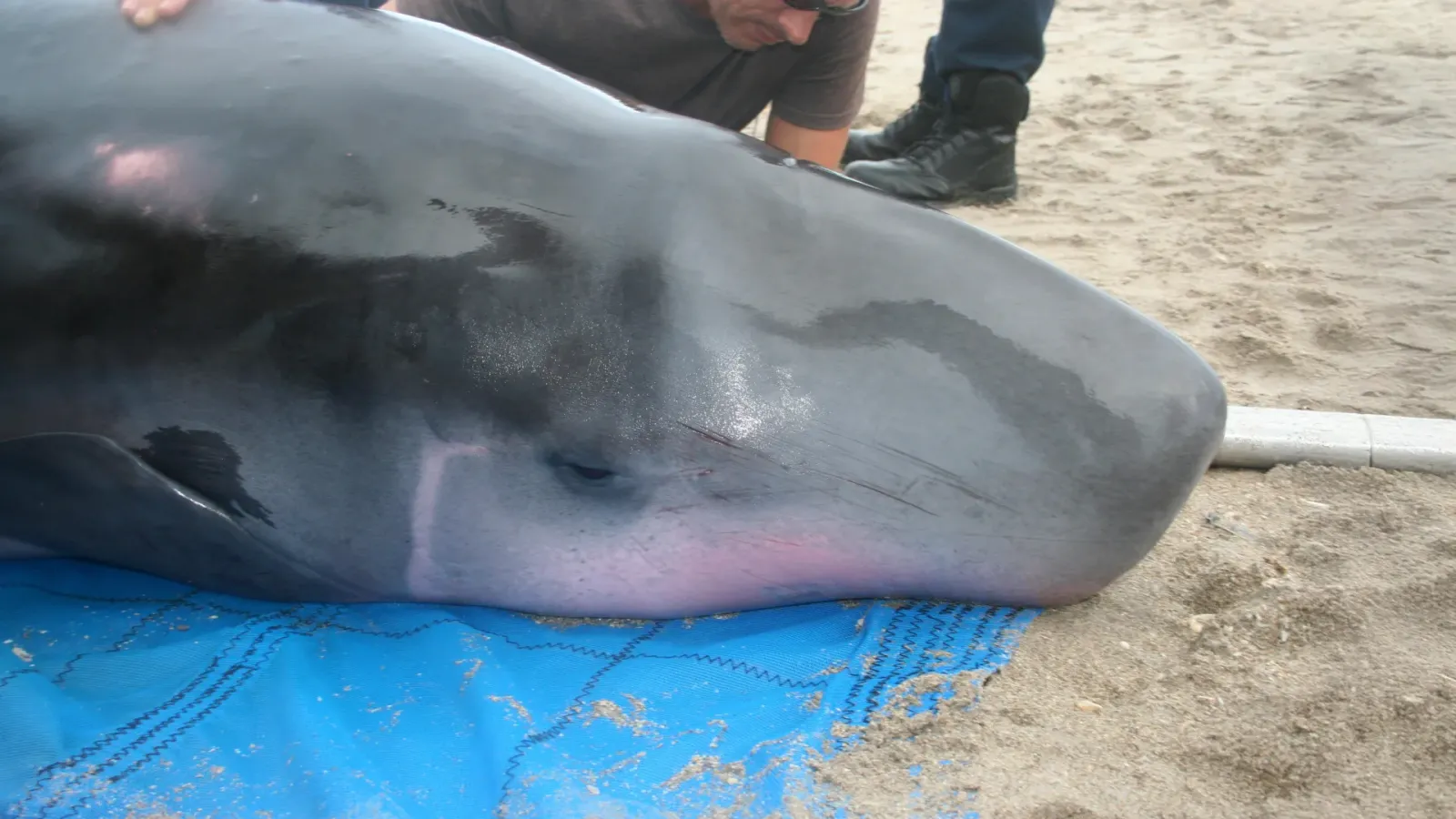
Scientists studying decades of pygmy sperm whale strandings report three previously unknown Helicobacter bacteria types in four whales’ stomachs. The findings come with severe digestive damage, including inflammation, ulcers, scarring, and parasite infestations.
Scientists have uncovered three previously unknown types of Helicobacter bacteria hiding in the stomachs of pygmy sperm whales. The study ties the discovery to all four infected whales in their dataset, each showing serious digestive damage including inflammation, ulcers, scarring, and parasite infestations. Importantly, the researchers did not confirm the bacteria as the cause of death, but the pattern is hard to ignore: mystery microbes plus visible injury in the same vulnerable organ.
Here is the immediate reality check for anyone managing risk, funding research, or setting policy around marine health. The animals were not just “harboring bacteria.” The infected whales showed damage deep in their digestive systems, which is the sort of biological stress signal that can change how scientists interpret strandings and how managers plan responses. Even without a proven causal chain to death, finding novel Helicobacter types in the stomachs of elusive whales moves the evidence forward, from rumor and speculation to something testable.
Why does this matter beyond marine biology trivia? Pygmy sperm whales are among the ocean’s most elusive species, and strandings are one of the few windows researchers get into their health. When scientists study strandings over decades, they are essentially building a long-running dataset from unfortunate events. That makes the discovery consequential for how institutions evaluate what “counts” as a health driver. If new pathogens or bacterial groups are showing up alongside specific tissue damage, the next question is not just “what is present,” it is “what does presence do to function,” and “how often does this co-occur with other stressors like parasites.”
The study also points to a familiar problem for decision-makers: correlation versus causation. The researchers did not confirm that the Helicobacter bacteria were the cause of death. That single sentence is operationally important. In public health and in environmental monitoring, people often want a clean culprit. But biology is messy, and the evidence may show a credible association without closing the loop on mortality. That means stakeholders should read the finding as a strong lead, not a completed verdict.
There is also a regulatory and governance angle, even for executives not steeped in microbiology. When pathogens and disease markers are detected in wildlife, questions can spill into permitting, conservation strategy, and how agencies design monitoring programs. Regulators and conservation organizations often need to decide how aggressively to collect samples, how to standardize diagnostic methods, and how to communicate uncertainty. A discovery of three previously unknown Helicobacter types gives scientists a clearer target for future testing, which can tighten study design and improve the comparability of results across time and locations.
Now zoom out to second-order implications. First, if the stomach is the site where both bacterial colonization and ulcer-like tissue outcomes show up, then parasite infestations being present too suggests a multi-factor pathway. Even though the study did not confirm causation, it raises the possibility that digestive dysfunction, immune stress, or ecological conditions could be involved. For boards and leaders funding marine research, that usually translates into a need for broader sampling frameworks, not narrower single-agent hunts.
Second, novelty matters. “Previously unknown types” implies these bacteria are not simply routine passengers already cataloged. That can change what monitoring looks like. It may require new assays, updated reference databases, and tighter coordination among labs so that future strandings can be compared with earlier findings rather than treated as isolated curiosities.
Third, the whale’s biology is the message. All four infected whales showing serious digestive damage means the signal is consistent across cases within the study sample. Even without confirmed death causality, consistent injury patterns can influence how teams prioritize follow-up work, including histological review, bacterial profiling, and attempts to untangle how parasites and bacteria interact. Executives in research, conservation, and science policy should treat that consistency as a leverage point: it can justify scaling up targeted diagnostics while still being honest about what is not proven.
For peer stakeholders making decisions about marine health programs, the strategic stake is straightforward. Strandings will keep happening. The question is whether organizations can turn them into actionable biological insight instead of fragmented anecdotes. This study provides a concrete new biological lead inside pygmy sperm whale stomachs and pairs it with visible digestive harm, setting up the next phase of work to test causality, clarify frequency, and refine the health models that guide conservation and monitoring efforts.
This story's Key Insights and Take-aways are locked.
Create a free account to unlock Executive Actions for one credit.
Register to UnlockAlways free for Executives Club members. Join the Club
More in Science
2026 Nikon Small World Winners Reveal the Hidden Machinery of Everyday Life
A mycologist's frozen Edinburgh garden became the backdrop for vivid views inside cells, a reminder of what advanced imaging now makes visible to researchers and the industries built on biology.

Study: 1 in 4 depression cases may be a body-clock problem, not a chemical one
A 10,000-person study finds standard antidepressants often fail these patients, but melatonin and morning sunlight may hit the real root cause.

Start-Up Says A.I. Designed a Virus to Attack One Patient's Superbug
If the claim holds up, personalized phage therapy could become a new frontline weapon against antibiotic resistance - but proof is far from final.