
House of the Dragon S3E5 kills Ser Criston Cole off-screen irony with three arrows
The episode sets Criston's “own” death speech, then Fire and Blood gives him a sharper, uglier end.
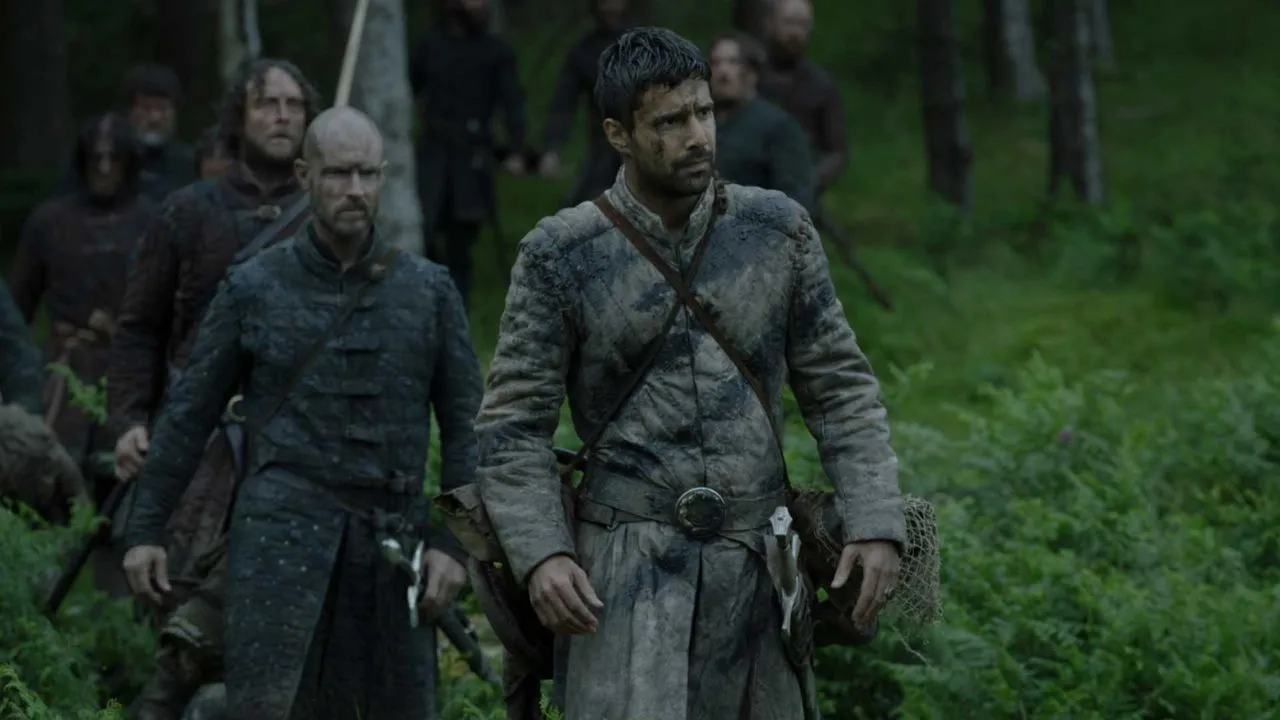
In House of the Dragon season 3, episode 5, Ser Criston Cole walks with Ser Criston Cole and Gwayne Hightower, delivers a rousing death speech, and fully expects to die as the realm's greatest warrior. Fire and Blood, however, ties his fate to a Black army confrontation where three arrows swiftly strike him dead, cutting off any chance for songs to reach Alicent.
House of the Dragon season 3, episode 5 sets up Ser Criston Cole’s death with the kind of foreshadowing that feels almost too on-the-nose. He walks for miles with the green army and Alicent Hightower's brother, Gwayne Hightower, and he does not just look like a man marching toward danger. He acts like a man rehearsing the story people will tell afterward.
The episode then pays off that expectation in a different way, by giving Criston a speech that promises glory, autonomy, and audience. He declares, "I am the realm's greatest warrior, and I will die as such, clear-eyed, unbent, glorious in battle, and not in their service, finally, but in my own." He even hopes songs of his death reach Alicent. If you are watching and thinking, "Okay, this is building to a proper, heroic end," Fire and Blood disagrees, and the disagreement is the point.
Here is the irony Fire and Blood puts on the table: Criston’s grand hopes collapse the moment he is confronted by the black army, along with his host. He doesn't get the negotiation-to-truce version of events that his speech implies. Instead, he unsuccessfully tries to negotiate for the lives of his men if he surrenders. That attempt matters because it shows the same tension the show has been teasing all season: Criston is not just trying to survive. He is trying to control the terms, to make his ending mean something. But the black army does not reward bargaining.
When negotiation fails, Criston tries to force the confrontation into his preferred shape. He battles against his three challengers, framing the matchup as a test of his worth: "One of me against three of you. Will that be enough to make a fight of it?" That is the language of a man who wants a clean narrative, one that lets him be both brave and singular. And yet the outcome is neither clean nor cinematic in the way he imagines.
One member of Team Black, Longleaf the Lionslayer, signals archers. Then three arrows swiftly strike Criston dead. In a cruelly efficient cap to the episode’s earlier buildup, the death is fast and blunt, not the extended tableau Criston hoped would become legend. Longleaf delivers the moral verdict as well as the tactical one: "I'll have no songs about how brave you died, Kingmaker," followed by the explanation, "There's tens o' thousands dead on your account." It is not only that Criston dies. It is that the people who might have turned his end into a hymn get denied the script.
If you are a modern viewer, the immediate takeaway is cinematic: the show teases steadily building tension, and you expect a climactic showdown. This installment even notes that no battles break out in the present moment, making the promise of future confrontation feel inevitable. But the deeper payoff is narrative and thematic. The story is telling you that the loudest claims about dignity and destiny can still end in anticlimax. In this case, Criston’s grand hopes all come to nothing, because an anticlimactic death is awaiting him, and no songs will reach Alicent.
Now, zoom out from the fantasy. Why does this kind of foreshadowing and reversal matter beyond fandom? Because it reflects a constant pattern in high-stakes environments: the story you tell yourself about control often fails at the moment execution hits. In corporate terms, it resembles the gap between strategy decks and real-world constraints. Criston’s speech is strategy. The black army’s archers are execution. When execution is faster than your narrative, the narrative loses, even if it sounds powerful.
For executives, founders, and anyone sitting in a decision seat, the second-order implication is uncomfortable in a practical way. When you assume the end state will match your desired framing, you risk ignoring signals that outcomes will be defined by counterpart behavior, not your intentions. Criston tries negotiation, then chooses a fight he can narrate as “one vs three.” He still gets a result that is governed by someone else’s plan, and by the speed of their tools. This is the same kind of lesson boards and leadership teams learn when bargaining turns into a hard pivot, or when a process moves faster than stakeholder alignment.
House of the Dragon continues weekly on HBO in the US and HBO Max, Sky, and NOW in the UK, which means there is a steady cadence of tension building and payoffs. Episode 5 is one of those moments where the show’s pacing feels deliberate: it lets you feel the inevitability of a showdown, then undermines the expectation of how “glorious” that showdown will be. If you want to understand where this season is going, look less at what Criston hopes people will say, and more at what his enemies are willing to do instead. That is where the real stakes are hiding.
This story's Key Insights and Take-aways are locked.
Create a free account to unlock Executive Actions for one credit.
Register to UnlockAlways free for Executives Club members. Join the Club
More in Entertainment

12TB Steam 'teraleak' goes beyond Valve: GTA 3, Mafia 2 prototypes exposed
A 12-terabyte dump of Steam data reveals prototypes and builds of third-party classics like GTA 3 and Mafia 2, plus unreleased Valve content, rewriting game history.

LinkedIn's romance problem: 1 in 4 workers say dating on it is fair game
A new survey shows a quarter of U.S. employees treat the professional network as fair game for romance, even as LinkedIn bans it and removes hundreds of thousands of offending posts.

Enhypen's first No. 1 album breaks K-pop's Billboard 200 streak
The K-pop group's 98,000-unit debut tops the chart while Dolly Parton's catalog reentry shows how death reshapes streaming.