

House passes $1.15 trillion defense bill, Republicans push through while Democrats call it embracing war
The vote clears a massive price tag for defense policy, but the political fight over Iran shifts board-level risk appetites.
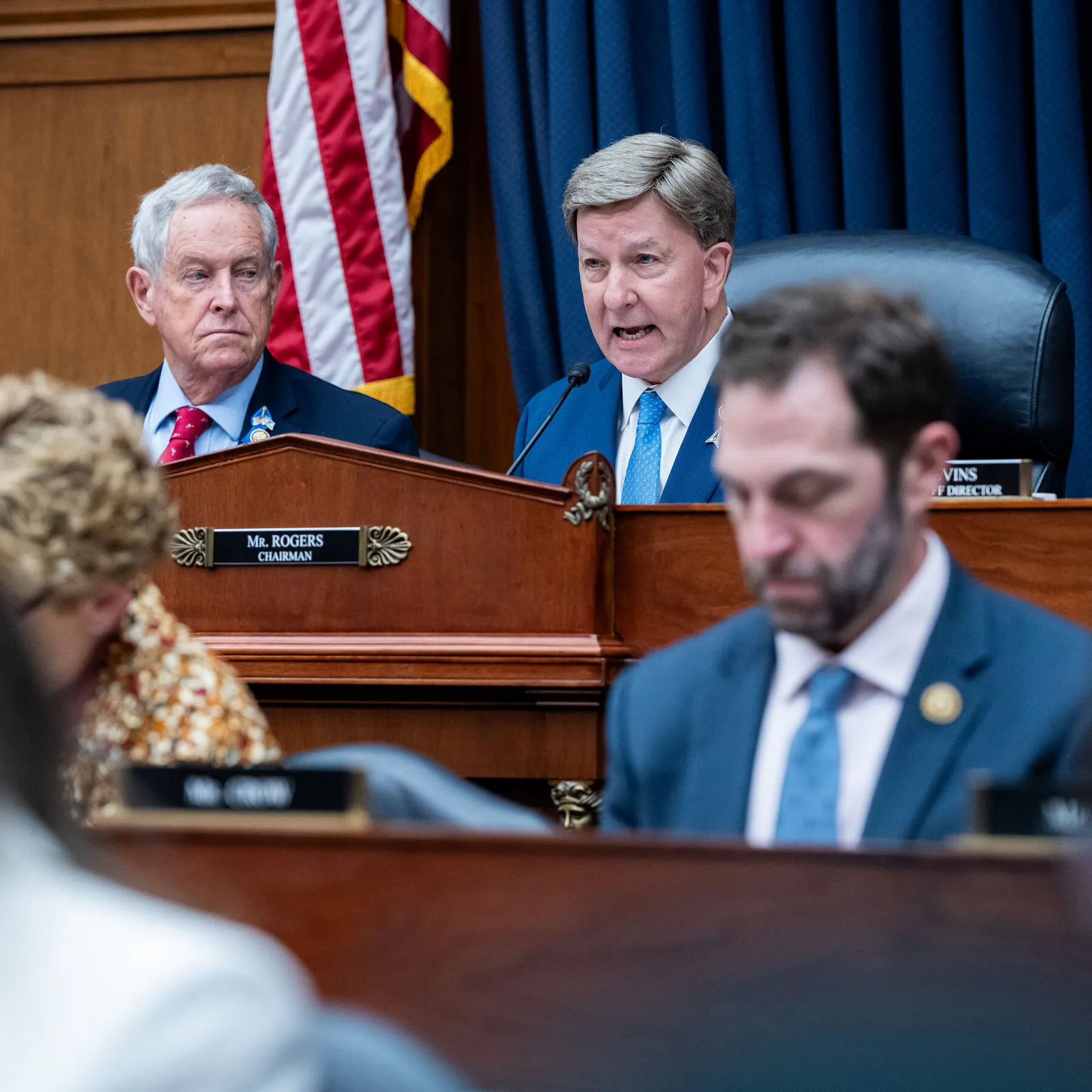
The House passed a $1.15 trillion defense bill after Republicans pushed it through despite opposition from Democrats. The consequence is that the bill becomes a near-term governance reality for decision-makers as Iran-related war policy divides legislators.
The House passed a $1.15 trillion defense bill, and it did not happen in a polite, bipartisan haze. Republicans pushed the bill through, while Democrats opposed it and said backing the legislation was akin to embracing the war.
That single clash of framing is the entire story, and it matters beyond cable-news theatre. When lawmakers disagree so sharply over whether a bill is effectively endorsing an active conflict, it signals that the legislation is not just policy. It is a political commitment that will shape how future funding, oversight, and procurement decisions move, and how businesses and investors read congressional intent when the topic is defense and Iran.
Zoom out for a second to understand why this kind of bill can feel like a high-stakes turning point even when it is “just” legislative process. A defense bill at the $1.15 trillion scale is a capital allocation machine. It funds programs, sets priorities, and influences what gets ordered, supported, and scaled. For companies tied to defense procurement and contractors, this is not abstract. Budget authority and legislative direction can determine demand schedules, hiring plans, supply chain commitments, and the timing of revenue.
Now add the political fracture. Democrats arguing that backing the bill is like embracing the war means they are putting a moral and strategic label on the funding. That label can show up later as tougher oversight or more conditional support, even if the bill passes. In practical terms, decision-makers should assume that the “how did you vote” question will come back in committee hearings, appropriations refinements, and future authorization debates. Businesses that rely on stable planning do not just need money. They need clarity about whether the money will stay intact, whether programs will face accelerations or delays, and whether specific lines will attract scrutiny.
There is also a second-order governance effect for corporate leadership. When Congress treats a defense funding bill as a proxy for war support, it increases reputational risk for the companies in the orbit of those programs. That does not mean companies cannot benefit from appropriations. It means boards and executives have to manage the narrative alongside the numbers. If lawmakers are publicly debating whether the legislation aligns with war or restraint, it becomes easier for outside stakeholders to pressure firms for transparency, compliance posture, and ethical framing.
Another reason this matters to decision-makers is that “passing” in the House is only one step in the legislative pipeline, and the political divide can change the shape of what comes next. The source is clear on the House action: Republicans pushed through the $1.15 trillion bill over opposition from Democrats. From there, the conflict over how to characterize the legislation, particularly in relation to Iran and the “war divide” framing, can influence how negotiations proceed, how adjustments are debated, and how durable the final product is.
Finally, this is a reminder that in defense policy, the line between geopolitics and budgets is thin. The moment Congress decides to move a large package quickly, it creates momentum that can be hard to slow later. But because Democrats are on the record opposing it and equating support with embracing the war, the legislative record carries friction. For executives and investors trying to model policy risk, friction is not noise. It is volatility. It can affect how committees interpret spending, how quickly oversight tightens, and how politically exposed specific programs become.
If you are a CEO, CFO, or board member looking at defense-adjacent demand, the headline is the operational reality: Republicans pushed through a $1.15 trillion defense bill, and Democrats resisted, saying backing it is like endorsing the war. The stake is whether that reality becomes stable planning runway or a recurring political battleground that injects uncertainty into procurement, compliance, and public perception for everyone downstream.
This story's Key Insights and Take-aways are locked.
Create a free account to unlock Executive Actions for one credit.
Register to UnlockAlways free for Executives Club members. Join the Club
More in Politics

LA County: DOJ's 20,000 'noncitizen' voter list is 'unreliable,' includes U.S.-born
Preliminary review by Los Angeles County election officials finds errors in the federal list, raising the stakes for voter roll integrity ahead of November.

Trump's $1.5B Pentagon chip investment lands in North Carolina
A $1.5 billion defense infusion for North Carolina chipmaking signals a new era of Pentagon-backed reshoring - here's what it means for the industry.

Nigeria confirms first Ebola case in Abuja, a woman just off a Uganda flight
Health Minister Muhammad Ali Pate says the patient flew in from Uganda, putting Africa's latest outbreak on Nigeria's doorstep.