
Houthi claims hit Saudi tankers, as US strikes Iran and IRGC stops Hormuz crossings
A contested Red Sea and Strait of Hormuz are colliding, with claimed tanker attacks and IRGC stoppages reshaping risk for energy flows.

Iran-backed Houthi Yemeni rebels claimed attacks on Wednesday evening in the Red Sea against two Saudi oil tankers. Meanwhile, the United States continued its strikes against Iran, and the Iranian Revolutionary Guards said on Thursday they stopped three oil tankers attempting to cross the Strait of Hormuz.
Here is the moving part nobody in energy risk departments can ignore: Houthi rebels claimed they attacked two Saudi oil tankers in the Red Sea on Wednesday evening, while the United States kept striking Iran and Iran’s Revolutionary Guards said they stopped three oil tankers trying to cross the Strait of Hormuz. That is not a distant headline. It is a one-two stress test on two of the most important choke points for global oil movement.
France 24 reports the sequence as follows. In the Red Sea, Iran-backed Houthi Yemeni rebels claimed attacks on Wednesday evening against two Saudi oil tankers. Then, on Thursday, the Iranian Revolutionary Guards announced that they had stopped three oil tankers trying to cross the Strait of Hormuz. Put simply, the story is about claimed maritime interference at both ends of a route that businesses and investors treat like a plumbing system for supply chains.
The Red Sea and Hormuz are different in geography, but they rhyme in consequence. When actors in either area escalate, shipping decisions can change fast even before any final damage assessment is known. Companies may reroute, slow down, or adjust insurance arrangements. Traders and refiners may revise assumptions on arrival timing. And insurers and lenders tend to price the whole situation, because the cost of a disruption is not only the lost cargo. It is the operational friction, the legal and claims process, and the chance of repeat incidents.
This is also a story about escalation dynamics between regional and extra-regional forces. The source notes that “the United States continued its strikes against Iran” while these maritime claims and stoppages were happening. Even without additional operational details in the report, the juxtaposition matters for decision-makers: strikes and stopped crossings are the kind of signals that can raise the perceived odds of more disruptions at sea. For boards and executives, that means risk is not isolated to one actor or one tactic. It can spread across an operating theater, especially when multiple parties are signaling capability in adjacent lanes.
There is another layer for corporate leaders: incentives. Iran-backed groups and Iran-linked enforcement actions may view attacks and stoppages as a way to pressure specific interests, including Saudi-linked shipping. Saudi oil tankers being named in the claimed Red Sea attacks is an explicit link to targeted economic exposure, even though this report frames it as a claim by the rebels rather than independently verified damage. Still, in risk management, “claimed” does not mean “irrelevant.” Markets price probabilities. Insurance underwriters price uncertainty. Logistics planners price time.
Regulatory and compliance teams also have to think beyond the immediate physical risk. Maritime security incidents typically intersect with sanctions screening, routing policies, and counterparty risk controls. Any stoppage in a major strait creates uncertainty about which entities are allowed through and under what conditions. The Iranian Revolutionary Guards’ announcement that they stopped three oil tankers attempting to cross the Strait of Hormuz adds to that uncertainty. Executives dealing with chartering, shipping contracts, and receivables may need to revisit force majeure clauses, notice requirements, and documentation standards, because payment and delivery disputes can be triggered by interrupted transit even when ownership and liability are contested.
For investors and capital allocators, the second-order implication is straightforward: energy logistics risk can become a volatility engine. Even modest disruptions can affect freight rates, insurance premiums, and near-term supply expectations. That can move costs through the value chain, from upstream producers to refiners to downstream industrial buyers. And because these incidents happen at chokepoints, they can influence broader sentiment about geopolitical stability and the likelihood of sustained disruptions.
So what should peers in similar roles do with this? First, treat the Red Sea and Hormuz as one combined risk envelope for shipping and sourcing decisions, not two separate watchlists. Second, ensure that scenario plans reflect both “claimed” attacks and official stoppages, because the operational impact can look similar from the perspective of a charterer or insurer even if the details differ. Third, coordinate across commercial planning, legal, insurance, and sanctions compliance, since the downstream effects of a single chokepoint event rarely stay in one department.
The strategic stakes are clear: when Houthi rebels claim attacks on Saudi tankers in the Red Sea, and the IRGC announces stoppages at Hormuz while the United States continues strikes against Iran, the probability of more friction rises. For executives, the question becomes not whether the incidents will be confirmed or disputed, but whether your organization is ready for the resulting changes in transit risk, contract timing, and cost of capital.
This story's Key Insights and Take-aways are locked.
Create a free account to unlock Executive Actions for one credit.
Register to UnlockAlways free for Executives Club members. Join the Club
More in Politics

LA County: DOJ's 20,000 'noncitizen' voter list is 'unreliable,' includes U.S.-born
Preliminary review by Los Angeles County election officials finds errors in the federal list, raising the stakes for voter roll integrity ahead of November.

Trump's $1.5B Pentagon chip investment lands in North Carolina
A $1.5 billion defense infusion for North Carolina chipmaking signals a new era of Pentagon-backed reshoring - here's what it means for the industry.
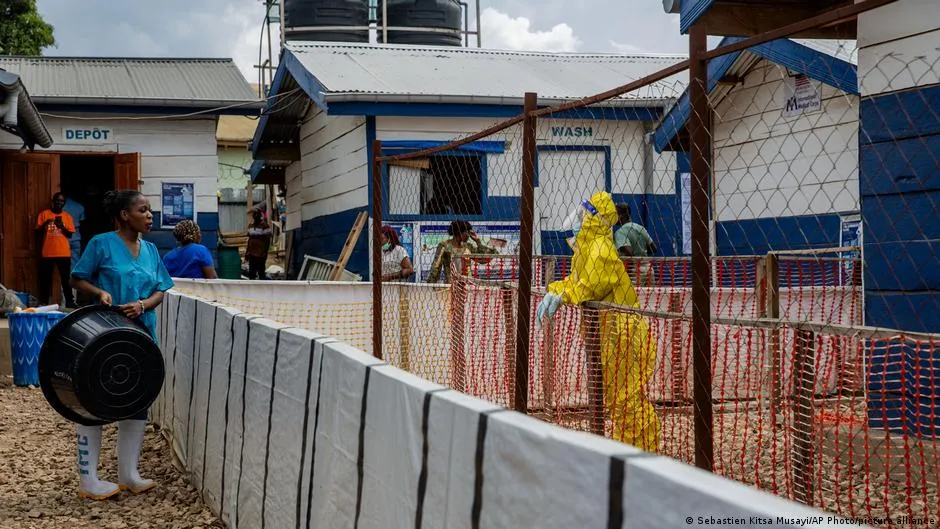
Nigeria confirms first Ebola case in Abuja, a woman just off a Uganda flight
Health Minister Muhammad Ali Pate says the patient flew in from Uganda, putting Africa's latest outbreak on Nigeria's doorstep.