
Instagram’s numbers drown stoma education, because attention beats usefulness every time
A single poster story shows how algorithmic incentives can bury high-value health info under higher-engagement photos.

The Phys.org piece uses Amy’s Instagram behavior to illustrate the gap between engagement metrics and genuinely useful social content. For decision-makers, it signals how platforms and creators unintentionally skew public health literacy toward what gets clicked.
On Instagram, Amy knows exactly what will get attention: a photograph of her in a bikini can pull thousands of views, while a post explaining the realities of living with a stoma may reach far fewer people. That simple contrast is the core problem the article points to. It is not that usefulness is unimportant. It is that the system rewards the kind of content that is easiest to stop-scroll and easiest to distribute widely.
Amy’s choice is basically a trade in real time. She posts pictures with different potential reach, and she can predict the outcome. The bikini photo tends to perform at scale, and the stoma education post does not. The point is not to shame anyone for chasing visibility, or to pretend audiences behave like charities. The point is that the same attention economy that can help someone share their story also decides which stories the majority of people ever see.
To understand why, you have to look at how social media platforms operate as distribution engines. Instagram is not designed like a health textbook. It is designed like a recommendation machine, where posts compete for limited user time. The incentives are clear even if you never open the algorithm settings: content that produces stronger engagement gets shown more, and the more it gets shown, the more engagement it tends to get. So even when a creator is trying to do the right thing, the platform’s feedback loop can nudge them toward content that is more likely to be rewarded quickly.
The article’s stoma example matters because it is not just “less popular content.” A stoma is a medical opening in the abdomen that directs waste to a bag attached to it. That definition is in the story for a reason. Education content like this often carries a real-world utility: it reduces confusion, normalizes experiences, and can help people feel less alone when they are dealing with something that many others rarely talk about. When that content reaches far fewer people, the harm is not abstract. It can mean fewer people understand what they are seeing in others. It can also mean fewer people seek help sooner because they do not recognize the condition.
There is also a governance angle, even if the article does not go into specific regulators. In many jurisdictions, health information is a regulated space in one way or another, and platforms often face pressure to moderate misinformation. The twist is that misinformation is not the only risk. When high-quality, practical health explanations get buried under more attention-grabbing posts, the information environment can become skewed toward what is emotionally salient rather than what is medically clarifying. In other words, the platform does not only decide what people believe. It decides what people even get exposed to.
For boards, investors, and senior operators, this is a reputational and product-quality issue, not only a creator issue. If a platform’s distribution system consistently underweights educational content, it can create a long-term credibility gap. Creators who want to teach may hesitate or change their format to fit the engagement mold, potentially turning education into entertainment. That creates a second-order effect: even good creators start to “optimize for the feed,” and the platform slowly shapes the content ecosystem it claims to simply host.
Amy’s line, “I get caught up in the numbers game,” captures the behavioral loop. Once creators believe the audience response is predictable, the rational move becomes chasing what scores. That does not require any bad intentions. It just requires incentives. And when enough people act on incentives, the platform sees a steady stream of what reliably drives views. The result is a distribution skew where useful content can be present, but not discoverable, and where the people who could benefit most may not be the ones seeing it.
Strategically, the stakes extend beyond one Instagram account. If education posts repeatedly lose to high-engagement personal imagery, health literacy can erode at scale, and the social layer of public understanding shifts toward what is easiest to share. For leaders in media, tech, and health-adjacent communication, the question becomes harder: how do you measure success beyond raw engagement, when the current scoring system rewards the opposite of usefulness? The article’s true takeaway is that the numbers are not neutral. They are steering what the internet teaches us, one post at a time.
This story's Key Insights and Take-aways are locked.
Create a free account to unlock Executive Actions for one credit.
Register to UnlockAlways free for Executives Club members. Join the Club
More in Science
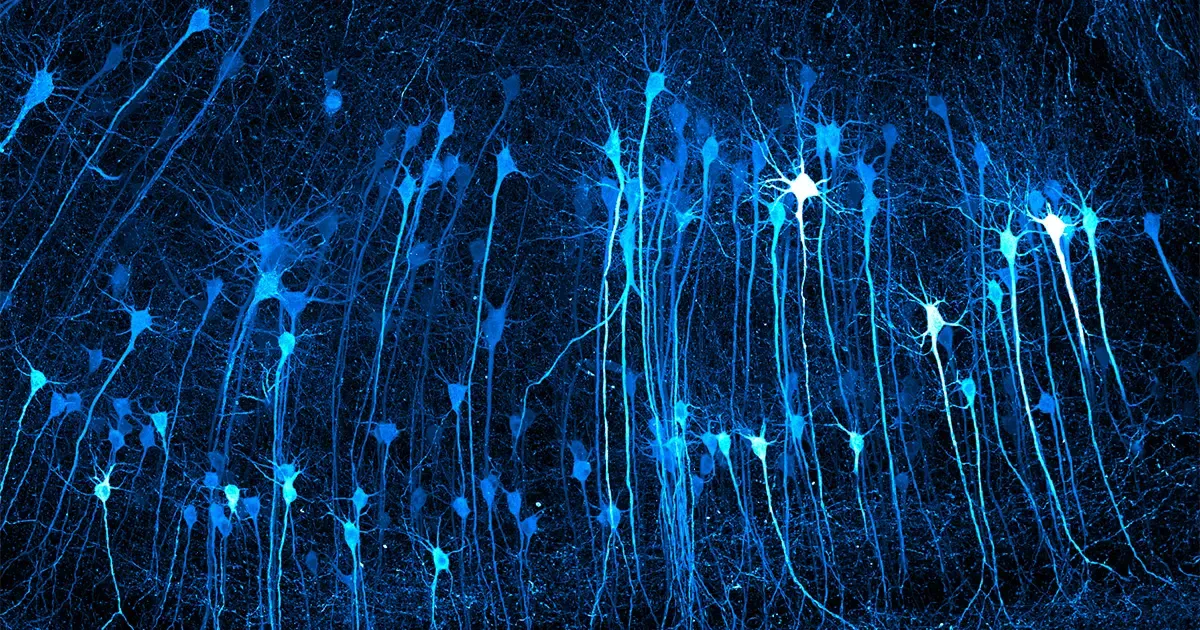
2026 Nikon Small World Winners Reveal the Hidden Machinery of Everyday Life
A mycologist's frozen Edinburgh garden became the backdrop for vivid views inside cells, a reminder of what advanced imaging now makes visible to researchers and the industries built on biology.

Study: 1 in 4 depression cases may be a body-clock problem, not a chemical one
A 10,000-person study finds standard antidepressants often fail these patients, but melatonin and morning sunlight may hit the real root cause.
Start-Up Says A.I. Designed a Virus to Attack One Patient's Superbug
If the claim holds up, personalized phage therapy could become a new frontline weapon against antibiotic resistance - but proof is far from final.