
Iran plans a six-day Khamenei funeral starting July 4, aiming for Tehran's biggest crowd
The date and duration are clear. The political message is the real event, and it lands at home and abroad.
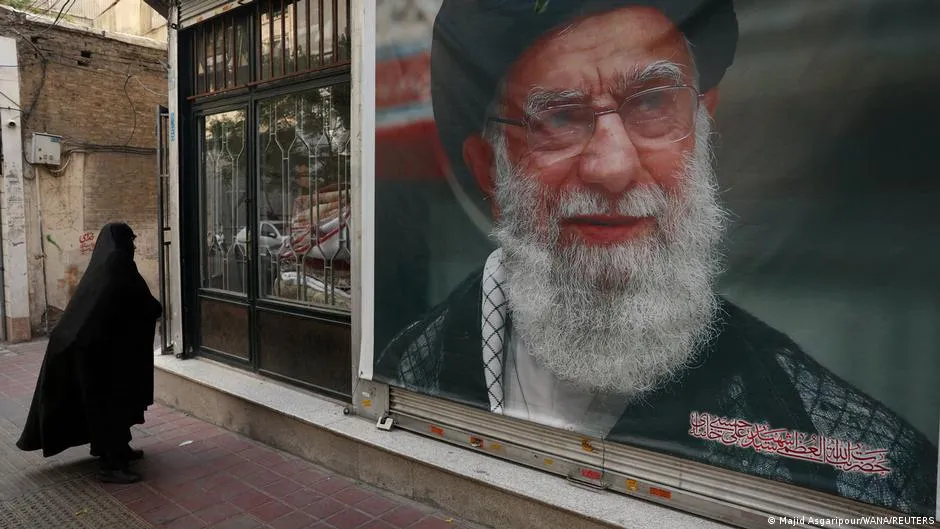
Iran's leadership is planning a six-day funeral for Ayatollah Ali Khamenei starting July 4. Officials say it is intended to be the largest gathering in Tehran's history and a demonstration of strength at home and abroad.
Iran's leadership is planning a six-day funeral for Ayatollah Ali Khamenei starting July 4, and officials describe it as the largest gathering in Tehran's history. They are not treating this as a purely religious moment. They frame it as a demonstration of strength, aimed at an audience inside Iran and observers beyond its borders.
In plain terms: the state is turning the funeral timeline into messaging. A six-day schedule matters because it extends attention, keeps the narrative in motion, and gives Iran a repeated platform to project unity and resolve. Starting July 4 also signals deliberate timing. Whatever else is happening politically and economically, the leadership wants the country and the outside world focused on one central figure and one central theme: power displayed, not power questioned.
For decision-makers watching from the business side, the key is not the theology. It is the mechanics of large public-state events and the second-order consequences that follow. When officials plan something they call the biggest gathering in Tehran's history, you can expect heightened security posture, tighter movement controls, and more intensive coordination across government agencies. That kind of operational tightening typically affects logistics, staffing, and the day-to-day rhythms of urban life, particularly in areas tied to the event footprint.
There is also a communications angle. The source is clear that officials are describing the funeral as a demonstration “at home and abroad.” That phrasing matters because it places the event in the same category as state signaling: a way to influence perceptions, shape expectations, and harden negotiating stances. In international contexts, signals can be read by governments and markets as indicators of political stability, ideological continuity, and the likely posture of leadership in the near term.
Zoom out further and the stakes look bigger, because Iranian political messaging often intersects with economic pressure. Even without adding new facts, the logic is straightforward: when leadership invests in high-visibility domestic events, it is typically because it wants to reinforce legitimacy and reduce uncertainty. For companies with exposure to Iran, neighboring regions, or Iran-linked supply chains, uncertainty is what raises costs and delays decisions. Extended public ceremonies that attract mass attention can also increase scrutiny from regulators and other authorities, even if the formal regulatory changes are not specified in the source. The likely impact is a higher baseline of compliance activity and risk management, especially around travel, communications, and vendor operations.
Boards and executives in adjacent sectors can also learn something from how the story is framed. The source emphasizes that the funeral will be “a demonstration of strength.” When a government uses that language, it is trying to pre-empt narratives of weakness. That is relevant for any leadership group operating in tense environments, because audiences often interpret the same facts through different lenses. A public display can be read by domestic constituencies as consolidation. By external observers, it can be read as defiance or durability. Either way, it tends to compress the window for speculation and replace it with a single, forceful story.
There is one more implication that matters for planners: duration. Six days is long enough that it becomes a rolling operational problem, not a single-day event. That means the signaling is sustained, not momentary. It also means operational disruptions can persist and ripple into surrounding days, affecting everything from routine schedules to the timing of business meetings and procurement activities. Even if firms are not directly involved, the surrounding ecosystem behaves differently during prolonged high-profile state events.
Ultimately, the true headline here is not only that Ayatollah Ali Khamenei’s funeral is planned. It is how Iran’s leadership is planning to control the narrative through time, scale, and repetition. A six-day funeral starting July 4, billed by officials as Tehran’s biggest gathering in history, is designed to communicate strength at home and abroad. For executives and investors, the strategic stake is simple: when politics chooses spectacle as policy, the operational and reputational impacts do not politely stay within the ceremony. They spill into how people plan, move, communicate, and price risk in the weeks that follow.
This story's Key Insights and Take-aways are locked.
Create a free account to unlock Executive Actions for one credit.
Register to UnlockAlways free for Executives Club members. Join the Club
More in Politics
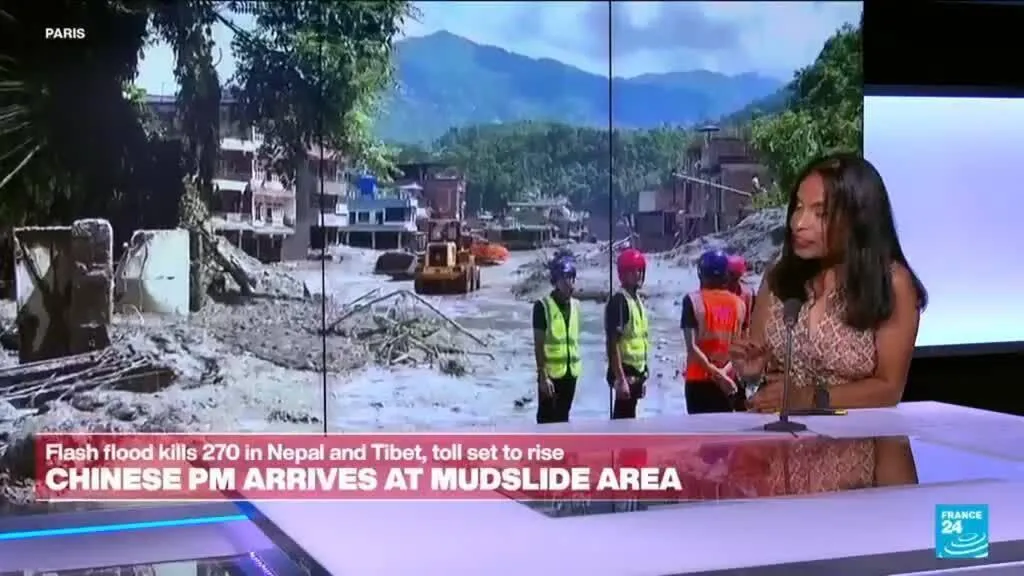
Glacial collapse, not rain, killed 180 in Nepal's Himalayan flood
The Himalaya's extreme geography hid the true cause of Nepal's catastrophic flood, a glacial collapse that turned a geological battleground into a mass-casualty zone.
Iran’s Esmail Baghaei says Oman talks start shipping via Hormuz, not US talks yet
Temporary route plans with Oman aim to restart commerce while Tehran says Washington dialogue is not on the table.
Standards watchdog opens probe into Reform UK deputy leader Richard Tice over interests
The parliamentary standards commissioner says it began an investigation on 28 July into a possible undeclared interest.