

Jalen Brunson and the Knicks end a 53-year wait with Game title vs Spurs
New York turns 37 first-half points into an identity-defining defensive second half, winning their first title in 53 years.
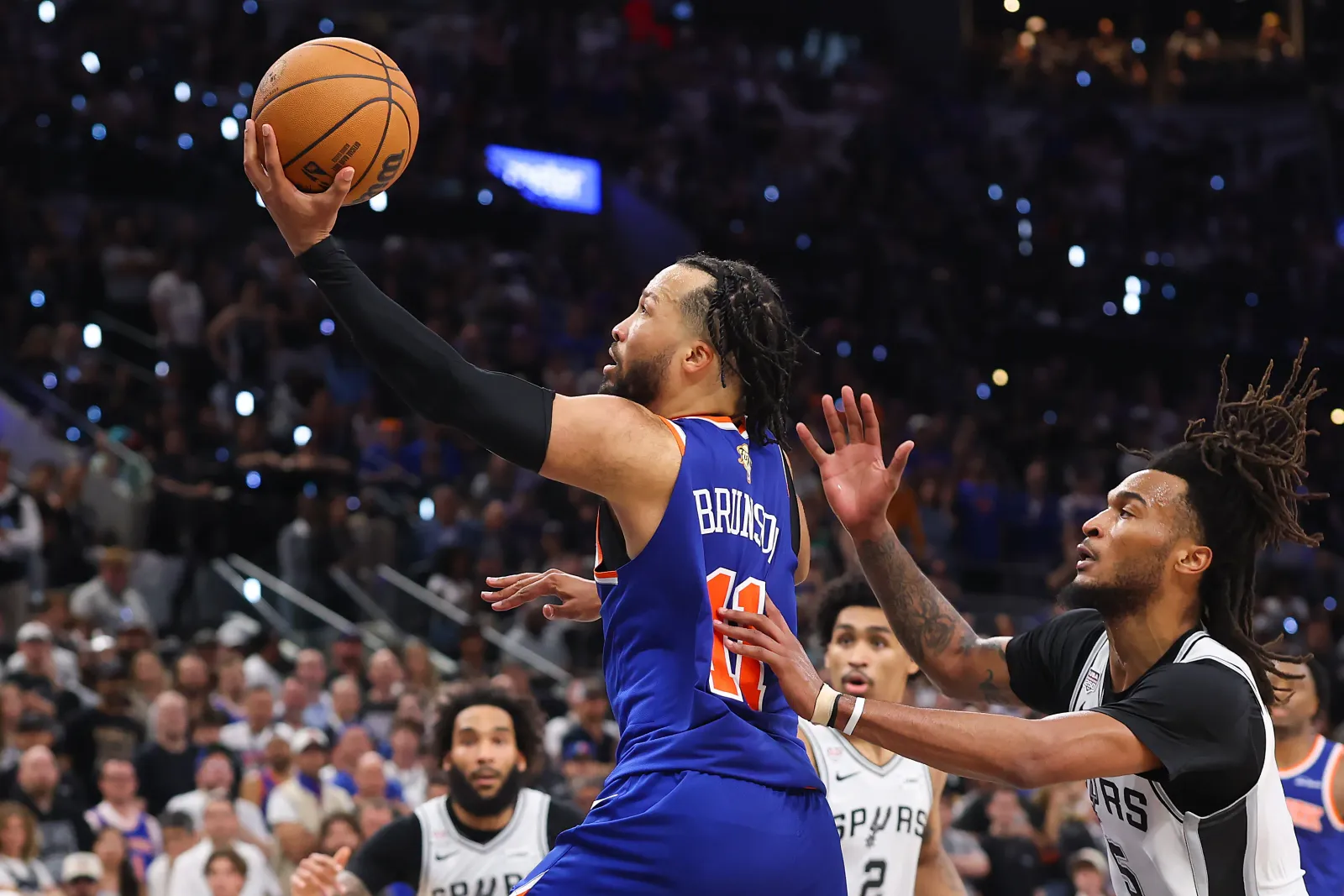
Jalen Brunson leads the New York Knicks to their first NBA championship in 53 years, finishing off the San Antonio Spurs. The win came after New York scored 37 points in the first half and then used tough defense plus timely baskets to take control.
Start spreading the news. The New York Knicks are NBA champions for the first time in 53 years, and the swing was not subtle. New York scored just 37 points in the first half against the San Antonio Spurs. Then, in the second half, the Knicks ground the Spurs down with tough defense and timely baskets, ultimately turning a slow start into a title.
The centerpiece of that turnaround was Jalen Brunson, who led the Knicks point guard play that helped transform the game from “can they get going?” to “they are controlling this.” In other words, the story is not only that New York won. It is how they won, after an anemic first half by their standards in a moment where the margin for error is basically nonexistent.
Why this matters beyond basketball is that it reads like a playbook for pressure. A team can spend the first half searching for rhythm, only to discover the opponent has answers. Then the adjustment becomes the whole event. In the Knicks' case, the source points to the mechanics: tough defense paired with timely baskets. That combination is a classic playoff formula, but it only works when the group buys into it in real time, possession by possession. The Spurs did not get the same level of comfort after the adjustment, and New York’s offense came back strongly enough at the right moments to convert stops into points.
For executives, investors, and operators, that is the transferable lesson. Organizations rarely fail because they lack talent. They fail because they keep running the same play while the environment changes. Here, the second half signals a decisive pivot: defense first, offense second, and always with the intent to win each possession instead of simply building a stats line. When you score 37 in the first half, you cannot rely on “normal” outcomes. You need a strategy that survives scarcity and momentum swings.
Sports is not regulated like finance, but it does have its own governance system, and playoff basketball is one of the most rules-driven environments in entertainment. What makes that governance feel real is what the Knicks accomplished within it. They managed a game state that was already unfavorable, and then they enforced a different tempo. That is not just a coaching narrative. It is execution: rotations, communication, shot selection, and the willingness to make the other team uncomfortable for longer than a few highlight possessions. Defense is effort that the scoreboard often understates until it flips the game.
There is also a culture and stakeholder angle, and this is where the 53-year timeline turns into more than a trivia fact. In most industries, long gaps between wins create skepticism, internal politics, and a higher bar for leadership accountability. The Knicks winning their first NBA championship in 53 years is a reminder of how quickly perception can reverse when performance aligns with belief. For teams, that shift affects every stakeholder group: players want to stay, fans want to believe, and executives want to build on something real rather than promising the next cycle.
For decision-makers in boardrooms and C-suites, the second-order implication is about legitimacy. Titles do not just reward a season; they validate a strategy and a roster approach. When the source describes New York’s turnaround as tough defense and timely baskets, it is essentially saying the championship was built on fundamentals that are repeatable. That is the kind of clarity boards prefer because it reduces hand-wavy explanations after the fact.
And yes, the Spurs are part of this, too. When a team is held down after a slow start by one opponent, it pressures the other side’s assumptions about who controls the game. That is what New York did. They “ground” San Antonio down in the second half, meaning the Knicks did not just catch up on offense, they removed the Spurs’ ability to play their preferred game.
So the strategic stake is simple: if you are an operator, investor, or executive trying to build a winning system, you should watch how the Knicks handled the 37-point first half and then closed with defensive control and timely scoring. Championships are a scoreboard event, but they are also a systems event. New York just proved that when the first plan fails, the organization can still pivot fast enough to finish the job. That is the kind of momentum you cannot fake, and the kind of lesson that travels.
This story's Key Insights and Take-aways are locked.
Create a free account to unlock Executive Actions for one credit.
Register to UnlockAlways free for Executives Club members. Join the Club
More in Entertainment

'It's a Magic Trick': Ballet Experts Say Rosalía's SNL Pose Is Impossible
Three ballet experts tell Rolling Stone Rosalía's gravity-defying SNL stillness shouldn't be possible - and why the debate is now part of the show.

Activision CMO: GTA 6 Will Boost Call of Duty, Not Bury It
Activision's top marketer says Rockstar's blockbuster will drive players back to consoles and into Modern Warfare 4, even as the company admits its recent strategy failed.

Justice to Score GTA 6, Share New Song with Tame Impala, SZA, King Gizzard
Rockstar taps the French duo for the GTA VI score, and the first taste is a genre-melting collab with Tame Impala, SZA, and King Gizzard & The Lizard Wizard.