
James Murdoch-backed MCH Group launches Jupiter Festival to muscle into media events
An art fair owner wants to join the thought-leader circuit, and board-level attention should follow fast.

MCH Group, where Fox scion James Murdoch is the largest shareholder, is launching an event called the Jupiter Festival. For decision-makers, it signals how media-style influence is becoming a product line for cultural brands.
MCH Group, in which Fox scion James Murdoch is the largest shareholder, is launching an event titled the Jupiter Festival. The goal is simple and ambitious: become a stop on the thought leader circuit, moving beyond pure art-world programming into the same attention economy where media companies have long lived.
That positioning matters because “thought leadership” is not just a vibe. It is a distribution strategy. Events like this work like temporary publishing platforms: they gather investors, executives, founders, policymakers, and high-status creators in one place, then convert that concentrated audience into ongoing credibility for sponsors and partners. By building Jupiter Festival around that logic, MCH Group is effectively trying to turn its cultural infrastructure into media-grade influence.
To understand why this is a big deal, zoom out to what the events market has been rewarding lately. High-end conferences and branded convenings have become a modern pipeline for relationships that used to require long sales cycles and expensive travel. Media brands, consulting firms, and investor networks have all learned that the fastest way to shape narratives is to host the room where narratives are made. MCH Group entering that lane suggests it believes it can borrow some of those advantages from art-world credibility and the brand equity that comes with curating taste at scale.
There is also an incentive alignment question that boards and investors should be thinking about. When a cultural business expands into media-style events, it can change both risk and revenue behavior. Art fairs tend to be cyclical and dependent on participation and audience confidence. Media events, by contrast, often rely on partnerships, sponsorships, and access. Those models can diversify revenue, but they also can create new pressures around optics, audience composition, and sponsor expectations. In other words: the board may gain a growth outlet, but it also inherits a higher-stakes reputation engine.
The “Murdoch-backed” detail is not just name recognition. James Murdoch’s presence as the largest shareholder puts extra spotlight on governance and direction. While the source does not spell out internal dynamics, a founder or major shareholder influence usually affects what gets prioritized, what gets funded, and how aggressively leadership moves into adjacent markets. An event called Jupiter Festival, explicitly aimed at thought leadership, reads like a strategic bet that visibility and convening power can travel from the art market into broader business and media ecosystems.
This is where second-order implications start to show up for decision-makers in adjacent companies. If an art fair operator can credibly claim thought leadership territory, it threatens to compress budgets and attention within the sponsor landscape. Sponsors and partners often allocate spend across a familiar mix of media properties, executive forums, and established investor events. A credible new entrant backed by a heavyweight shareholder could be able to offer something incumbents struggle with: a fresh brand story and a distinctive audience network.
There is also the regulatory and compliance layer that typically comes with moving closer to media-like influence. The source does not mention regulators, but in many jurisdictions, the closer an event gets to political or policy discussion, the more legal and compliance teams get involved. Topics, speakers, advertising boundaries, disclosure requirements, and conflicts of interest can all become more complicated. Even when an event is “just” a festival, the moment it becomes a recurring stage for prominent voices, legal review tends to become routine rather than optional. Boards should assume additional governance work will follow.
So what should executives take from this? Jupiter Festival is not an art-world sideshow. It is a bid to occupy the thought-leader circuit, using MCH Group’s existing platform to chase a kind of credibility that sponsors, media outlets, and dealmakers all understand. For peers watching cultural and events businesses, the move raises a practical question: is the next wave of influence going to be built by media companies alone, or can cultural institutions reshape the same attention channels?
For decision-makers, the stake is whether convening power can be productized and scaled, and whether MCH Group can translate brand prestige into repeatable media-style outcomes. If it succeeds, the threat is broader than one festival. It is the opening of a new category where art-world operators compete directly for sponsor dollars, speaker ecosystems, and narrative control.
This story's Key Insights and Take-aways are locked.
Create a free account to unlock Executive Actions for one credit.
Register to UnlockAlways free for Executives Club members. Join the Club
More in Entertainment

Deltarune Chapter 5 smashes 300,000 Steam peak just minutes after launch
Within minutes, Toby Fox's episodic RPG blows past its own record, changing what “momentum” looks like on Steam.

Shrinking surges on Apple TV+ ahead of Season 4 debut on August 5
Streaming momentum is building for Apple TV+'s Ted Lasso replacement, making renewal and release timing feel suddenly important.
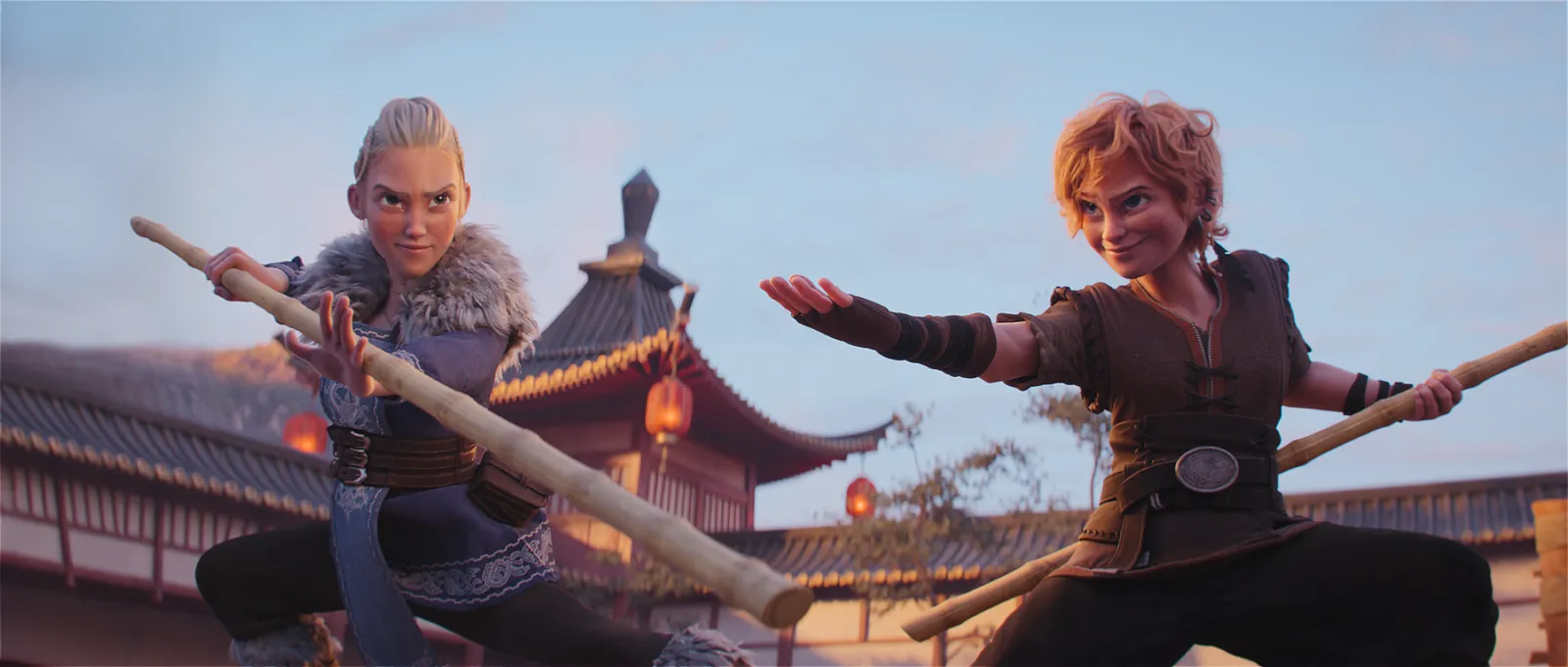
ViQueens’ Annecy teaser drops Ella Purnell, Rita Ora, and Erling Haaland cameos
Zwart Arbeid previews the animated Viking drama’s voice cast at Annecy, signaling a serious celebrity play.