
Jamieson Greer tells the Senate the U.S. will keep tariffs, even after the Supreme Court
As the Supreme Court struck down certain duties, Trump’s top trade negotiator signaled tariff replacement is still the plan.
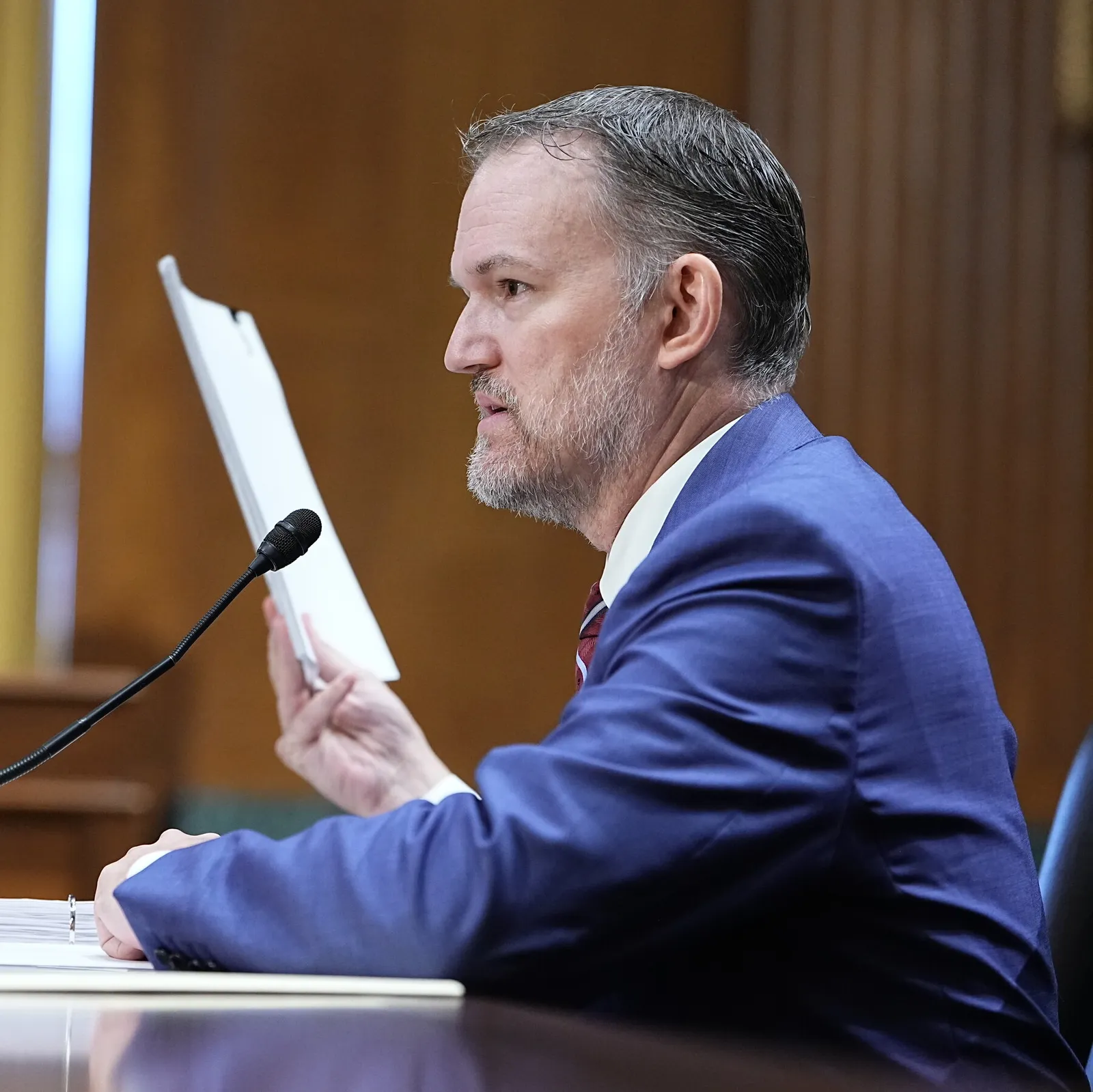
Jamieson Greer, the president’s top trade negotiator, told the Senate the United States remains intent on tariffs while it prepares to replace duties the Supreme Court struck down. For decision-makers, that means trade policy risk does not disappear when legal challenges win, it just shifts into a new, replacement-shaped round.
Jamieson Greer, the president’s top trade negotiator, told the Senate the United States remains intent on tariffs even as it prepares to replace duties the Supreme Court struck down. In other words: the legal clock reset, but the tariff clock did not stop. Greer framed this as a continuation of the policy direction, not a retreat, which matters because it signals how quickly businesses may need to re-price risk even after a court victory.
The core tension is simple. The Supreme Court struck down certain duties, meaning the specific legal basis for those charges is no longer enough. But the United States is preparing to replace them, and Greer’s message to the Senate was that the intent to use tariffs remains. For executives, that creates a practical question: what exactly “changes” when a court knocks out one set of duties? Based on Greer’s position, the answer is often, “not the end goal, just the packaging.” If the goal is continued tariff pressure, replacement duties can still land on supply chains, pricing models, and contract terms.
To understand why this is a big deal, zoom out to how tariffs typically function in U.S. trade policy. Tariffs are tax-like charges applied to imports. They can be used for bargaining leverage, to protect domestic industries, or to pressure trading partners during negotiations. But they also have a second-order effect inside the U.S. economy: they reshape the incentives of everyone downstream. Importers and manufacturers do not just see higher landed costs. They also face uncertainty about whether those costs will persist, change, or be undone. That uncertainty can be almost as expensive as the duty itself, because it forces companies to build scenarios into procurement, inventory planning, and customer pricing.
Now add the Supreme Court layer. A court decision striking down duties is not just symbolism. It can invalidate the legal pathway the government used. That means the government has to either find a different legal authority or revise the policy mechanism so it can survive judicial review. In the meantime, businesses often experience a messy transition: contracts negotiated under one tariff regime meet a new reality, compliance teams scramble, and finance leaders have to forecast whether margins will get crushed again or whether the duty burden lifts.
Greer’s remarks to the Senate are interesting because they point to continuity. He indicated that as the United States prepares to replace the duties the Supreme Court struck down, it is still focused on tariffs. That tells companies and investors not to assume court rulings automatically mean an end to tariff pressure. Instead, a win in court may simply change the form of the tariff intervention. The market impact is straightforward: expect more hedging against tariff costs, more attention to the timing of replacement, and more pressure on policymakers to draft a replacement that both meets legal requirements and preserves negotiating leverage.
There is also a governance and board-level angle here. Boards and executive teams like to think they are managing controllable risks, but trade policy uncertainty is often not. When the policy direction signals “replacement, not rollback,” boards may treat trade as a recurring volatility factor rather than a one-time event. Audit, compliance, and risk committees may need to revisit assumptions about customs exposure and contract resilience, especially for companies that rely on cross-border components or rely on import-intensive supply chains.
For peers in similar roles, Greer’s message is a reminder that trade negotiations and legal outcomes do not move in a straight line. The legal system can strike down a specific set of duties, but the political and strategic impetus behind tariffs can still drive replacement. That is the strategic stake. If your business plan assumes tariffs fade after a court ruling, you could be wrong in timing and wrong in magnitude. If your plan assumes tariffs can mutate into a new structure, you are better positioned for whatever the replacement looks like.
Bottom line: Greer told the Senate the United States intends to keep tariffs while replacing duties struck down by the Supreme Court. That means companies should treat tariff risk as an active variable, not a resolved chapter, and plan for a policy continuation that may arrive under a new legal framework rather than disappearing entirely.
This story's Key Insights and Take-aways are locked.
Create a free account to unlock Executive Actions for one credit.
Register to UnlockAlways free for Executives Club members. Join the Club
More in Politics

LA County: DOJ's 20,000 'noncitizen' voter list is 'unreliable,' includes U.S.-born
Preliminary review by Los Angeles County election officials finds errors in the federal list, raising the stakes for voter roll integrity ahead of November.

Trump's $1.5B Pentagon chip investment lands in North Carolina
A $1.5 billion defense infusion for North Carolina chipmaking signals a new era of Pentagon-backed reshoring - here's what it means for the industry.

Nigeria confirms first Ebola case in Abuja, a woman just off a Uganda flight
Health Minister Muhammad Ali Pate says the patient flew in from Uganda, putting Africa's latest outbreak on Nigeria's doorstep.