

Jason Zhang signs UMG deal as Universal buys into Thailand's Solution One
Universal Music is tying a marquee Chinese pop star to a broader platform play, while also betting on a Thai distributor's local reach.
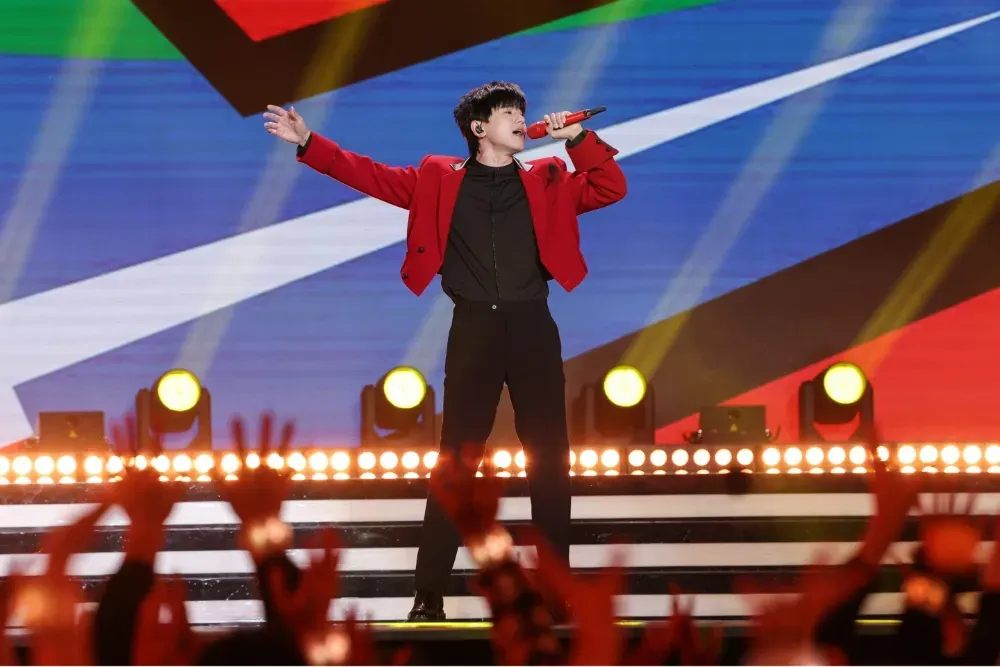
Universal Music Greater China has signed Jason Zhang, one of the most commercially successful artists in Chinese-language pop, in a deal spanning recorded music, artist management, live performance and international strategy, structured with his label Planet Culture. In a separate move, Universal Music Group said it is also investing in Thai distributor Solution One, signaling a push for deeper regional control over talent, distribution, and cross-border growth.
Universal Music Greater China has signed Jason Zhang, and this is not a narrow recording contract. It is a wide-ranging deal that covers recorded music, artist management, live performance, and international strategy, and it is structured in partnership with Zhang’s personal label, Planet Culture. That matters because Zhang is described as one of the most commercially successful artists in Chinese-language pop, which makes this less about a single album cycle and more about locking in a proven draw across multiple parts of the music business.
The second piece of the news is just as telling: Universal Music Group also said it is making a strategic investment in Thai distributor Solution One. Put those two moves together and the picture gets clearer fast. Universal is not only signing marquee talent in Greater China, it is also putting money into distribution infrastructure in Southeast Asia. For executives watching the music business, that combination points to a company trying to control more of the value chain, from artist relationships to local market access, rather than relying on one-off deals or distant licensing arrangements.
Start with Zhang. A deal structured around recorded music, management, live performance, and international strategy is a sign that the old label playbook has gotten bigger. In practice, that means the partnership is not just about songs landing on streaming platforms. It potentially connects the artist to touring, promotion, brand-building, and cross-border positioning. And by making Planet Culture part of the structure, Universal is working with Zhang’s existing personal label rather than treating him as a standalone asset to be acquired and integrated. That is a useful reminder for founders and operators in creator-heavy businesses: the strongest talent often brings an ecosystem, not just a name.
The “international strategy” piece is especially important in a business where growth increasingly depends on moving beyond a home market. Chinese-language pop has a huge regional and global audience, but building that audience takes more than domestic momentum. It requires coordination across rights, marketing, live events, and local partnerships. Universal’s decision to fold that into the agreement suggests it sees Zhang as someone whose commercial footprint can stretch beyond one market, and that the company wants to help engineer that expansion rather than wait for it to happen organically.
Then there is Solution One. The source does not spell out the size or terms of the investment, but the strategic intent is still obvious enough. A distributor sits close to the market’s plumbing. It helps move music into the places where listeners actually consume it, and in markets where local relationships matter, that role can be more than administrative. A strategic investment in a Thai distributor signals Universal’s interest in strengthening its position in a Southeast Asian market that can serve as both a growth engine and a bridge for regional circulation. For a global music company, that can mean better execution on the ground, faster market entry for artists, and more leverage when competing for attention in crowded local ecosystems.
The broader business logic here is straightforward. Major labels are increasingly competing not just on who they sign, but on how much of the surrounding infrastructure they can influence. Artist management, live performance, international strategy, and distribution all sit closer to the fan and closer to the cash flow than a simple rights deal. If Universal can combine a flagship artist relationship in Greater China with an investment in a Thai distributor, it is effectively building a more connected regional machine. That can make the company more attractive to artists who want reach, to partners who want scale, and to investors who watch for businesses that can turn one cultural hit into multiple revenue streams.
For other executives, the takeaway is less about music and more about structure. The headline here is that Universal is using two different tools at once: a broad artist partnership and a strategic infrastructure investment. That is a playbook many consumer-facing businesses recognize. If demand is fragmented across markets, the advantage goes to companies that can pair premium talent or product with local distribution and international ambition. In plain English: this is what expansion looks like when a company stops thinking in single transactions and starts thinking in systems. And for anyone managing talent, content, or brands across Asia, the signal is hard to miss. The battle is not just for the star. It is for the rails that let the star travel further.
This story's Key Insights and Take-aways are locked.
Create a free account to unlock Executive Actions for one credit.
Register to UnlockAlways free for Executives Club members. Join the Club
More in Entertainment

Christopher Nolan’s “The Odyssey” posts his biggest Tuesday haul, surpassing “The Dark Knight’s” record
The film’s Tuesday breakout reframes Nolan’s box-office ceiling and forces competitors to rethink timing, budgets, and release strategy.

Kacey Musgraves cancels Aug. 20, 29, Sept. 2 Middle of Nowhere shows
Ticketmaster emails are telling fans refunds are coming, while the tour still starts Aug. 21 in Chicago.

Billie Joe Armstrong launches Epiphone Les Paul Junior and Marshall 1959BJA signature gear
Two limited releases turn decades of Green Day’s tone into branded hardware, including Marshall’s first artist amp in 14 years.