
JB Straubel’s first Musk pitch failed in 2003, then unlocked the Roadster and Tesla
He tried to sell Musk on an electric hydrogen airplane. Instead, he pivoted to lithium-ion and got the check.

JB Straubel, Tesla cofounder and former chief technology officer, pitched Elon Musk on an unmanned hydrogen-powered airplane in 2003, received no interest, and pivoted to an electric sports car using lithium-ion cells. That lunch helped spark Tesla’s first major funding round, Straubel’s Tesla career, and ultimately today’s battery supply chain bets through Redwood Materials.
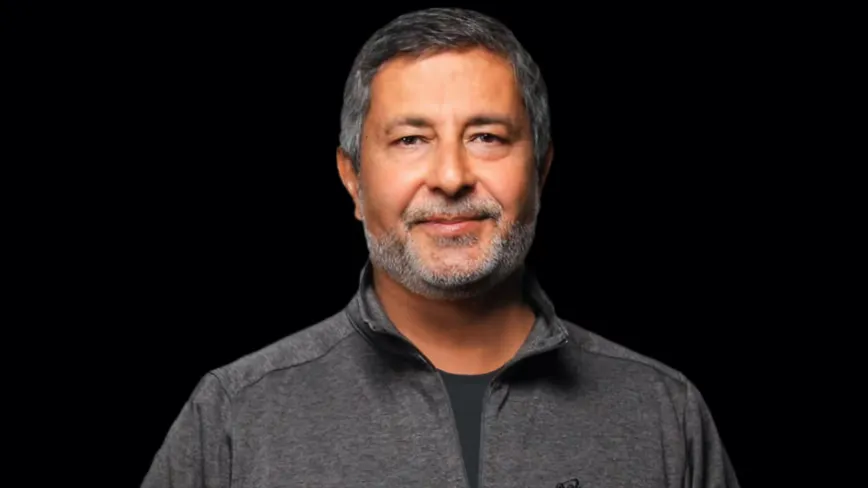
In 2003, JB Straubel sat across from Elon Musk with an idea that had everything to do with power and nothing to do with cars: an unmanned, hydrogen-powered airplane. Straubel, then a recently minted Stanford master’s graduate, told Fortune earlier this month on the sidelines of Brainstorm Tech in Aspen, Colo. that he “was seriously pitching the electric airplane idea to him, and he had absolutely no interest in it.”
The pivot matters because it changed the trajectory of Tesla itself. After Musk showed “absolutely no interest,” Straubel shifted to his other obsession: an electric sports car built with lithium-ion cells like the ones in laptop computers. He recalled he was “shameless in those days” and asking anyone he could for “a few thousand dollars,” and that Musk “immediately wrote a check.” Within weeks, the two were sketching plans for a high-performance electric sports car, and Musk soon led Tesla’s first major funding round.
That lunch is the kind of origin story investors love and operators distrust: not clean, not orderly, and not centered on a single genius moment. The source paints Straubel as the early battery and engineering backbone, while also showing how messy the human process was. Straubel formally joined Tesla in 2004 as its fifth employee and chief technology officer. In that role, he developed the battery pack used in Tesla’s first vehicle, the Roadster, bundling nearly 7,000 battery cells to deliver 244 miles of range, which Fortune notes went further than other EVs at the time. The Roadster prototype emerged in 2006, with the first-generation car able to travel 200 miles on a single charge and accelerate from zero to 60 mph in just under 4 seconds. Regular production began in 2008, and the first model year sold out.
Straubel’s fingerprints were not limited to one product. Fortune describes him as an architect of Tesla’s core technology, driving battery manufacturing, planning the groundwork for the Supercharger network, and helping plan Tesla’s first Gigafactory. His technical centrality is reflected in the paper trail too: a large share of Tesla’s early patents list his name. One early nickname, “Woz to Musk’s Jobs,” comes from a 2019 Bloomberg profile, and it sticks because it captures the division of labor in a company where hardware could not be an afterthought.
Then comes the governance and legitimacy part, where founders and boards usually earn their scars. After a 2009 legal settlement resolving a bitter feud over Tesla’s origins, Straubel was officially recognized as a cofounder alongside Elon Musk, Martin Eberhard, Marc Tarpenning, and Ian Wright. The story also includes Musk’s own less flattering framing: at a 2016 shareholders’ meeting, Musk said he gave Tesla only a 10% chance of succeeding early on and admitted the team had “no idea what we are doing.” He has expressed similar criticism about SpaceX, which had three consecutive rocket failures and came close to bankruptcy in 2008 before staging the largest IPO in history. In other words, Straubel’s pivot story is one thread, but the bigger theme is risk tolerance at board level, and the willingness to fund iteration without certainty.
Straubel left Tesla after 15 years as chief technologist, moving on to Redwood Materials, a battery-recycling startup he founded while still at Tesla. Musk, in an earnings call announcing the departure, said: “If we hadn't had lunch in 2003, Tesla wouldn't exist, basically.” The company-wide emotional shorthand here is real, but the strategic follow-through is more important. Redwood has raised over $2.3 billion in venture funding from firms and strategic backers including Google, Microsoft, and Nvidia’s NVentures, among others. In 2023, Redwood also secured a $2 billion conditional loan from the Department of Energy’s Advanced Technology Vehicles Manufacturing program. TechCrunch values Redwood at roughly $6 billion today, and Fortune reports partners including Volkswagen, Volvo, Toyota, and BMW.
Now, the supply-chain storyline is where this becomes an executive briefing instead of a founder memoir. Redwood Materials founder Straubel warned at Fortune’s Brainstorm Tech conference that the U.S. grid is straining under the surge of new data centers built to fuel the AI boom, telling Fortune’s Allie Garfinkle: “The pace of growth and demand of energy is unprecedented.” That is not a battery recycling anecdote. It is a signal about how energy, compute, and industrial inputs are converging. If energy demand is already accelerating and the grid has limited slack, then the “next phase” of EVs and AI infrastructure depends on whether companies can secure and manage critical materials and energy systems at scale. Straubel is effectively trying to solve the supply-chain problem that could define that phase.
For boards and senior executives, there is a meta-lesson in Straubel’s advice. Two decades after taking a chance on a small startup, he distills his guidance to entrepreneurs and engineers into a willingness to dive into hard problems even when “reasonably sure” odds might fail. He also highlights the reality of rejection pressure: entrepreneurs often hear from “10 or 20 people” that what you are doing is a bad idea. He points to repeated moments when people dismissed investments, dismissed Tesla as a terrible idea, and suggested doing something else. The practical takeaway is less motivational poster and more pattern recognition. When markets are loud, contrarian signals can be real information, or they can just be noise. The difference is whether the core mission remains stubbornly testable.
That is where this origin story lands for decision-makers today. Straubel and Tesla show what happens when engineering conviction, early capital, and board recognition align after early technical setbacks, internal power struggles, and brushes with bankruptcy. Musk has said he gave Tesla less than a 10% chance and admitted the team had “no idea what we are doing,” but the company built anyway. Straubel’s next chapter suggests the same playbook is now moving from car batteries to the broader industrial plumbing behind AI energy demand. If you sit on a board, run a product org, or allocate capital in EVs, batteries, grid-adjacent infrastructure, or materials, the question is not whether you can avoid failure. It is whether you can recognize the pivot that turns a dead-end pitch into the next trillion-dollar platform.
This story's Key Insights and Take-aways are locked.
Create a free account to unlock Executive Actions for one credit.
Register to UnlockAlways free for Executives Club members. Join the Club
More in Business

SK Hynix jumps 11% after seeking up to $29.4B in Nasdaq listing
The chip giant filed for a Nasdaq listing plan that could raise $29.4 billion, instantly reshaping investor expectations.
Micron revenue hits nearly $42B as AI memory lifts gross margins above 81%
Fiscal Q3 results crush estimates, prove AI memory is rewriting Micron's margins, and change the momentum math for the whole chip stack.

SpaceX sells $25B in debt under two weeks after IPO, despite $90B in orders
The satellite and rocket company’s quick $25 billion borrowing move signals how it plans to finance scale after going public.