
Jeff Gattis says IOI could develop the 007: First Light sequel, if MGM clears the path
Amazon Luna and Game Studios’ GM walks back earlier ambiguity, narrowing who might build the next chapter of the franchise.
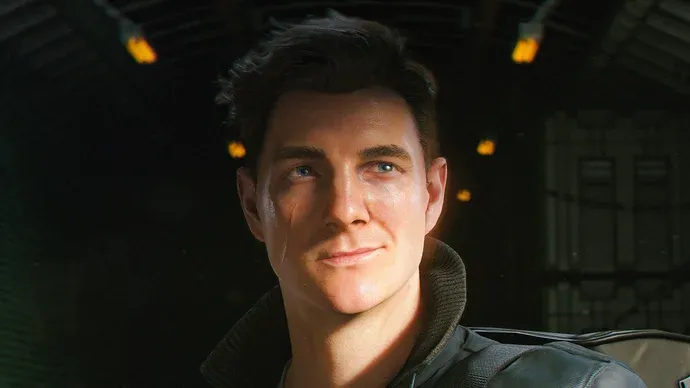
Jeff Gattis, general manager for Amazon Luna and Amazon Game Studios, clarified earlier comments about who would handle sequels to 007: First Light. His updated stance points to MGM as the primary driver, with Amazon Game Studios potentially involved, and he specifically suggested IOI developing the sequel.
Jeff Gattis, general manager for Amazon Luna and Amazon Game Studios, clarified what happens next for 007: First Light. In an earlier round of comments, he had suggested that sequels would be “done by MGM and, theoretically, by Amazon Game Studios.” Now, he sharpened that picture by adding a practical detail: “Given the success of this one, I think you probably want IOI developing it.”
Translation for decision-makers: the sequel question is not a vague brand wish. It is a specific development pipeline problem, and Gattis is saying the pipeline likely runs through IOI, with MGM still at the center of the “who makes the game” decision. MGM, not Amazon, is framed as the core sequencer of franchise ownership and approvals, while Amazon Game Studios is positioned as a possible development partner.
Why this matters goes beyond who gets the credit. 007: First Light sits at the intersection of platform strategy and publishing leverage. Amazon has been building around Luna as a distribution and engagement layer, while Amazon Game Studios focuses on creating games that justify time spent in its ecosystem. When a big external franchise like 007 lands, the sequel becomes a high-stakes coordination test: who controls the license-facing decisions, who funds or backs production, and who supplies the development muscle.
In games, that “who does what” split can decide the entire project shape. If MGM is the primary sequencer, it can influence approvals, milestones, and creative direction. If Amazon Game Studios is only “theoretically” in the mix, that suggests a partnership model rather than a fully owned program. And when Gattis singles out IOI, it tells you the debate is likely about execution capability and proven fit. “Given the success of this one” is doing a lot of work in that sentence, because success is the currency that gets boards and licensors to say yes.
This is also the kind of statement that plays differently across internal stakeholders. Amazon Game Studios leadership will care about development throughput, studio assignment, and the credibility of future releases for subscribers and cloud gaming audiences. The business side will care about how quickly an approved sequel can move from concept to production without stepping on MGM’s contractual runway. IOI, as the implicated developer, has its own incentives too. A sequel offer is not just another project, it is a chance to convert franchise traction into a longer pipeline.
There is an additional layer for executives watching this story: franchise sequels are often a governance issue as much as a creative one. Licensors like MGM tend to retain control because the IP is valuable and brand risk is real. That means even if a studio is capable, approvals and responsibilities must line up. Gattis’ “done by MGM” language is a clean signal to the market: Amazon is not portraying itself as the lone decision-maker. It is acknowledging the franchise authority while still mapping where Amazon Game Studios could participate.
For peers in platform, publishing, and studio leadership, the second-order implication is straightforward. If you are negotiating for a franchise sequel, you are not just negotiating for access to the IP. You are negotiating for a development chain where licensing approval, platform strategy, and studio capacity all align. Gattis’ clarification reduces uncertainty for partners and competitors alike, because it points to IOI as the likely development candidate, conditioned on continued franchise success and MGM’s central role.
So the strategic stake is this: sequels are often where momentum becomes money. If MGM decides sequels route through a proven developer like IOI, the winning studio can secure recurring work, stronger publisher confidence, and a clearer production calendar. If, instead, the sequel process stays open-ended, every party loses time and negotiating leverage. Gattis is effectively telling the market that the sequel direction is heading toward IOI, with MGM guiding the franchise decision and Amazon Game Studios potentially in the mix.
This story's Key Insights and Take-aways are locked.
Create a free account to unlock Executive Actions for one credit.
Register to UnlockAlways free for Executives Club members. Join the Club
More in Entertainment

Ali G's 'stooge' says he was in on joke, outplayed Sacha Baron Cohen
A 54-year-old aspiring actor says he recognized Sacha Baron Cohen mid-shoot, kept his MAGA act up, and let the film-makers think they had fooled him.

Entertainer Russell Brand denies 7 sex charges amid accuser's 'couldn't breathe' claim
The alleged victim's account sharpens the reputational and legal stakes for Brand, his platforms, and any business tied to a public figure under criminal scrutiny.

Russell Brand's accuser 'bewildered and confused' as he denies 7 sex charges
The criminal case against the comedian is a live test of how media companies manage talent risk when serious allegations go public.