
Joe Budden apologizes to Latto after alleging “Hostage” sounds like Drake’s “Shabang” flow
The misunderstanding goes public on the Joe Budden Podcast, and it raises a bigger question: who owns a rap’s “sound”?
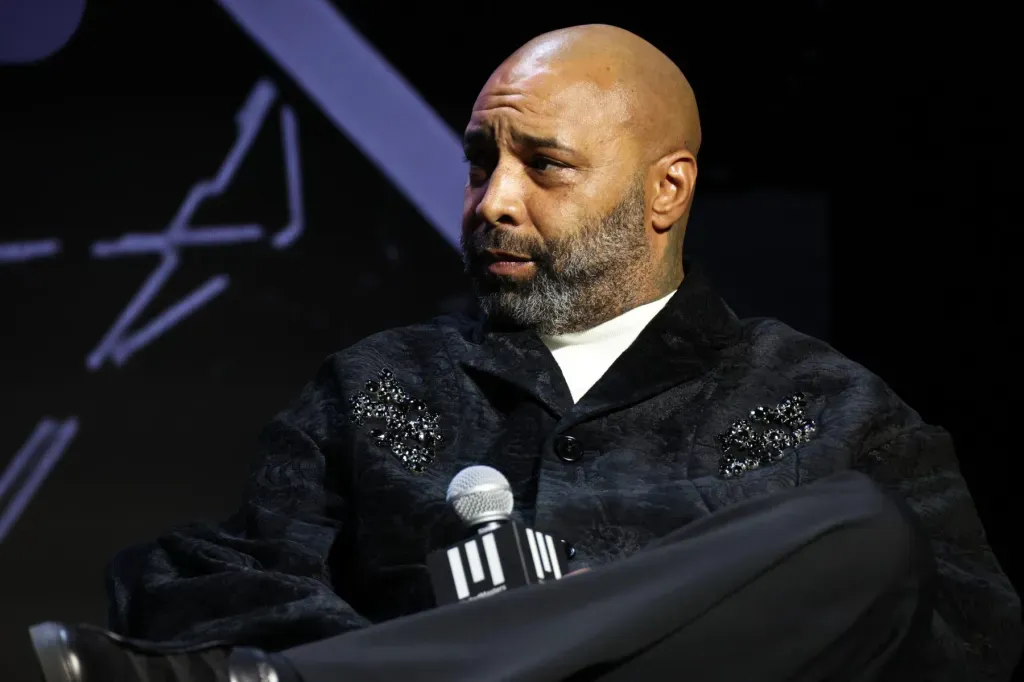
Joe Budden apologized to Latto in a clip from a Patreon episode of the Joe Budden Podcast after Latto shared handwritten lyrics for “Hostage” and Budden said her flow reminded him of Drake’s “Shabang.” The fallout matters for anyone watching brand, reputation, and creative credit risk in today’s hyper-visible music ecosystem.
Joe Budden has apologized to Latto after he earlier suggested that her flow on “Hostage” sounded like Drake’s cadence on “Shabang.” The correction came in a clip from a Patreon episode of the Joe Budden Podcast that recently surfaced, following a chain reaction that started with Latto tweeting a picture of her handwritten lyrics for “Hostage” from her new album Big Mama.
Latto tagged Budden after he made the “Shabang” comparison, and the show’s co-hosts brought up the topic when it came back around in discussion. Budden tried to explain his reasoning first. He said he was not trying to claim Latto did not write her own raps, framing it as a heavy accusation and emphasizing that Latto has been on the show, she won the Netflix show, and she says she writes all her stuff. Then, once the misunderstanding clearly landed, he pivoted to a direct apology: “Latto, I’m sorry. I wasn’t tryna play with your pen like that. I get how it sounded like that, so my bad.”
Here is why this matters beyond the obvious “internet beef” cycle. In rap, flow is both craft and shorthand. When one artist’s cadence gets compared to another’s, it can be heard as influence, but it can also be interpreted as copying. Budden’s explanation walked that line. He argued that when you sit down to write your own songs, being influenced by rappers you like can happen, because you are human and your tastes seep into your muscle memory. But he also acknowledged, in his own way, that listening so much to one performer can cause them to “rub off” on you when you write.
So what did Budden accuse? Not explicitly “she didn’t write her raps,” but he did publicly say her flow reminded him of Drake’s cadence on ICEMAN’s “Shabang.” Latto’s tweet of handwritten lyrics from Big Mama is effectively a rebuttal that is hard to ignore. It is also a reminder of how quickly the evidence standard changes on social platforms: one photo of a whiteboard-style artifact can become a cultural exhibit, and once that happens, the conversation shifts from artistic interpretation to authenticity claims.
The bigger incentive problem is that podcasters and commentators operate in a world where instant reactions are the product. The Joe Budden Podcast has become a major stage for music discourse, and Budden’s comments get amplified. When the source is a Patreon episode that “recently surfaced,” the impact can be delayed but still sharp. A moment from weeks or days earlier can become news when clipped, retitled, and redistributed, putting the original speaker in the uncomfortable position of clarifying something after the audience has already taken a position.
In other words, the apology is not just about tone. It is about damage control to reset the narrative before it calcifies. Budden’s wording signaled that he understood how the comparison could be received as questioning authorship, even though his intent was different. He used the metaphor of “pen” and “play with your pen,” which ties into Latto’s explicit effort to show she writes. That matters because the core dispute is about creative agency: who generated the lines, and whose style is embedded in the delivery.
There is also a broader industry context embedded in the timeline. The source notes that Latto has been busy since Big Mama released last week, including dissing Cardi B on “Gimme Dat” in response to a leaked phone call in 2025. The article adds that Cardi apologized afterward. That detail matters because it shows how fast controversy travels when artists are not only releasing music but also responding to prior incidents. Once a cycle starts, the audience often interprets every subsequent lyric, beat choice, or flow similarity as part of a larger pattern. Budden’s Drake cadence comment, even if it was meant as a stylistic observation, was pulled into that same credibility lane.
For executives, founders, investors, and anyone advising entertainment teams, the second-order implication is reputational risk across the creator pipeline. Talent companies, labels, and management teams often think of “brand safety” as policy and sponsorship guidelines. But in the current attention economy, brand safety also includes how commentary functions as a public audit of legitimacy. A misread can look like a public challenge to an artist’s writing credit, and that can force rapid response even when the actual claim was never fully stated.
There is also a strategic stake for anyone building media products. Budden’s choice to apologize in a surfaced clip demonstrates a recurring reality: if you are a loud voice in music culture, your words become public assets. They can appreciate in attention and depreciate in trust if the audience decides you crossed a line. The best-case scenario is what Budden aimed for after the explanation: clarify intent, acknowledge how it sounded, and move back toward a relationship that preserves credibility.
The takeaway for peers is simple but not easy. When the conversation is about creative authorship and style, audiences do not separate “interpretation” from “accusation.” They hear flow comparisons through the lens of legitimacy. Latto’s handwritten-lyrics tweet and Budden’s apology show the modern rule of engagement: if you imply doubt about who wrote what, you may need to do more than explain. You may need to repair.
This story's Key Insights and Take-aways are locked.
Create a free account to unlock Executive Actions for one credit.
Register to UnlockAlways free for Executives Club members. Join the Club
More in Entertainment

Christopher Nolan’s “The Odyssey” posts his biggest Tuesday haul, surpassing “The Dark Knight’s” record
The film’s Tuesday breakout reframes Nolan’s box-office ceiling and forces competitors to rethink timing, budgets, and release strategy.

Kacey Musgraves cancels Aug. 20, 29, Sept. 2 Middle of Nowhere shows
Ticketmaster emails are telling fans refunds are coming, while the tour still starts Aug. 21 in Chicago.

Billie Joe Armstrong launches Epiphone Les Paul Junior and Marshall 1959BJA signature gear
Two limited releases turn decades of Green Day’s tone into branded hardware, including Marshall’s first artist amp in 14 years.