
Joe Tsai vows full-stack AI push at VivaTech, betting on $50 trillion opportunity
Alibaba’s chairman frames “all in” AI as an industry-wide value-chain bet, not a single winner wager.
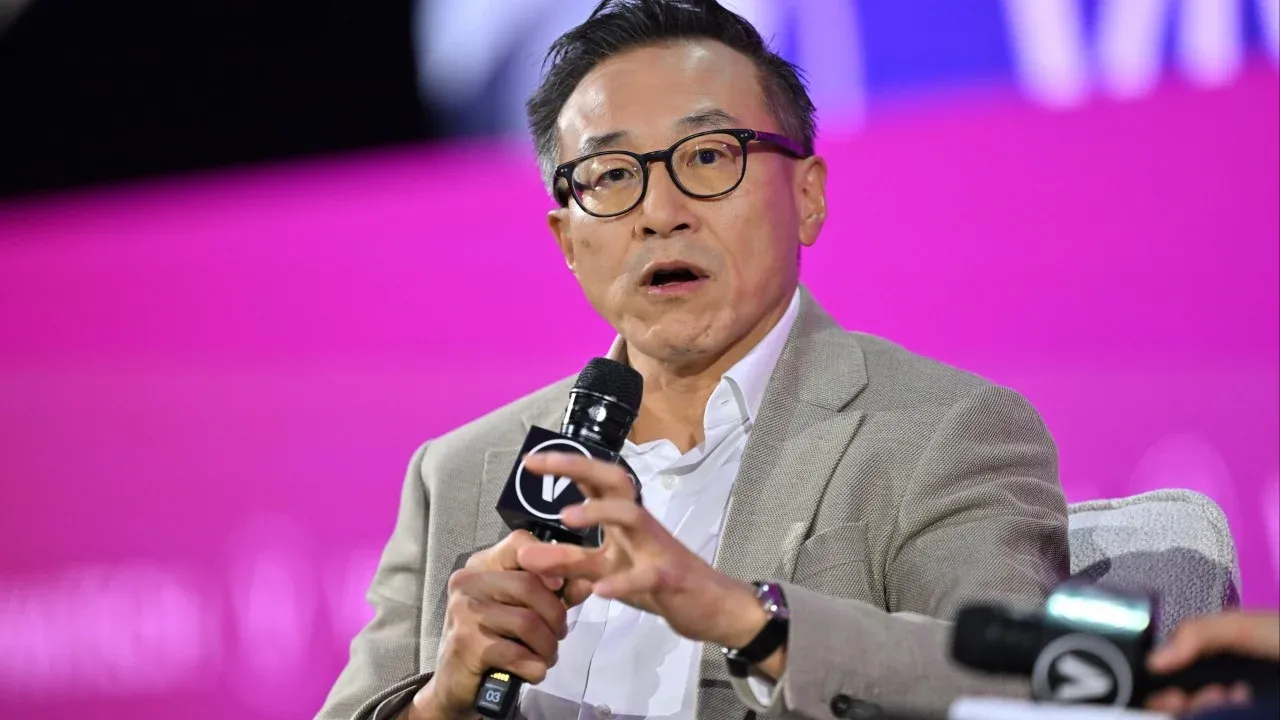
Alibaba Group chairman Joe Tsai used VivaTech in Paris to argue for an “all in” AI strategy, calling AI a potential US$50 trillion market. He said Alibaba will invest across chips, cloud, foundation models, and consumer applications rather than concentrate on one winning approach.
Alibaba Group chairman Joe Tsai went on stage at VivaTech in Paris to make what is, in tech terms, a pretty bold promise: the company is “all in” on artificial intelligence, and it is not going to pin its future on one single bet.
Tsai’s centerpiece claim was that AI could ultimately become a US$50 trillion market. But the more actionable message was the strategy behind that number. He said Alibaba would invest across the industry’s entire value chain, instead of choosing a lone winner, and positioned Alibaba’s plan as a “full-stack” approach that spans chips, cloud infrastructure, foundation models, and consumer applications.
That “full-stack, all the way down” framing matters because AI markets rarely reward companies that only show up at one layer. Chips and infrastructure shape costs and performance. Foundation models influence what gets built on top of them. Consumer applications translate capability into usage, data, and revenue. If you sit out one of those layers, you can end up dependent on someone else’s roadmap. Tsai is effectively arguing that Alibaba wants to control enough of the stack to avoid being boxed in.
There is also a capital allocation subtext here. Betting on a single winner is tempting when the industry is noisy. Everyone wants the simplicity of a narrative, the clean thesis that says: pick the best model provider, or the best cloud, or the best chips, then scale. Tsai’s counterpoint is that AI is not a point solution anymore, it is an ecosystem. If the opportunity is really as large as he suggested, then the growth game is about distributing investment where upside compounds. Chips can lower unit economics. Cloud can provide distribution and reliability. Foundation models can drive product differentiation. Consumer applications can create the demand loop.
The VivaTech setting is not incidental either. VivaTech is one of the industry’s public convergence points in Europe, where large companies, startups, and investors try to see what the next platform shift will look like. By making an “all in” defense there, Tsai is not only addressing Alibaba internal strategy, he is also signaling to partners and competitors. When a chairman publicly commits to a multi-layer stack, it pressures the rest of the market to take the strategy seriously. It can influence how vendors negotiate, how developers prioritize integration, and how institutional investors interpret execution risk.
Contextually, this also lands in a broader moment where AI is moving from experimental to operational, and from research labs into regulated, high-impact deployments. While the source focuses on Tsai’s claims about Alibaba’s AI approach and the US$50 trillion market idea, the underlying reality executives are dealing with is that AI adoption is now tied to compliance, governance, and accountability frameworks. In practice, “full-stack” strategies can be harder to implement, but they can also provide more levers for controls and auditing. If you build across layers, you may have more consistency in how systems are developed and evaluated.
There is a board-level implication as well. The moment you commit to investing across an entire value chain, you are choosing breadth over focus. That can be uncomfortable for directors who prefer a tight wedge and measurable milestones. Tsai’s argument, at least as presented at VivaTech, is that the risk of narrow focus is missing the market structure entirely. If AI’s economic impact is widespread across industries and consumer experiences, then a broad strategy can be a hedge against picking the wrong “winner” at the wrong layer.
For executives at peer companies who are weighing whether to compete in AI, Tsai’s message is simple: if you are going to claim leadership, you cannot just fund models or just sell compute. You have to decide whether you are building an end-to-end stack or relying on one. In a world where buyers care about performance, cost, and deployment speed, the strategy behind that stack becomes the real competitive moat.
Alibaba’s “all in” defense, delivered by Joe Tsai at VivaTech and backed by a US$50 trillion market framing, is not just marketing. It is a capital strategy announcement, a product roadmap posture, and a market-structure bet. The question for everyone watching is whether Alibaba can turn full-stack investment into a durable advantage across chips, cloud infrastructure, foundation models, and consumer applications, in a market where the biggest opportunities do not belong to the narrowest playbook.
This story's Key Insights and Take-aways are locked.
Create a free account to unlock Executive Actions for one credit.
Register to UnlockAlways free for Executives Club members. Join the Club
More in Business

Accenture’s $4.18bn play fails as AI fears spark a 20% worst-ever stock plunge
On Thursday, Accenture hit its biggest one-day drop on record after forecasting worries that AI could hollow out consulting.

SpaceX stock jumps 3% after it overtakes Amazon’s market cap
CNBC says SpaceX’s shares surge following its IPO Friday, forcing investors to reprice what “space” and “AI” are worth.

SpaceX’s first options day breaks U.S. records after a $85B IPO win
Big IPO, bigger options debut: what it means for investors, risk teams, and anyone benchmarking market appetite.