

Josh Sawyer picks independent New Vegas as the least-worst ending
The New Vegas director says handing power to Caesar, Mr. House, or the NCR is riskier than trying independence first.
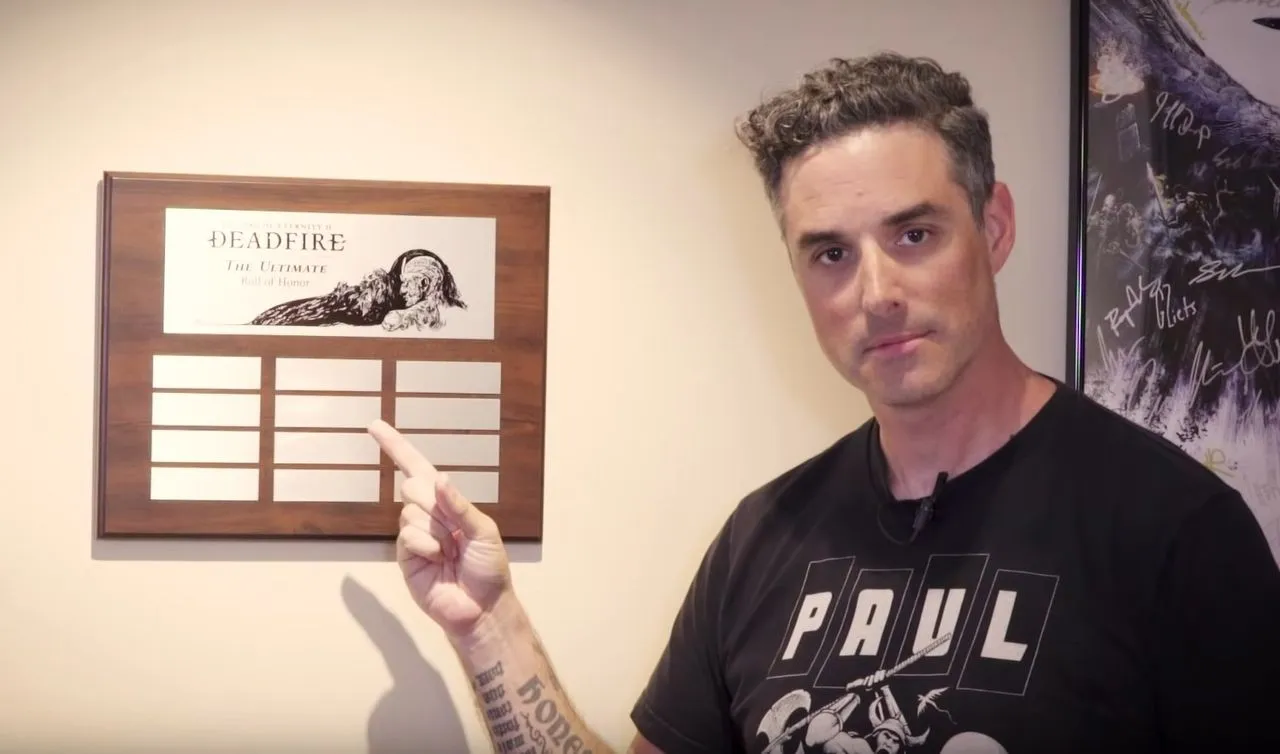
Josh Sawyer, the designer and director behind Fallout: New Vegas at Obsidian, told The Examined Game with Steven Lake that his “best of a bad lot” outcome is an independent Mojave. For decision-makers, the comments highlight how teams and publics think about legitimacy, control, and corruption when there is no truly good option.
Fallout: New Vegas does not end with a neat bow. It ends with four outcomes that share one brutal theme: none of them is “great,” and Sawyer is upfront about which one he’d choose anyway. In an interview on The Examined Game with Steven Lake, New Vegas designer and director Josh Sawyer said his personal best-of-a-bad-lot pick for the Mojave Wasteland endgame is independence all the way.
He explains why fast. Sawyer argues it is “kind of hard to hand everything over” to an individual like Caesar or Mr. House because it “feels dangerous.” He also pushes back on the NCR, saying you quickly see they have “a lot of problems,” including doing things for “very questionable reasons,” while also being “very imperialistic.” Even if you find “virtuous” people in the NCR who are sacrificing to fight in the Mojave, Sawyer says it is still hard to walk away and say, “yeah, I think NCR is great.” Independence is, for him, the least-worst path because it has not been tried in the Mojave yet.
That is the core logic: when every faction has obvious failure modes, the “optimal” choice becomes the one that most honestly admits tradeoffs. Sawyer notes independence comes with its own drawbacks, which Obsidian tried to portray as “drawbacks of dysfunction,” specifically including bureaucracy and corruption that tends to follow. In other words, he is not claiming independence is clean. He is claiming it is untested, and untested is at least something. His line of reasoning, as he puts it, is that it “hasn’t been tried yet,” so let’s “give it a try.”
There is a second layer here that matters beyond a game. The Mojave in New Vegas is a miniature governance experiment under stress, with competing institutions trying to control territory, resources, and people. Sawyer frames each alternative as a handover of power to an entity whose incentives are already suspect. Caesar and Mr. House represent concentrated authority, and Sawyer treats that concentration as the primary risk. The NCR represents an institution that can field virtue and sacrifice, but still carries structural problems and political reach. Independence is the option that distributes power enough that the system becomes messy, but also denies any single faction the ability to “hand everything over” to a single ruler.
If you are an executive, that sounds like a governance model, not a quest choice. And it maps to how real organizations make decisions when legitimacy is contested. You weigh whether centralization reduces coordination risk or amplifies corruption risk. You ask whether a “problem-prone but familiar” system is safer than an “unproven but distributed” one. Sawyer is basically saying: when the known actors already have “a lot of problems,” the least-worst option may be the one that breaks the pattern, even if it breaks other things first.
The article also notes something telling about how New Vegas players experience these outcomes. It references a personal head canon from the author, where instead of choosing the canon endgame route, the player creates an unofficial fifth path. In that scenario, after Mr. House asks the player to take out the Brotherhood of Steel, the author says they “packed up” and “wandered back out into the desert, never to return,” leaving the political mess behind rather than finishing it. It is not canon, but it underscores a real player psychology: some people do not just prefer an ending, they reject the entire premise of the factions’ competing claims.
Meanwhile, Josh Sawyer is not just a voice in a retrospective. The source says he is reportedly heading up a new Fallout project at Obsidian. That is a big deal for anyone tracking how Obsidian builds systems and narratives, because New Vegas is the template for faction-driven moral tradeoffs at scale. And the timing matters because the report also ties this to the current industry environment: the source notes recent major cuts at Xbox, with roughly 25% of the studio’s workforce let go and the cancellation of multiple other projects, including a sequel to Avowed. Those kinds of shifts can change what gets funded, what gets protected, and what gets cut first, especially for ambitious, systems-heavy RPGs.
So the business stake is straightforward. If Sawyer is steering a new Fallout project after Xbox-linked cutbacks, the question is what kind of “Mojave” Obsidian will be asked to build under new constraints. Do you lean into the safety of known formulas (centralized decision-making, fewer experiments), or do you chase independence in production, taking dysfunction for speed and creativity? The way Sawyer talks about independence, bureaucracy, and corruption is fictional, but the incentives are not. When capital gets tighter and oversight gets heavier, teams can become NCR-like: they may deliver order, but they can also accumulate mission drift and “questionable reasons.” Independence, in the corporate sense, can look like messy governance, but it can also reduce the risk of betting everything on a single, flawed ruler.
And that is why this comment lands. Sawyer’s “independence all the way” is not just a fandom opinion. It is a blueprint for choosing under uncertainty: when every faction has a price tag, the best move might be the one that avoids concentrated control, even if it guarantees dysfunction.
This story's Key Insights and Take-aways are locked.
Create a free account to unlock Executive Actions for one credit.
Register to UnlockAlways free for Executives Club members. Join the Club
More in Entertainment

12TB Steam 'teraleak' goes beyond Valve: GTA 3, Mafia 2 prototypes exposed
A 12-terabyte dump of Steam data reveals prototypes and builds of third-party classics like GTA 3 and Mafia 2, plus unreleased Valve content, rewriting game history.

LinkedIn's romance problem: 1 in 4 workers say dating on it is fair game
A new survey shows a quarter of U.S. employees treat the professional network as fair game for romance, even as LinkedIn bans it and removes hundreds of thousands of offending posts.

Enhypen's first No. 1 album breaks K-pop's Billboard 200 streak
The K-pop group's 98,000-unit debut tops the chart while Dolly Parton's catalog reentry shows how death reshapes streaming.